Introduction
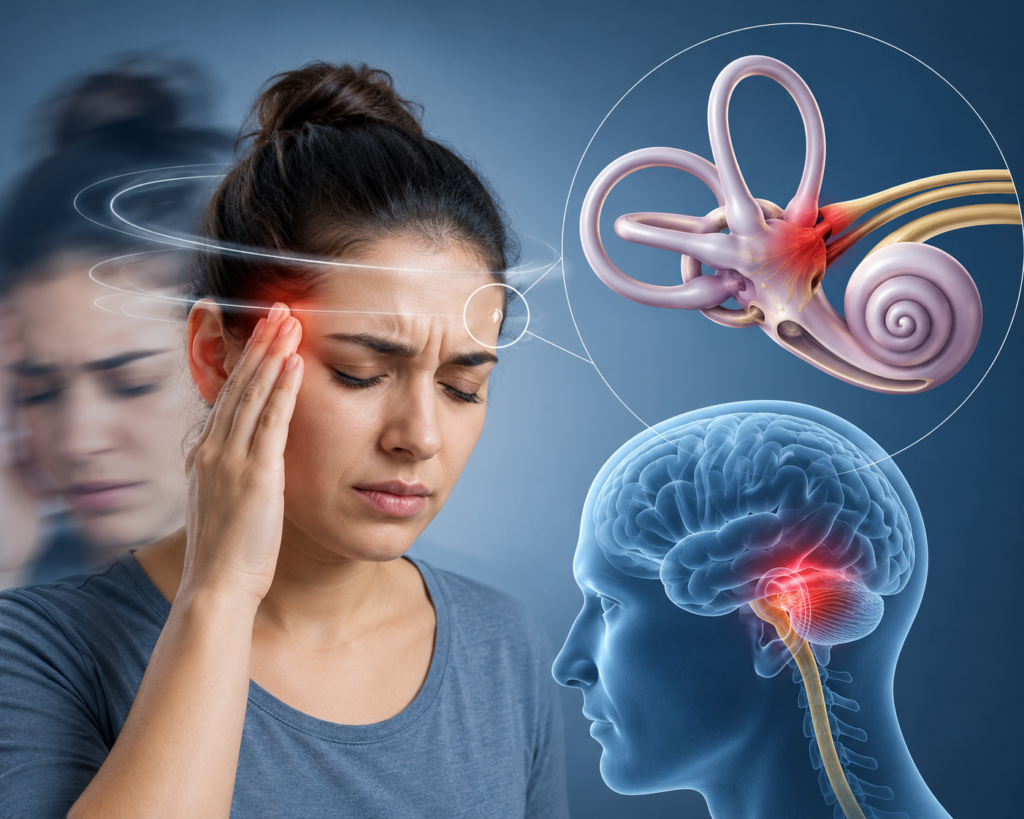
Vestibular Neuritis is a common cause of sudden-onset vertigo resulting from dysfunction of the vestibular nerve. It remarkably affects balance and spatial orientation, often leading to severe dizziness and difficulty in daily activities. Early diagnosis and physiotherapy-based rehabilitation are essential for optimal recovery.
Definition
Vestibular neuritis is an acute peripheral vestibular disorder characterized by inflammation of the vestibular portion of the eighth cranial nerve, leading to impaired balance without hearing loss.
Etiology
The exact cause of vestibular neuritis is not always clear, but it is most commonly associated with:
- Viral infections
- Post-viral inflammatory response
- Reactivation of latent herpes simplex virus
- Rarely, vascular compromise of the vestibular nerve
Clinical Features
- Sudden onset of severe vertigo
- Nausea and vomiting
- Persistent dizziness lasting days to weeks
- Difficulty standing or walking
- Symptoms worsen with head movement
- Absence of hearing loss
Signs and Symptoms
- Spontaneous horizontal nystagmus
- Postural imbalance with a tendency to fall toward the affected side
- Gait unsteadiness
- Visual blurring during head movement
- Motion intolerance
- Fatigue and anxiety due to persistent dizziness
Complication
- Prolonged balance impairment
- Increased risk of falls
- Development of chronic dizziness
- Visual dependence and motion sensitivity
- Decreased confidence in mobility
- Delayed central vestibular compensation if untreated

Physiotherapy Management
Physiotherapy is the cornerstone of recovery and focuses on promoting vestibular compensation:
- Vestibular Rehabilitation Therapy (VRT): Customized exercises to restore balance
- Gaze Stabilization Exercises: Improve visual focus during head movement
- Habituation Exercises: Reduce dizziness provoked by specific movements
- Balance Training: Static and dynamic postural control exercises
- Gait Training: Improve walking stability and coordination
- Functional Training: Safe performance of daily activities
- Patient Education: Encouragement of early movement and activity pacing
Early initiation of physiotherapy significantly enhances recovery and prevents long-term disability.
Conclusion
Vestibular Neuritis is a disabling but self-limiting vestibular disorder with excellent prognosis when managed appropriately. Early recognition and structured physiotherapy rehabilitation play a crucial role in restoring balance, reducing dizziness, and improving quality of life.
What is Vestibular Neuritis?
Vestibular neuritis is an acute inflammation of the vestibular nerve causing severe vertigo and balance problems without hearing loss.
What are the common symptoms of Vestibular Neuritis?
Common symptoms include sudden vertigo, nausea, vomiting, dizziness, imbalance, and difficulty walking, especially with head movement.
How is Vestibular Neuritis managed?
It is mainly treated with physiotherapy, including vestibular rehabilitation therapy, balance training, gaze stabilization, and functional exercises.
Need Personalized Guidance for Physiotherapy?
Our senior certified therapists at Aaziban Care Center provide customized 1-on-1 evaluation and treatment plans at our care centers.