Introduction
Scar Management is a natural part of wound healing following surgery, trauma, burns, or infections. While most scars heal without complications, some may become painful, restrictive, or cosmetically concerning. Effective scar management improves tissue mobility, reduces discomfort, and enhances functional and aesthetic outcomes. Early intervention plays a vital role in preventing long-term complications.
Definition
Scar Management refers to therapeutic interventions aimed at optimizing scar healing, minimizing abnormal scar formation, and restoring normal skin mobility and function. It includes preventive, conservative, and rehabilitative strategies tailored to the individual’s condition.
Procedure
Scar Management procedures vary depending on scar type and stage of healing:
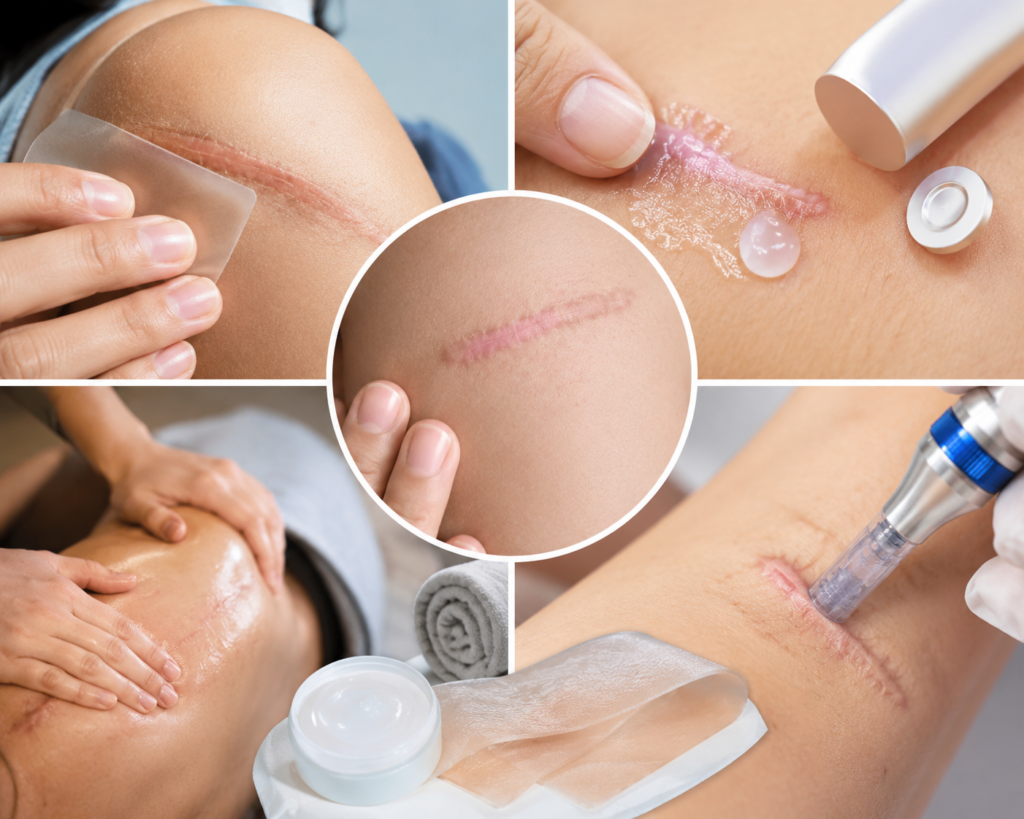
- Scar assessment: Evaluation of color, thickness, pliability, pain, and adherence.
- Topical therapy: Application of silicone gel sheets or creams to improve hydration.
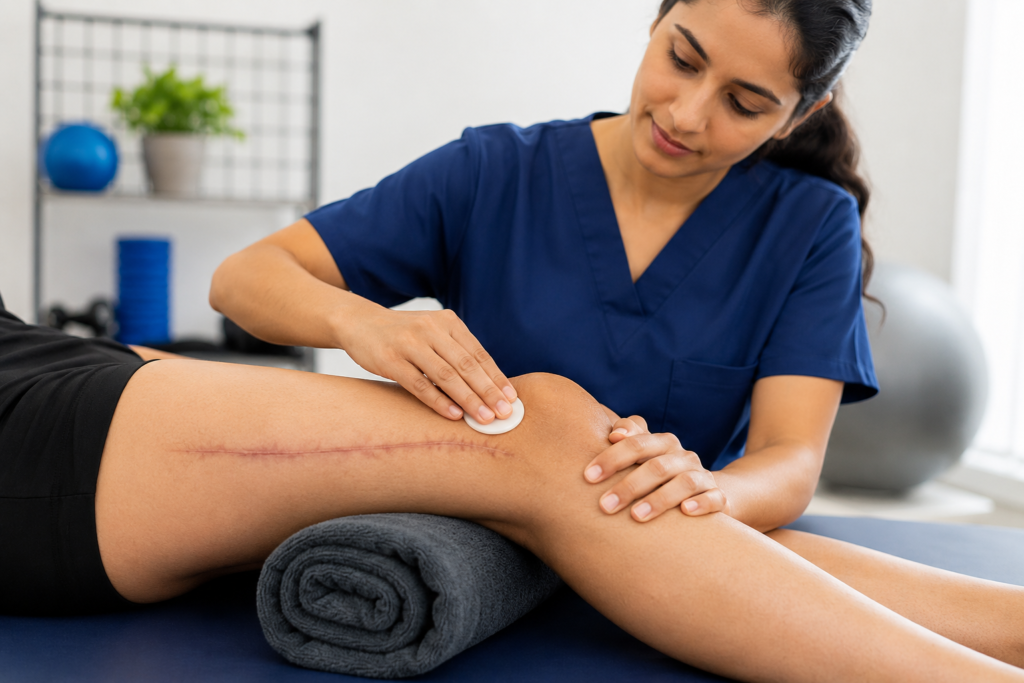
- Manual therapy: Gentle scar massage and mobilization to decrease adhesions.
- Pressure therapy: Use of compression garments, especially in burn scars.
- Taping techniques: To reduce tension across healing tissue.
- Electrotherapy modalities: Ultrasound or low-level laser therapy.
Indication
Scar management is indicated in:
- Post-surgical scars
- Burn scars
- Hypertrophic scars
- Traumatic lacerations
- Keloids
- Adhesive scars limiting joint movement
- Painful or hypersensitive scars
Contraindication
Scar management should be avoided or modified in:
- Open or infected wounds
- Active bleeding
- Unhealed incisions
- Fragile skin conditions
- Severe skin allergies to topical agents
- Malignant or suspicious skin lesions
Physiotherapy Management
Physiotherapy plays a crucial role in scar rehabilitation:
- Scar massage: Improves collagen alignment and tissue flexibility.
- Stretching exercises: Prevent contractures and maintain range of motion.
- Strengthening exercises: Restore functional mobility.
- Desensitization techniques: Reduce hypersensitivity.
- Myofascial release: Decreased deep adhesions.
- Patient education: Skin care, sun protection, and activity modification.
- Postural correction: Especially for scars across joints or the trunk.
A structured rehabilitation plan enhances circulation, promotes tissue remodeling, and improves cosmetic appearance.
Conclusion
Scar Management is an essential component of comprehensive rehabilitation. Timely assessment and physiotherapy-based interventions prevent complications such as contractures, restricted mobility, and chronic pain. A multidisciplinary approach ensures optimal healing, improved function, and better quality of life.
What is scar management?
Scar management involves therapeutic interventions to improve scar healing, reduce abnormal scarring, and restore normal skin mobility and function.
When is scar management indicated?
It is indicated for post-surgical scars, burn scars, hypertrophic scars, keloids, adhesive scars, and painful or hypersensitive scars.
How does physiotherapy help in scar management?
Physiotherapy improves outcomes through scar massage, stretching, strengthening, desensitization, myofascial release, and patient education.
Need Personalized Guidance for Physiotherapy?
Our senior certified therapists at Aaziban Care Center provide customized 1-on-1 evaluation and treatment plans at our care centers.