
Introduction
Polyneuropathies are common neurological disorders affecting multiple peripheral nerves simultaneously. They can remarkably impair sensation, movement, and autonomic function, leading to decreased mobility and quality of life. Early diagnosis and comprehensive rehabilitation are essential to prevent disability and enhance functional independence.
Definition
Polyneuropathy refers to a diffuse and usually symmetrical dysfunction of peripheral nerves. It typically involves distal nerves first, producing a “glove and stocking” pattern of sensory or motor deficits.
Pathophysiology
Polyneuropathies occur due to damage to peripheral nerve fibers, including axons, myelin sheaths, or both.
- Axonal degeneration: Often caused by metabolic or toxic factors.
- Demyelination: Results from immune-mediated or inflammatory processes.
Nerve damage disrupts signal transmission, leading to weakness, sensory disturbances, and impaired reflexes.
Classification
Polyneuropathies can be classified based on cause and pathology:
1. Based on Etiology:
- Diabetic neuropathy
- Alcoholic neuropathy
- Nutritional deficiency (e.g., Vitamin B12 deficiency)
- Autoimmune (e.g., Guillain–Barré syndrome)
- Toxic or drug-induced neuropathy
- Hereditary neuropathy
2. Based on Pathology:
- Axonal polyneuropathy
- Demyelinating polyneuropathy
- Mixed type
3. Based on Duration:
- Acute
- Subacute
- Chronic
Signs and Symptoms
Common clinical features include:
- Distal muscle weakness
- Numbness or tingling (paresthesia)
- Burning pain
- Loss of reflexes
- Impaired balance and coordination
- Muscle wasting in advanced stages
- Autonomic symptoms (e.g., dizziness, bowel/bladder issues)
Symptoms often begin in the feet and progress proximally.
Physiotherapy Management
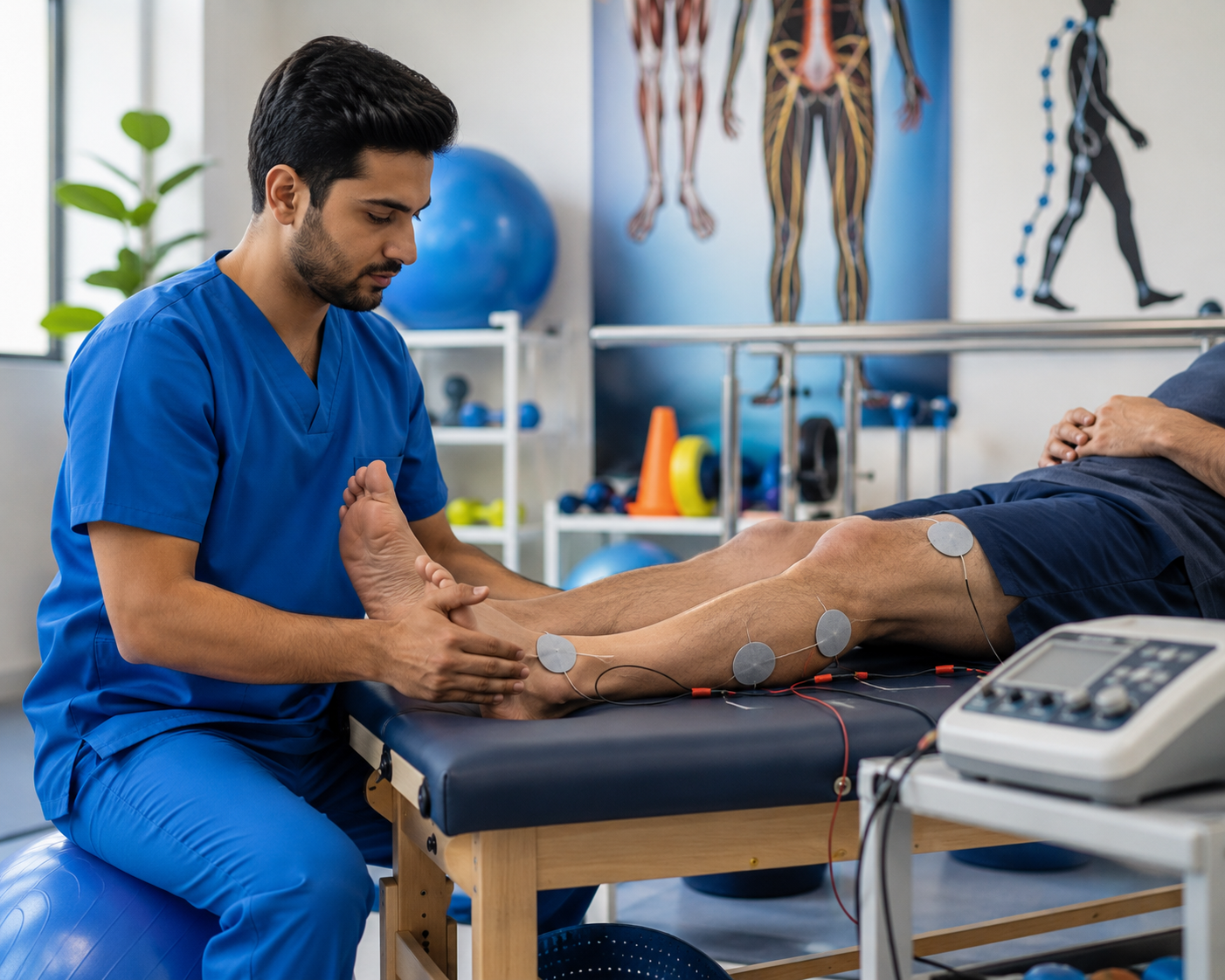
Physiotherapy plays a crucial role in minimizing disability:
- Strengthening exercises: Improve muscle power and prevent atrophy.
- Balance training: Decreased fall risk.
- Gait training: Enhance walking ability, sometimes with assistive devices.
- Aerobic conditioning: Improve endurance and cardiovascular health.
- Stretching exercises: Prevent contractures.
- Sensory re-education: Enhance proprioception and coordination.
- Pain management techniques: TENS and relaxation methods.
- Patient education: Foot care, fall prevention, and lifestyle modification.
An individualized rehabilitation program enhances functional recovery and independence.
Conclusion
Polyneuropathies are diverse disorders with remarkable functional impact. Timely medical management combined with structured physiotherapy decreased complications, improved mobility, and enhanced quality of life. A multidisciplinary approach ensures optimal long-term outcomes.
What is polyneuropathy?
Polyneuropathy is a symmetrical dysfunction of multiple peripheral nerves, often causing a “glove and stocking” pattern of sensory and motor deficits.
What are common symptoms of polyneuropathies?
Common symptoms include distal muscle weakness, numbness, tingling, burning pain, loss of reflexes, impaired balance, and autonomic disturbances.
How does physiotherapy help in polyneuropathies?
Physiotherapy improves recovery through strengthening, balance and gait training, stretching, sensory re-education, pain management, and fall prevention strategies.
Need Personalized Guidance for Physiotherapy?
Our senior certified therapists at Aaziban Care Center provide customized 1-on-1 evaluation and treatment plans at our care centers.