
Introduction
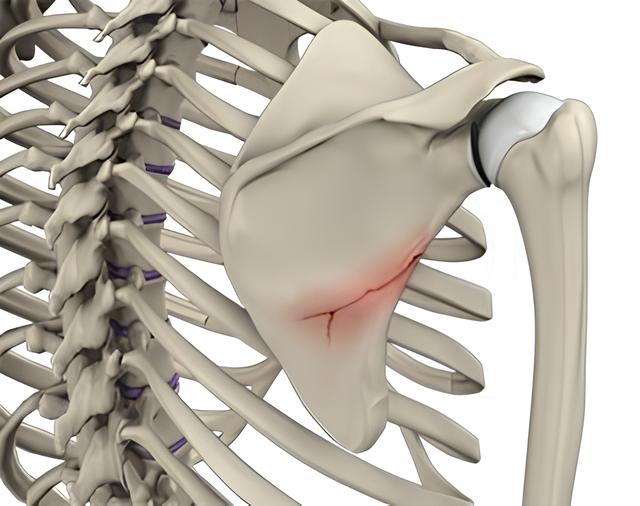
Fracture of the Scapula is an uncommon injury, accounting for a small percentage of all fractures due to the bone’s protected position within surrounding muscles and the thoracic cage. It usually results from high-energy trauma and is often associated with other serious injuries. Early diagnosis and appropriate rehabilitation are essential for optimal shoulder function.
Definition
A scapular fracture refers to a break in any part of the scapula (shoulder blade), including the body, spine, acromion, coracoid process, or glenoid cavity. These fractures may be stable or unstable depending on the site and displacement.
Mechanism of Injury
- High-energy trauma such as road traffic accidents
- Direct blow to the shoulder or upper back
- Falls from height
- Sports-related injuries involving forceful impact
- Associated thoracic trauma transmitting force to the scapula
Clinical Feature
- Severe shoulder and upper back pain
- Swelling and bruising over the scapular region
- Restricted shoulder movements
- Pain aggravated by arm movement or breathing
- Tenderness on palpation
- Possible associated injuries (rib fractures, lung injury)
Complication
- Shoulder stiffness and reduced range of motion
- Malunion or non-union (rare)
- Chronic shoulder pain
- Glenohumeral instability (if glenoid involved)
- Muscle weakness and postural abnormalities

Physiotherapy Management
The basic objective is to regain an active full range of all movements of the shoulder complex. As the period of immobilization is short(2 weeks), mobilization is not difficult. During this immobilisation period, only isometrics to the shoulder girdle muscles could be initiated early.
Proper mobilisation to the body of the scapula and suitable physiotherapy modality to control pain are essential.
Extra emphasis to be given to the programme of strengthening exercises using PNF, dumbbells, and elastic band exercises.
A full range of fairly strong movements of the shoulder complex should be obtained by 4-6 weeks.
Conclusion
Fracture of the Scapula, though rare, is a significant injury often linked with high-energy trauma. Timely diagnosis and structured physiotherapy rehabilitation play a crucial role in pain reduction, functional recovery, and prevention of complications, enabling patients to regain optimal shoulder performance.
Q1. What is a fracture of the scapula?
A scapular fracture is a break in the shoulder blade, involving parts like the body, acromion, coracoid process, or glenoid cavity, usually caused by high-energy trauma.
Q2. What are the common symptoms of scapula fracture?
Symptoms include severe shoulder or upper back pain, swelling, bruising, restricted shoulder movement, and tenderness, often accompanied by rib or lung injuries.
Q3. How is physiotherapy helpful in scapular fracture recovery?
Physiotherapy restores movement and strength through early isometrics, pain-relief modalities, scapular mobility exercises, and strengthening.