
Introduction
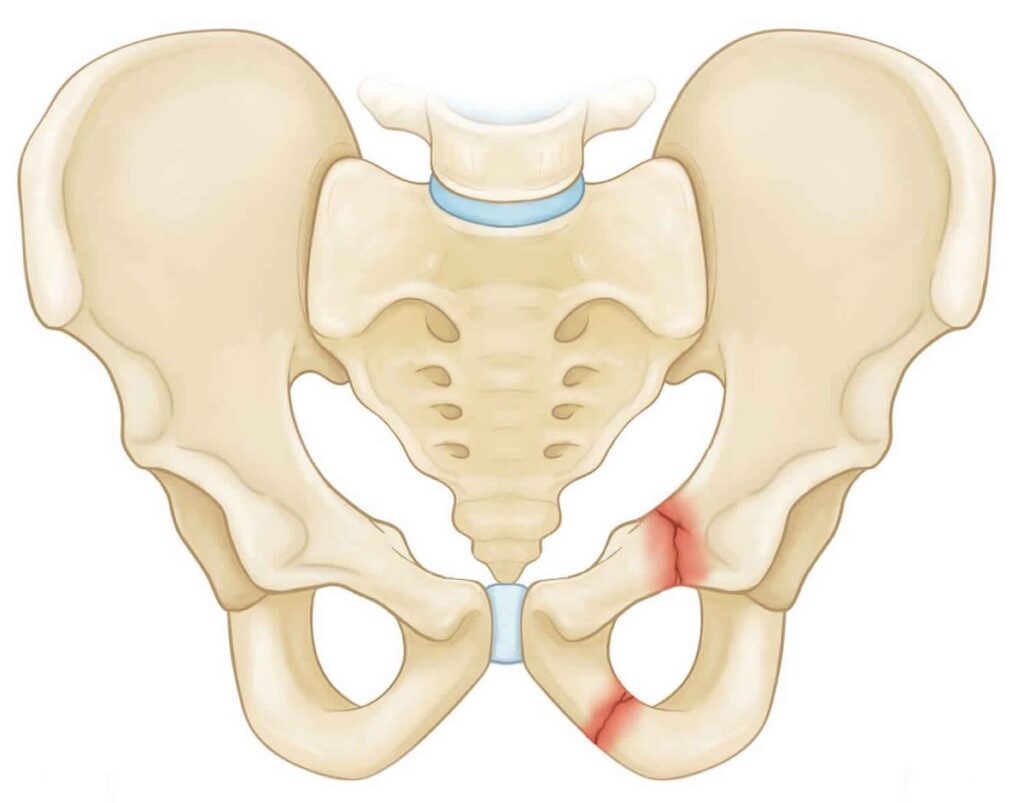
Pelvic Fractures involves a break in one or more pelvic bones, including the ilium, ischium, pubis, or sacrum. Pelvic fractures range from stable, low-energy injuries to complex, life-threatening trauma. Proper medical care and early physiotherapy are essential for restoring mobility and preventing long-term disability.
Etiology
- High-energy trauma, such as road traffic accidents
- Crush injuries
- Falls from height or severe direct impact
- Sports-related trauma
- Low-energy falls in elderly individuals with osteoporosis
- Pathological fractures due to bone weakness or tumors
Clinical Features
- Severe pain in the pelvic, hip, or groin region
- Tenderness and swelling over the pelvic area
- Difficulty or inability to stand or walk
- Bruising around the pelvis, perineum, or lower abdomen
- Pain during hip movements
- Possible leg length discrepancy or deformity
- In severe cases, signs of internal bleeding or shock
Physiotherapy Management
Acute Phase:
- Pain relief through proper positioning and support
- Breathing exercises to prevent pulmonary complications
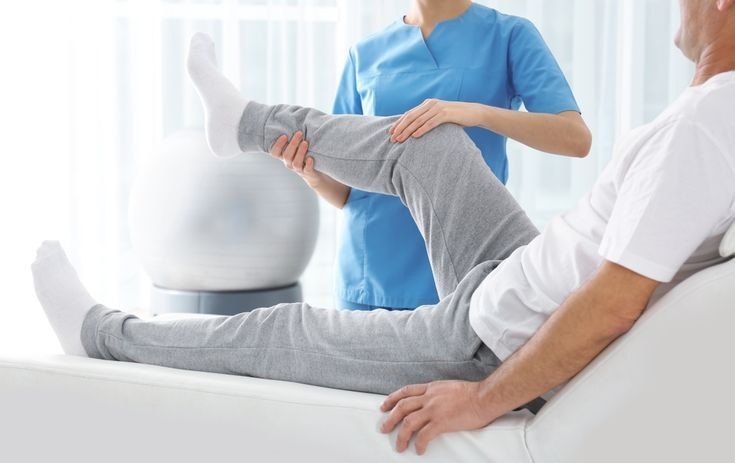
- Isometric exercises for lower-limb muscles
- Gentle active movements of non-injured limbs
Rehabilitation Phase:
- Gradual progression to active and assisted range of motion exercises
- Strengthening exercises for hip, trunk, and lower-limb muscles
- Bed mobility and transfer training
- Gait training with assistive devices such as walkers or crutches
Functional Phase:
- Balance and coordination exercises
- Progressive weight-bearing is permitted
- Functional training for daily activities
- Education on posture and safe mobility techniques
Complications
- Chronic pelvic or low back pain
- Reduced mobility and gait abnormalities
- Nerve or vascular injury
- Sexual or urinary dysfunction
- Limb length discrepancy
- Deep vein thrombosis and pulmonary embolism
Epidemiology
Pelvic fractures account for about 2–8% of all skeletal injuries. They commonly occur in young adults due to high-energy trauma (road traffic accidents, falls from height) and in the elderly due to low-energy falls, often associated with osteoporosis.
Conclusion
Pelvic Fractures are serious injuries that can significantly affect mobility and quality of life. Early diagnosis, appropriate medical management, and structured physiotherapy rehabilitation are vital in achieving optimal functional recovery and decreasing long-term complications.
Q1. What is a pelvic fracture and how does it occur?
Answer: A pelvic fracture is a break in one or more pelvic bones, commonly caused by high-energy trauma, falls, crush injuries, or low-energy falls in elderly individuals.
Q2. What are the common clinical features of a pelvic fracture?
Answer: Severe pelvic or groin pain, swelling, difficulty walking or standing, bruising, painful hip movements, and in severe cases signs of internal bleeding.
Q3. Why is physiotherapy important in pelvic fracture recovery?
Answer: Physiotherapy helps reduce pain, restore mobility and strength, improve gait and balance, and prevent long-term complications.