
Introduction
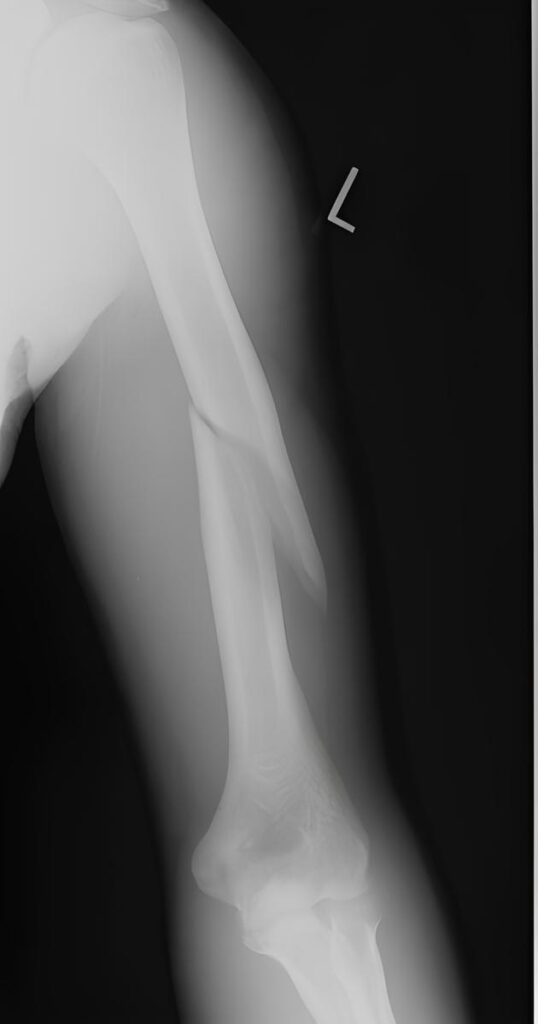
Fracture of the neck of the humerus is a common upper-limb injury, especially in elderly individuals with osteoporosis and in younger adults following high-energy trauma. It involves a break near the proximal end of the humerus, close to the shoulder joint, and can significantly affect shoulder mobility and function. Early diagnosis and appropriate physiotherapy play a key role in recovery.
Mechanism of Injury
- Fall on an outstretched hand or directly onto the shoulder
- Low-energy falls in elderly patients with weak bones
- Road traffic accidents or sports injuries in younger individuals
- Direct blow to the upper arm
Signs and Symptoms
- Pain around the shoulder and upper arm
- Swelling and bruising over the shoulder region
- Painful or Restricted shoulder movements
- Visible deformity in displaced fractures
- Tenderness on palpation
- Difficulty performing daily activities
Investigation
- X-ray (AP and lateral views): Confirms the fracture and displacement
- CT scan: Used in complex or comminuted fractures
- MRI: Helps assess soft tissue and rotator cuff involvement if needed

Physiotherapy Management
- In elderly patients, the limb is supported in a sling for 2-3 weeks, followed by shoulder mobilization, and no manipulation is attempted.
- Initially, cryotherapy, TENS, or diapulse may be given.
- Self resisted full range elbow, forearm, wrist, and hand movements to be encouraged.
- Relaxed pendular movements, in a small range with the arm in a sling, can be started after 1 week of the fracture incident.
- K-Taping(facilitatory application) may be used.
- Resisted exercises late stage of rehabilitation.
- Good functional results can be achieved by 6 to 8 weeks.
Complications
- Shoulder stiffness and frozen shoulder
- Malunion or non-union of the fracture
- Avascular necrosis of the humeral head
- Chronic pain and reduced shoulder strength
- Nerve injury
Conclusion
Fracture of the neck of the humerus can lead to significant shoulder dysfunction if not managed properly. Timely diagnosis, appropriate medical care, and structured physiotherapy rehabilitation are essential for restoring shoulder mobility, strength, and functional independence. Early physiotherapy intervention helps minimize complications and ensures better long-term outcomes.
Q1. What is a fracture of the neck of the humerus?
It is a break near the proximal end of the humerus close to the shoulder joint, commonly seen in elderly and trauma cases.
Q2. What are the common symptoms of this fracture?
Shoulder pain, swelling, bruising, restricted movement, tenderness, and difficulty performing daily activities.
Q3. How does physiotherapy help in recovery?
Physiotherapy reduces pain, improves shoulder mobility and strength, prevents stiffness, and restores functional independence.