
Introduction
Tendo-Achilles Tendon Rupture is a common orthopaedic injury that affects individuals involved in sports, sudden high-impact activities, or those with predisposing tendon weaknesses. As the strongest tendon in the body, the Achilles plays a crucial role in walking, running, and jumping. A rupture significantly limits mobility and requires timely management to restore function and prevent long-term disability.
Definition
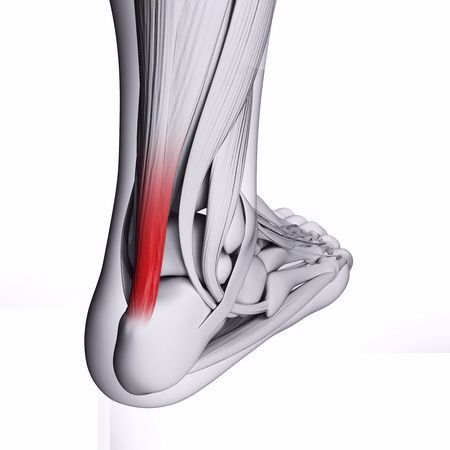
A Tendo-Achilles tendon rupture refers to a complete or partial tear of the Achilles tendon, located at the back of the lower leg. This tendon connects the calf muscles (gastrocnemius and soleus) to the heel bone, enabling plantarflexion of the foot.
Causes
Common causes include:
- Sudden Forceful Movements: Jumping, sprinting, or pushing off the foot abruptly.
- Overuse or Degeneration: Repetitive strain weakens the tendon over time.
- Poor Flexibility: Tight calf muscles increase tension on the tendon.
- Direct Trauma: A sudden blow to the back of the ankle.
- Improper Footwear: Shoes with poor heel support.
- Medical Conditions: Diabetes, rheumatoid arthritis, or chronic tendinitis.
Clinical Features
- Sudden sharp pain in the back of the ankle.
- Audible “pop” or snapping sensation.
- Difficulty performing heel raises.
- Visible gap or swelling in the tendon area.
- Loss of normal gait pattern.
Signs and Symptoms
- Severe pain during weight-bearing or movement.
- Swelling and bruising around the Achilles tendon.
- Inability to push off the foot while walking.
- Weak plantarflexion of the ankle.

Physiotherapy Treatment
- Post-surgical condition, there may be present plaster cast or a more sophisticated alternative, such as a lockable brace, which permits early ankle movement yet blocks tension on the newly repaired tendon.
- A young individual’s Gait training must start with crutches. Gait training starting with non-weight bearing to partial weight bearing(Three-point Gait). Gradually progressing from three-point to four-point and finally two-point. After that crutches will be discarded.
- Stretching of the Achilles tendon affects the Achilles tendon rupture.
- Ankle mobilisation exercises/Elastic band exercises may be helpful.
- In later, contrast bath may be helpful to combat the inflammation, if it increases the ankle ROM.
Conclusion
Tendo-Achilles Tendon Rupture is a significant injury that can impact daily activities and athletic performance. Early diagnosis, appropriate medical care, and a structured physiotherapy program ensure optimal recovery, restoring strength, flexibility, and functional mobility.
What is a Tendo-Achilles tendon rupture?
It is a partial or complete tear of the Achilles tendon, which connects the calf muscles to the heel bone and enables foot plantarflexion.
What are the common symptoms of an Achilles tendon rupture?
Symptoms include sudden sharp ankle pain, a popping sensation, swelling, bruising, difficulty walking, and weak plantarflexion.
How does physiotherapy help in recovery?
Physiotherapy includes gait training with crutches, ankle mobilization, stretching, strengthening exercises, and contrast bath therapy to reduce inflammation and restore mobility.