Introduction
Meningocele is a type of neural tube defect that affects the spine and surrounding structures. It is a congenital condition present at birth and requires early diagnosis and management to prevent difficulty and upgrade quality of life.
Definition
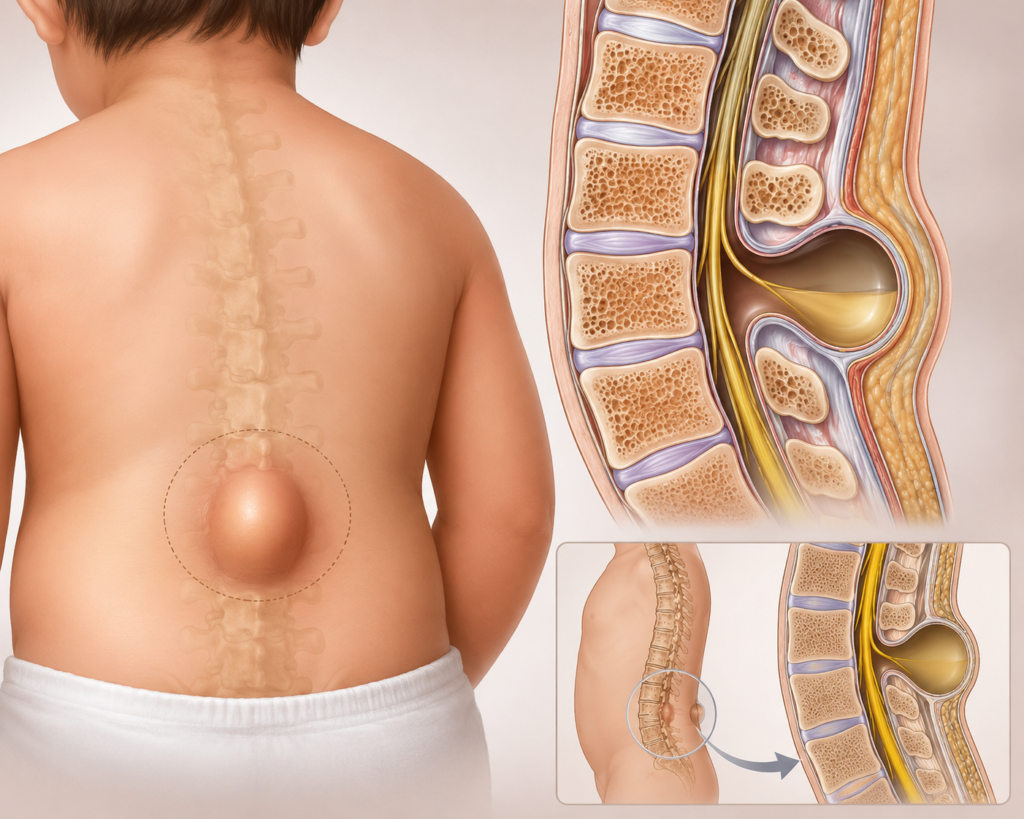
Meningocele is a form of spina bifida in which the meninges (protective coverings of the spinal cord) protrude through a defect in the vertebral column, forming a fluid-filled sac. Unlike myelomeningocele, the spinal cord itself usually remains in its normal position.
Etiology
- Failure of neural tube closure during early embryonic development
- Folic acid deficiency during pregnancy
- Genetic predisposition
- Maternal exposure to certain drugs or infections
- Environmental factors affecting fetal development
Clinical Features
- Visible cystic swelling over the spine (commonly in the lumbar region)
- Normal motor and sensory function (in mild cases)
- Intact neurological function in many cases
- Skin covering over the sac may be thin or translucent
Signs and Symptoms
- Soft, fluid-filled sac on the back
- Bladder or bowel dysfunction (rare)
- Mild weakness or coordination issues (occasionally)
- Possible associated spinal deformities
Complications
- Risk of infection (e.g., meningitis) if the sac ruptures
- Hydrocephalus in some cases
- Delayed motor development
- Tethered cord syndrome
- Orthopedic deformities, if untreated
Risk Factors
- Lack of folic acid intake during pregnancy
- Maternal diabetes or obesity
- Family history of neural tube defects
- Use of anti-epileptic drugs during pregnancy
- Poor prenatal care

Physiotherapy Management
- Early Intervention: Promotes normal motor development
- Strengthening Exercises: Upgrade muscle tone and functional ability
- Positioning Techniques: Prevent deformities and pressure sores
- Range of Motion (ROM) Exercises: Maintain joint mobility
- Gait Training: If needed, to improve walking ability
- Postural Training: Enhance balance and alignment
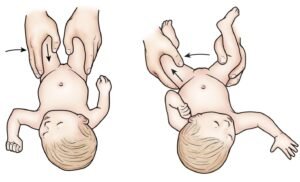
- Parental Education: Guidance on handling, positioning, and home exercises
- Assistive Devices: Use of braces or supports if required
Conclusion
Meningocele is a manageable congenital condition with a generally good prognosis when treated early. Multidisciplinary care, including physiotherapy, plays a vital role in ensuring optimal physical development and preventing long-term problems.
What is meningocele?
Meningocele is a type of spina bifida where the meninges protrude through a spinal defect, forming a fluid-filled sac.
What are common causes of meningocele?
Causes include failure of neural tube closure, folic acid deficiency, genetic factors, and maternal exposure to drugs or infections.
What is the role of physiotherapy in meningocele?
Physiotherapy helps improve motor development, maintain joint mobility, prevent deformities, and enhance functional ability.
Need Personalized Guidance for Physiotherapy?
Our senior certified therapists at Aaziban Care Center provide customized 1-on-1 evaluation and treatment plans at our care centers.