
Introduction
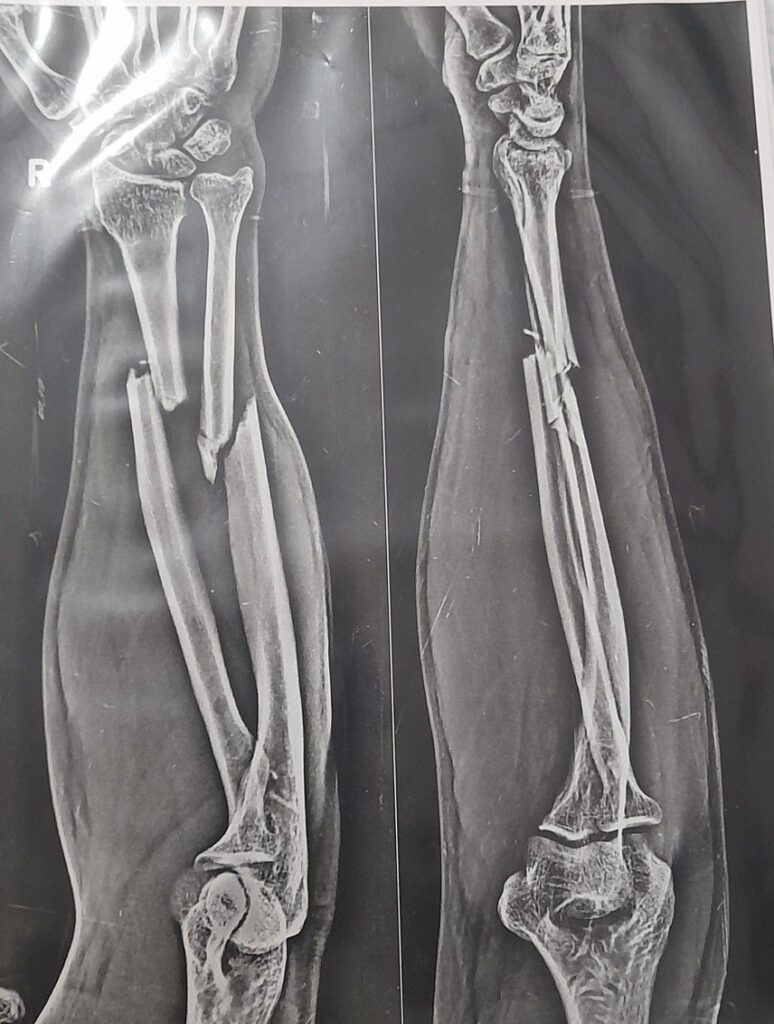
Fracture of the Radius and Ulna refers to a break involving one or both bones of the forearm. These injuries are common in children and adults and can significantly affect hand, wrist, and elbow function. Early diagnosis and suitable rehabilitation are essential for optimal recovery.
Mechanism of Injury
- Fall on an outstretched hand
- Rotational force or twisting
- Direct trauma to the forearm (road traffic accidents, sports injuries)
- High-energy impact injuries in adults
Classification
Based on Anatomical Location
- Proximal third fractures – Involve the upper third of the radius and ulna near the elbow
- Middle third (shaft) fractures – Involve the diaphysis of the radius and ulna
- Distal third fractures – Occur near the wrist joint
Based on Fracture Pattern
- Transverse fracture
- Oblique fracture
- Spiral fracture
- Comminuted fracture
- Greenstick fracture (commonly in children)
Based on Displacement
- Undisplaced fracture
- Displaced fracture
- Angulated fracture
- Rotated fracture
- Overriding (shortened) fracture
Signs and Symptoms
- Severe forearm pain and tenderness
- Swelling and redness
- Visible deformity or abnormal angulation
- Pain during gripping or rotation (pronation–supination)
- Restricted movement of the wrist and elbow
- In severe cases, numbness or reduced circulation
Investigation
- X-ray (AP and lateral views): Confirms fracture type and alignment
- CT scan: Used for complex or intra-articular fractures
- Neurovascular assessment: To rule out nerve or vessel injury
Physiotherapy Management
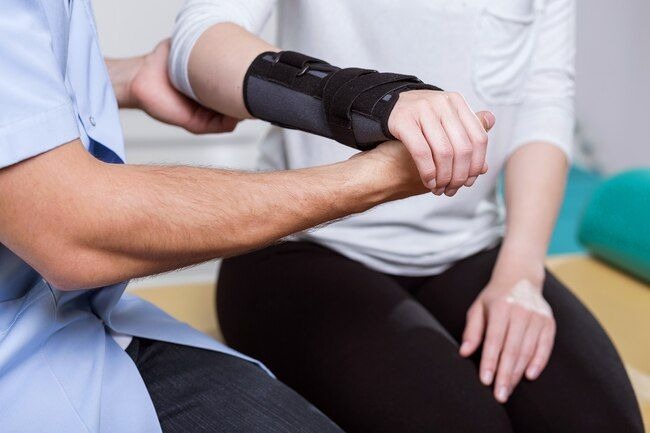
- AROM with strong movements should be initiated to the muscles and joints that are not immobilised, e.g., the shoulder, fingers, and thumb. The patient does isometrics for elbow flexors and extensors while the limb is in a cast.
- Post immobilisation(after 3-6 weeks in children and 8-10 weeks in adults), vigorous active movements of the elbow and wrist should be initiated.
- Gradually progress the supination/ pronation exercises.
- Proper physiotherapy management can rehabilitate the patient to a near normal range of motion by 8-12 weeks.
Complications
- Malunion or non-union of the fracture
- Forearm stiffness and reduced rotation
- Muscle weakness and loss of grip strength
- Compartment syndrome (rare but serious)
- Nerve injury or chronic pain
Conclusion
Fracture of the Radius and Ulna can severely limit upper-limb function if not managed properly. Timely medical treatment combined with structured physiotherapy plays a crucial role in restoring mobility, strength, and functional independence.
Q1. What are the common causes of fracture of the radius and ulna?
Answer: It commonly occurs due to a fall on an outstretched hand, direct trauma, rotational or twisting forces, sports injuries, or high-energy road traffic accidents.
Q2. What are the typical signs and symptoms of a radius and ulna fracture?
Answer: Severe forearm pain, swelling, deformity, restricted wrist and elbow movement, pain during rotation, and in severe cases numbness or reduced circulation.
Q3. What is the role of physiotherapy in radius and ulna fracture management?
Answer: Physiotherapy helps restore movement, strength, and function through early joint mobility exercises, isometrics during immobilisation, and progressive active movements after cast removal.