Introduction
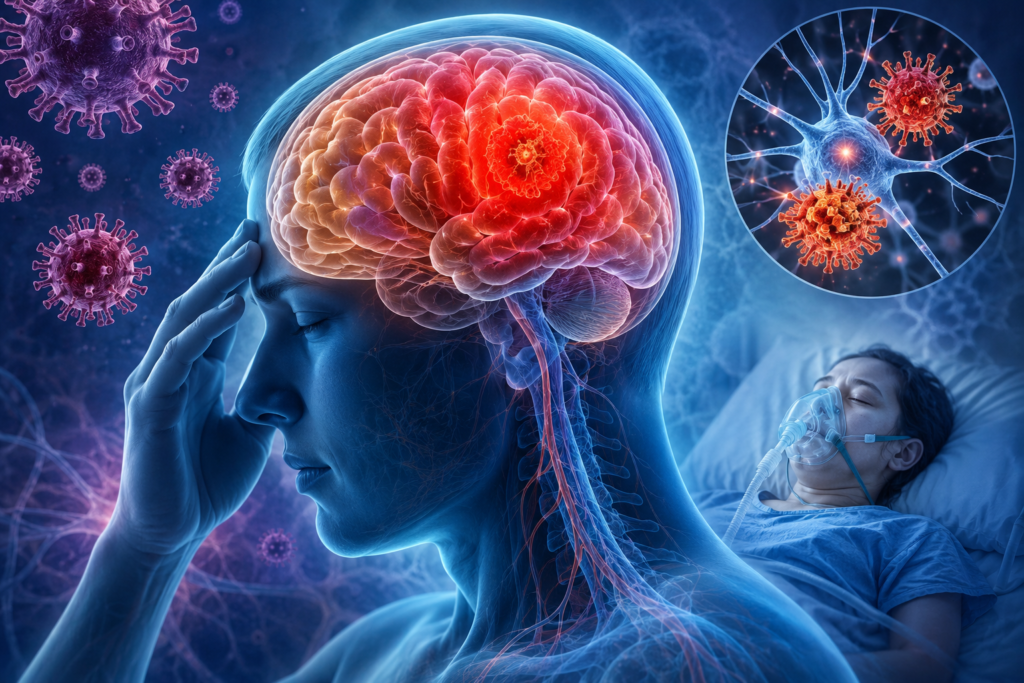
Infective encephalitis is a serious condition in which the brain becomes inflamed due to an infection, most commonly caused by viruses, but sometimes by bacteria, fungi, or parasites. It is considered a medical emergency because inflammation of the brain can rapidly affect consciousness, movement, memory, speech, and other vital functions. Early diagnosis, prompt medical treatment, and appropriate rehabilitation, including physiotherapy, play a importent role in improving recovery and decreased long-term disability.
Definition
Infective encephalitis is the inflammation of the brain tissue caused by infectious microorganisms. The condition disrupts normal brain function and may result in neurological deficits ranging from mild confusion to severe coma.
Etiology
Common causes of infective encephalitis include:
- Herpes simplex virus (HSV), the most common cause of severe viral encephalitis.
- Japanese encephalitis virus.
- Varicella-zoster virus.
- Enteroviruses.
- Arboviruses transmitted by mosquitoes or ticks.
- Bacterial infections (rare).
- Fungal and parasitic infections, especially in immunocompromised individuals.
Clinical Features
Patients may present with a combination of neurological and systemic symptoms, including:
- Sudden onset of fever.
- Decreased level of consciousness.
- Altered mental status.
- Cognitive impairment.
- Motor weakness.
- Balance and coordination problems.
- Speech difficulties.
- Behavioral or personality changes.
Signs and Symptoms
- High fever.
- Neck stiffness.
- Severe headache.
- Confusion or disorientation.
- Drowsiness or coma.
- Seizures.
- Weakness of limbs.
- difficulties walking.
- Sensory disturbances.
- Nausea and vomiting.
- Memory impairment.
- Sensitivity to light (photophobia).

Physiotherapy Management
Physiotherapy is an important part of rehabilitation after the acute stage of infective encephalitis. Treatment is individualized according to the patient’s neurological deficits and functional abilities.
- Perform a detailed functional and neurological assessment.
- Maintain joint mobility with passive and active range-of-motion exercises.
- Strengthen weakened muscles through progressive resistance exercises.
- Conduct gait training with assistive devices if required.
- Improve sitting, standing, and walking balance.
- Encourage early mobilization to decreased complications of prolonged bed rest.
- Provide breathing exercises and chest physiotherapy when respiratory involvement is present.
- Improve coordination through task-oriented activities.
- Enhance endurance using graded exercise programs.
- Educate caregivers regarding safe transfers, positioning, and home exercise programs.
Complications
Possible complications include:
- Persistent neurological deficits.
- Memory and learning difficulties.
- Epilepsy.
- Speech and swallowing disorders.
- Cognitive impairment.
- Muscle weakness and paralysis.
- Behavioral changes.
- Respiratory complications.
- Permanent disability.
- Death in severe untreated cases.
Risk Factors
- Infancy and older age.
- Weak immune system.
- Lack of recommended vaccinations.
- Mosquito or tick exposure.
- Chronic medical illnesses.
- Travel to endemic regions.
- Organ transplantation or immunosuppressive therapy.
Conclusion
Infective encephalitis is a potentially life-threatening neurological condition that requires urgent medical attention. Early diagnosis, timely antimicrobial treatment, and comprehensive rehabilitation considerably improve recovery. Physiotherapy helps restore mobility, balance, muscle strength, and independence, enabling patients to achieve better functional outcomes and an improved quality of life.
What is infective encephalitis?
Answer: Infective encephalitis is inflammation of the brain caused by infectious organisms such as viruses, bacteria, fungi, or parasites. It is a medical emergency that requires prompt treatment.
What are the common symptoms of infective encephalitis?
Answer: Common symptoms include high fever, severe headache, confusion, seizures, neck stiffness, weakness, difficulty walking, memory problems, and sensitivity to light.
How does physiotherapy help in infective encephalitis?
Answer: Physiotherapy improves muscle strength, balance, mobility, coordination, walking ability, and endurance. It also helps reduce complications and supports a faster, more independent recovery.
Need Personalized Guidance for Physiotherapy?
Our senior certified therapists at Aaziban Care Center provide customized 1-on-1 evaluation and treatment plans at our care centers.