Introduction
Crutch Palsy is a neurological condition that occurs due to prolonged or improper use of crutches. It commonly affects individuals who rely on axillary crutches for mobility after injuries or surgeries. Excessive pressure in the armpit region can compress important nerves, particularly the radial nerve, leading to weakness and sensory disturbances in the upper limb. Early identification and appropriate rehabilitation are essential to prevent long-term complications and restore functional independence.
Definition
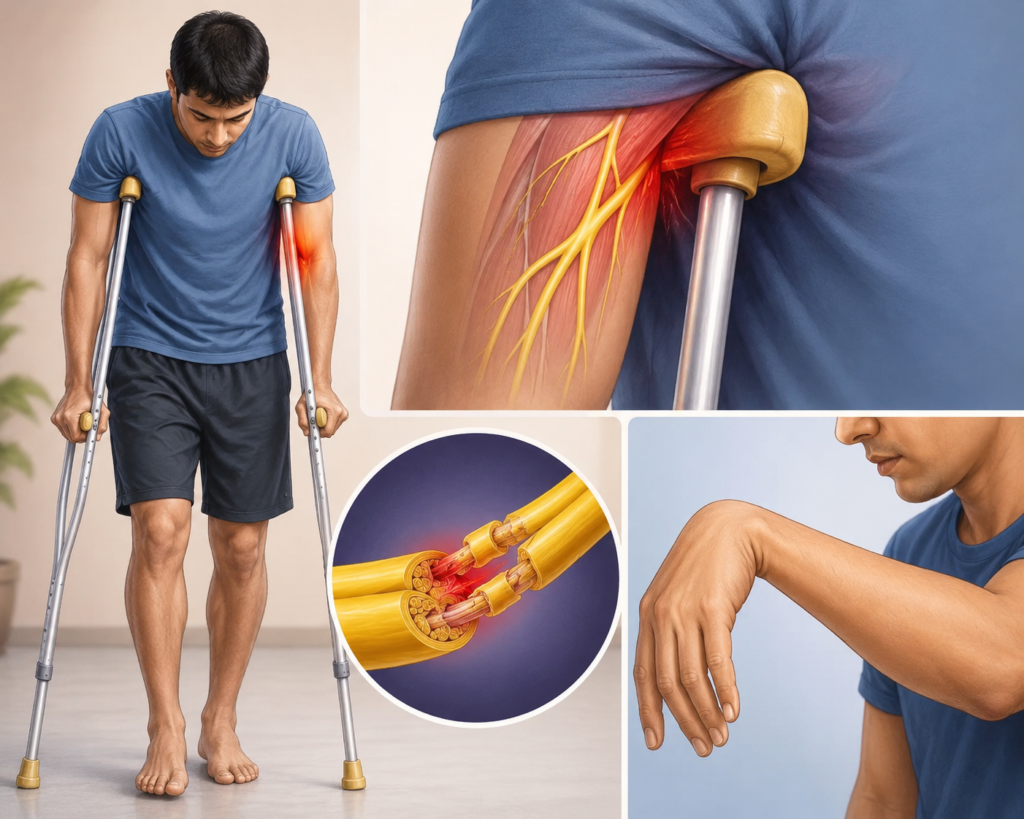
Crutch palsy refers to a form of peripheral nerve injury caused by continuous pressure of axillary crutches on the neurovascular structures in the armpit. The condition typically results in temporary or sometimes persistent weakness of the muscles supplied by the radial nerve, leading to functional impairment of the hand and wrist.
Etiology
The primary cause of crutch palsy is improper crutch use. Several contributing factors include:
- Excessive weight bearing through the axilla instead of the hands
- Prolonged use of poorly padded crutches
- Inadequate training in crutch walking techniques
- Incorrect crutch height adjustment
- Continuous pressure on the radial nerve in the axillary region
This sustained compression interferes with nerve conduction and may lead to nerve injury.
Clinical Features
Individuals with crutch palsy may present with the following signs and symptoms:
- Weakness of wrist and finger extensors
- Numbness or tingling in the forearm or hand
- Wrist drop (inability to extend the wrist)
- Difficulty gripping or holding objects
- Decreased muscle strength in the affected limb
- Fatigue or discomfort during arm movements
These symptoms often develop gradually after prolonged crutch use.
Complications
If the condition is not managed early, several complications may occur:
- Persistent wrist drop
- Muscle wasting due to nerve damage
- Decreased hand function and grip strength
- Difficulty performing daily activities
- Chronic nerve injury in severe cases
Physiotherapy Management
Physiotherapy plays a vital role in the recovery and prevention of crutch palsy. Key interventions include:
- Range of motion exercises: Prevent joint stiffness and maintain mobility
- Patient education: Teaching proper crutch fitting and correct weight-bearing techniques
- Strengthening exercises: Improve the muscle strength of the wrist and forearm
- Splinting: Wrist splints may help maintain functional hand position
- Nerve gliding exercises: Promote nerve mobility and recovery
- Functional training: Improve hand coordination and daily activity performance
- Postural training: Decreased unnecessary pressure on the axillary region
These rehabilitation strategies help restore nerve function and prevent recurrence.
Conclusion
Crutch Palsy is a preventable peripheral nerve injury resulting from improper crutch use. Early recognition, proper crutch fitting, and structured physiotherapy are essential for recovery. With appropriate rehabilitation and patient education, most individuals can regain normal upper limb function and avoid long-term complications.
Q: What is crutch palsy?
A: It is a peripheral nerve injury caused by prolonged pressure of axillary crutches on the nerves, especially the radial nerve.
Q: What are the common symptoms of crutch palsy?
A: Wrist drop, muscle weakness, numbness, tingling, and difficulty gripping objects.
Q: How is crutch palsy managed?
A: Through physiotherapy including exercises, proper crutch use education, splinting, and nerve gliding techniques.
Need Personalized Guidance for Physiotherapy?
Our senior certified therapists at Aaziban Care Center provide customized 1-on-1 evaluation and treatment plans at our care centers.