Introduction
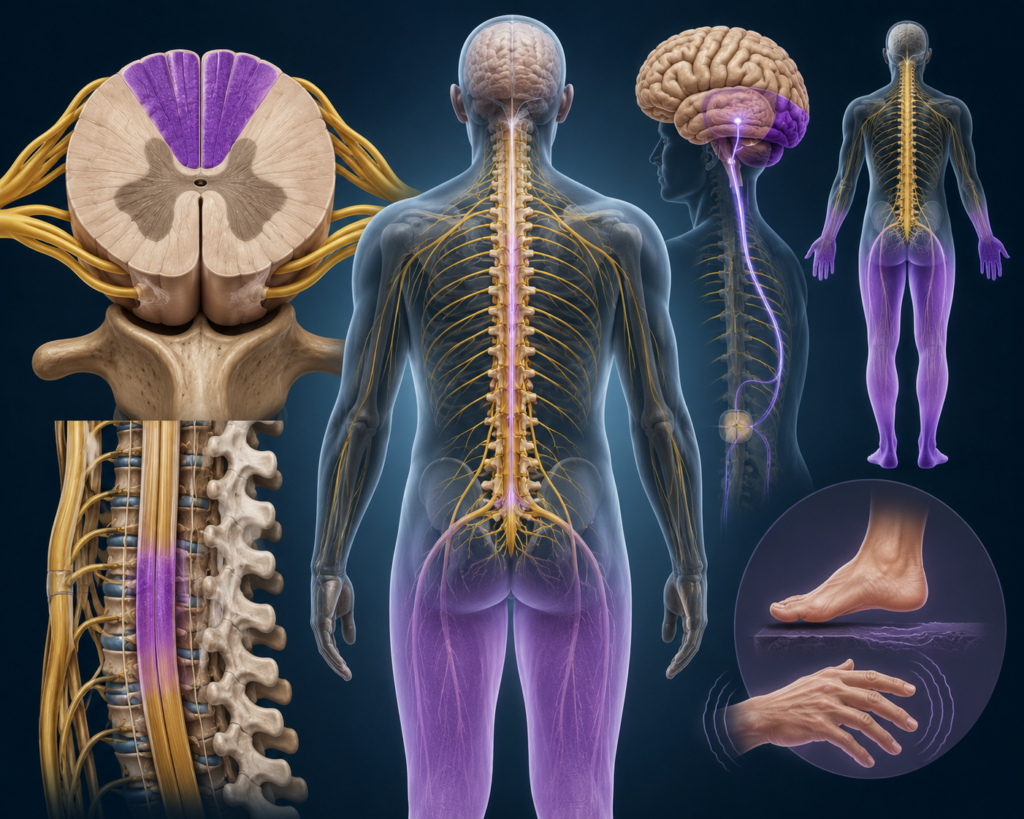
Posterior Cord Syndrome (PCS) is a rare form of incomplete spinal cord injury that primarily affects the dorsal (posterior) columns of the spinal cord. These columns are responsible for transmitting proprioception, vibration, and fine touch sensations. Although uncommon, PCS can remarkably impair coordination and functional mobility, making early recognition and rehabilitation crucial.
Definition
Posterior Cord Syndrome is defined as a neurological condition resulting from damage to the posterior columns of the spinal cord, leading to loss of proprioception, vibration sense, and fine discriminative touch, while motor function and pain-temperature sensation are relatively preserved.
Etiology
The causes of PCS are varied and include:
- Trauma to the posterior aspect of the spinal cord
- Multiple sclerosis and other demyelinating disorders
- Spinal tumors or space-occupying lesions
- Posterior spinal artery infarction
- Infections such as tabes dorsalis (neurosyphilis)
- Vitamin B12 deficiency (subacute combined degeneration)
Clinical Features
Patients with PCS typically present with:
- Loss of proprioception and vibration sense
- Sensory ataxia leading to unsteady gait
- Positive Romberg’s sign
- Difficulty with coordinated movements
- Preservation of muscle strength
- Intact pain and temperature sensation
- Wide-based gait and frequent falls, especially in low-light conditions
Complications
If not managed appropriately, PCS may lead to:
- Severe gait instability and increased fall risk
- Functional dependence in daily activities
- Joint injuries due to impaired position sense
- Secondary musculoskeletal complications due to inactivity
- Psychological issues such as anxiety or depression

Physiotherapy Management
Physiotherapy plays a crucial role in improving functional outcomes:
- Proprioceptive Training: Balance exercises using unstable surfaces, joint position training
- Coordination Exercises: Frenkel’s exercises to improve limb control
- Gait Training: Use of assistive devices, visual feedback techniques
- Sensory Re-education: Tactile and visual compensation strategies
- Strength Training: Maintain muscle strength and endurance
- Fall Prevention: Environmental modifications and safety education
- Functional Training: Task-specific exercises to enhance independence in ADLs
Conclusion
Posterior Cord Syndrome, though rare, poses significant challenges due to sensory deficits and coordination impairment. Early diagnosis combined with targeted physiotherapy interventions can greatly enhance functional independence and quality of life. A multidisciplinary approach is essential for optimal rehabilitation outcomes.
Q: What is Posterior Cord Syndrome (PCS)?
A: It is a spinal cord injury affecting the posterior columns, causing loss of proprioception, vibration, and fine touch.
Q: What is a key clinical feature of PCS?
A: Sensory ataxia with unsteady, wide-based gait and positive Romberg’s sign.
Q: What is an important physiotherapy approach in PCS?
A: Proprioceptive and balance training to improve coordination and prevent falls.
Need Personalized Guidance for Physiotherapy?
Our senior certified therapists at Aaziban Care Center provide customized 1-on-1 evaluation and treatment plans at our care centers.