“He Could Speak… So Why Was Communication Still So Hard?”
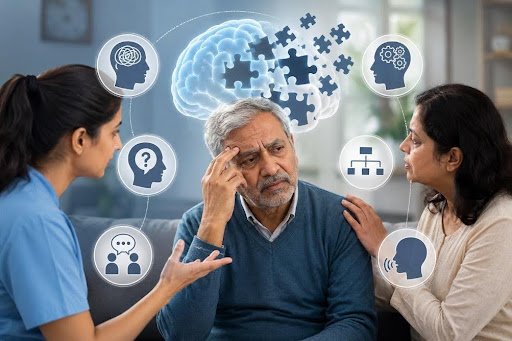
After her husband recovered from a stroke, Meera felt relieved to hear him talking again. His words were clear, and he could recognize everyone in the family. But something still wasn’t right.
He often forgot what they had just discussed. He would repeat the same questions several times, lose track of conversations, or suddenly change the topic. Family gatherings became frustrating because he interrupted others or misunderstood simple jokes.
Friends said, “At least he can talk now.”
But Meera knew that speaking was only part of communication.
What her husband was experiencing was a cognitive-communication disorder—a condition where changes in thinking, memory, attention, and problem-solving make everyday communication difficult.
What Are Cognitive-Communication Disorders?
Communication is much more than speaking words. Every conversation requires your brain to pay attention, remember information, organize thoughts, understand emotions, and respond appropriately. When these thinking skills are affected, communication becomes difficult—even if the person’s speech sounds perfectly normal.
A cognitive-communication disorder (CCD) happens when changes in brain function affect the ability to communicate effectively.
Your loved one may:
- Speak clearly but lose track of conversations
- Forget what was just said
- Have trouble organizing their thoughts
- Find it difficult to follow long discussions
- Respond in ways that seem unrelated
- Struggle to understand jokes or sarcasm
Why Communication Changes After a Brain Injury: What Families Often Notice First
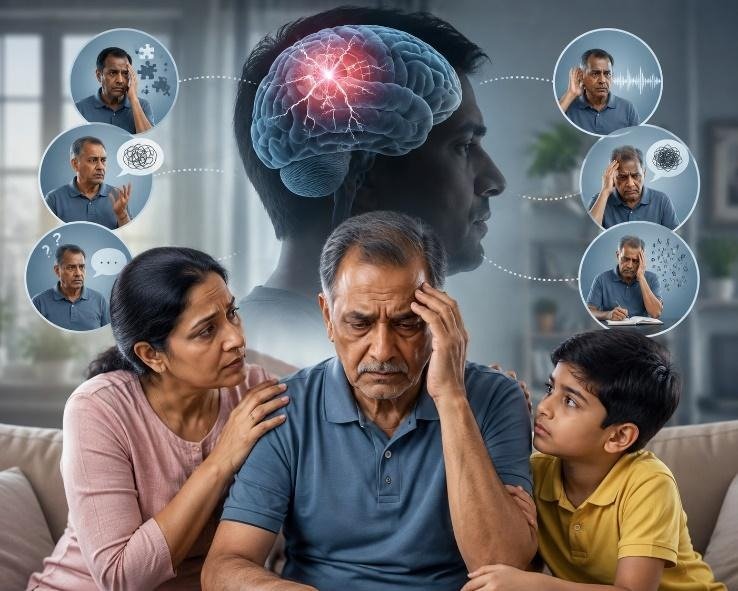
Many caregivers expect speech problems after a brain injury. What surprises them is when speech returns but communication still feels “different.”
This happens because a brain injury can affect the parts of the brain responsible for attention, memory, planning, and decision-making.
You may notice your loved one:
- Starts a story but forgets the ending
- Jumps from one topic to another
- Has difficulty following conversations
- Needs instructions repeated several times
- Takes longer to answer questions
- Becomes confused in busy environments
These changes are common after:
- Traumatic Brain Injury (TBI)
- Stroke
- Brain surgery
- Brain infections
- Lack of oxygen to the brain
Memory Problems and Communication
Imagine trying to have a conversation while forgetting parts of it every few minutes. That is what many people with cognitive-communication disorders experience.
They may:
- Ask the same question repeatedly
- Forget recent conversations
- Repeat stories without realizing it
- Misplace everyday items
- Forget appointments or medication schedules
How You Can Help
Small changes at home often make a big difference.
- Keep a daily routine.
- Write important information on a whiteboard or notebook.
- Use phone reminders and calendars.
- Repeat information calmly without showing frustration.
- Give one piece of information at a time.
Attention Difficulties and Everyday Conversations
Have you ever tried reading a book while several people were talking around you? For someone with attention difficulties, that feeling can happen during ordinary conversations.
Your loved one may:
- Lose focus quickly
- Become distracted by television or background noise
- Miss important parts of conversations
- Find group discussions overwhelming
- Need questions repeated several times
Simple Ways to Make Conversations Easier
You don’t need expensive equipment—just a few practical changes.
- Turn off the television while talking.
- Reduce background noise.
- Maintain eye contact before speaking.
- Speak slowly and clearly.
- Give enough time for responses.
These simple habits reduce stress and improve understanding.
Executive Function Skills and Communication
Executive functions are the brain’s “manager.” They help us plan, organize, solve problems, and control our behaviour during conversations.
When these skills are affected, your loved one may:
- Interrupt others without realizing it
- Speak impulsively
- Have difficulty planning what to say
- Lose track of conversations
- Find decision-making difficult
- Struggle with everyday tasks
This does not mean they have forgotten good manners. Their brain simply needs extra support to organize thoughts and actions. Speech-language therapy teaches practical strategies that help rebuild these important life skills.
Cognitive-Communication Challenges After Stroke
Stroke affects everyone differently. Some people have difficulty speaking, while others speak normally but struggle with thinking and communication.
For example, Rajesh, a 60-year-old accountant, recovered physically after his stroke. His speech sounded normal, but he found it difficult to remember instructions, manage finances, or participate in family discussions.
His family initially thought he was becoming careless. After meeting a speech-language pathologist, they learned that these were common cognitive-communication challenges after stroke. With therapy and family support, Rajesh gradually improved his confidence and independence.
If your loved one has had a stroke, watch for changes such as:
- Forgetfulness
- Slow thinking
- Difficulty solving problems
- Trouble following conversations
- Reduced attention
- Poor organization
Supporting Communication After Traumatic Brain Injury
Recovery after a traumatic brain injury is often a long journey—not a race. Some days will feel encouraging, while others may seem challenging.
As a caregiver, your support makes an enormous difference.
Helpful Strategies
- Speak using short, simple sentences.
- Give one instruction at a time.
- Allow extra time for responses.
- Encourage the use of notebooks and reminders.
- Break large tasks into smaller steps.
- Praise progress instead of focusing on mistakes.
Communication Changes in Dementia
Dementia gradually affects memory, thinking, and communication.
Your loved one may:
- Forget familiar words
- Repeat questions
- Lose track of conversations
- Become confused about people or places
- Have difficulty expressing ideas
- Misunderstand what others are saying
Communicating with Compassion
You can help by:
- Speaking slowly.
- Using short sentences.
- Asking one question at a time.
- Using pictures or gestures when needed.
- Giving reassurance instead of correcting every mistake.
Strategies for Caregivers and Families
Living with a cognitive-communication disorder affects the whole family.
The good news is that your everyday support plays a powerful role in recovery.
- Create a Calm Environment
Choose quiet places for conversations whenever possible.
- Be Patient
Allow your loved one enough time to think before responding.
- Keep Instructions Simple
Break tasks into smaller, manageable steps.
- Use Visual Supports
Calendars, labels, reminder notes, and smartphone alarms can improve independence.
- Encourage Participation
Include your loved one in conversations and family decisions.
- Celebrate Small Victories
Every successful conversation is progress worth appreciating. Your encouragement helps rebuild confidence one conversation at a time.
Rehabilitation and Recovery of Cognitive-Communication Skills
Many caregivers ask,
“Will my loved one ever improve?”
The answer is often yes.
Recovery depends on:
- The cause of the brain injury
- How early therapy begins
- Regular practice
- Family involvement
- Overall health
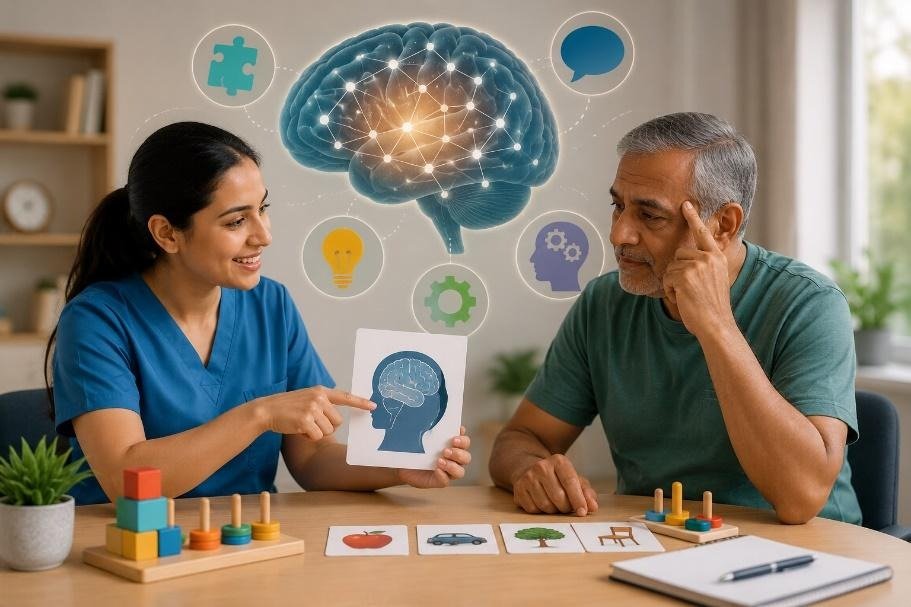
A Speech-Language Pathologist (SLP) evaluates both thinking and communication skills and designs a personalized therapy program.
Treatment may include:
- Memory training
- Attention-building activities
- Problem-solving exercises
- Organization strategies
- Social communication practice
- Everyday conversation training
A Final Message of Hope
Watching someone you love struggle with communication can be difficult, but remember—you are not alone. With patience, family support, and the right therapy, many people with cognitive-communication disorders can improve their communication skills and regain confidence.
At aaziban Care Center, our experienced speech-language pathologists provide personalized therapy and practical guidance to help individuals improve communication, memory, attention, and daily living skills. We also support families with strategies to continue progress at home.
Recovery is not about speaking perfectly—it’s about reconnecting with loved ones, building confidence, and enjoying everyday life again.
1. What are cognitive-communication disorders?
Cognitive-communication disorders are communication difficulties caused by problems with thinking skills such as memory, attention, problem-solving, and organization. They often occur after conditions like stroke, traumatic brain injury, or dementia.
2. What are the common signs of a cognitive-communication disorder?
Common signs include forgetting recent conversations, repeating questions, losing track of discussions, difficulty following instructions, poor attention, and trouble organizing thoughts or expressing ideas clearly.
3. Can cognitive-communication disorders improve with therapy?
Yes. Many people improve with early intervention, regular speech-language therapy, consistent practice, and strong family support. Recovery varies depending on the cause and severity of the condition.
4. How can caregivers support someone with a cognitive-communication disorder?
Caregivers can help by speaking slowly, giving one instruction at a time, reducing background noise, using reminders or visual aids, allowing extra time for responses, and encouraging the person with patience and understanding
Need Personalized Guidance for Speech Therapy?
Our senior certified therapists at Aaziban Care Center provide customized 1-on-1 evaluation and treatment plans at our care centers.