

One evening, 5-year-old Aarav sat at the dining table with his family. While everyone enjoyed dinner, he struggled to swallow even a small spoonful of food. He coughed after every sip of water, and mealtimes often ended with tears and frustration. His parents thought he was simply a “fussy eater.” But after visiting a speech-language pathologist, they learned that Aarav had swallowing and feeding difficulties.
Many parents and caregivers go through a similar experience. Swallowing and feeding problems are more common than many people realize, and they can affect children, older adults, and people recovering from illnesses such as stroke. The good news is that with early support, proper therapy, and patience, most individuals can eat more safely and comfortably.
Let’s understand these challenges and learn how you can help your loved one.
Understanding Swallowing Difficulties (Dysphagia)
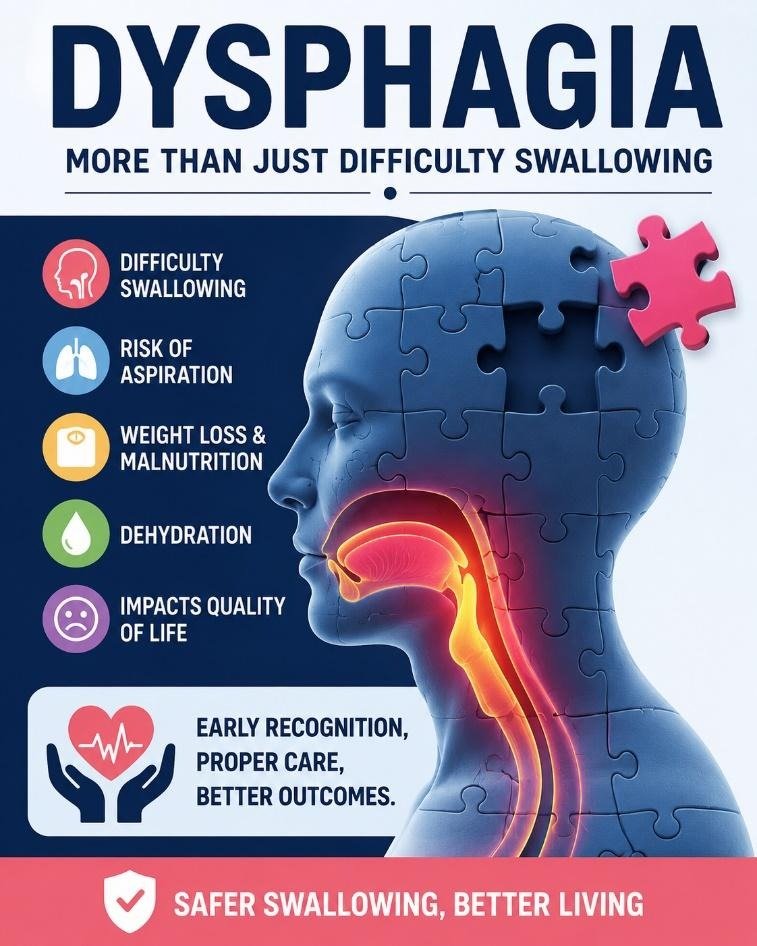
Swallowing may seem simple, but it is actually one of the body’s most complex actions. Every time we eat or drink, our mouth, tongue, throat, muscles, and brain work together to move food safely into the stomach.
When this process becomes difficult, it is called dysphagia, or swallowing difficulty.
Some people also experience feeding difficulties, which means they struggle with eating, chewing, accepting different foods, or feeding themselves.
Swallowing and feeding difficulties can affect:
- Babies learning to feed
- Children with developmental delays
- Adults recovering from stroke
- Older adults
- People with neurological conditions such as Parkinson’s disease or cerebral palsy
These difficulties are not anyone’s fault. They are medical conditions that deserve proper care and understanding.
Warning Signs of Dysphagia
As a caregiver, you know your loved one better than anyone else. Small changes during mealtimes can be important clues.
Watch for signs like:
- Coughing while eating or drinking
- Choking during meals
- Taking a very long time to finish food
- Difficulty chewing
- Food staying inside the mouth
- Wet or gurgly voice after swallowing
- Drooling
- Frequent chest infections
- Losing weight without trying
- Refusing certain foods because they are difficult to swallow
If you notice these signs regularly, don’t wait. Early assessment can prevent complications and make eating safer.
When Mealtimes Become a Challenge: Feeding Difficulties in Children
Every child develops at a different pace. However, if your child regularly struggles during meals, it may be more than just picky eating.
Some children may:
- Eat only a few favorite foods
- Refuse foods with certain textures
- Gag easily
- Keep food in their mouth without swallowing
- Take more than an hour to finish a meal
- Avoid chewing solid foods
These challenges are often seen in children with:
- Autism Spectrum Disorder (ASD)
- Cerebral palsy
- Down syndrome
- Developmental delay
- Sensory processing difficulties
Remember, your child is not being stubborn. They may genuinely find eating difficult. With the right support, many children gradually become more confident during mealtimes.
Safe Eating Strategies for Older Adults
As people grow older, swallowing muscles may become weaker. Conditions such as stroke, Parkinson’s disease, or dementia can also affect swallowing.
You can make mealtimes safer by following a few simple habits:
- Help the person sit upright while eating.
- Encourage small bites and slow chewing.
- Offer small sips instead of large gulps.
- Avoid distractions like television during meals.
- Allow enough time to finish eating without rushing.
- Keep them sitting upright for at least 30 minutes after meals.

Swallowing Problems After Stroke
After a stroke, many people experience weakness in the muscles that control swallowing.
Take the example of Mr. Sharma, a 62-year-old who had recently recovered from a stroke. Although he was eager to return to normal life, every sip of water made him cough. His family became worried that he might choke.
After a swallowing assessment, his speech-language pathologist taught him safer swallowing techniques and exercises. Over time, with regular practice and family support, eating became much easier and safer.
This story reminds us that swallowing problems after stroke are common—and they can improve with timely rehabilitation.
Is Coughing During Meals Normal? Knowing When to Seek Help

Everyone coughs occasionally while eating too quickly. But frequent coughing during meals should never be ignored.
Regular coughing may mean that food or liquid is entering the airway instead of the food pipe.
You should seek professional help if your loved one:
- Coughs during most meals
- Chokes while drinking water
- Develops repeated chest infections
- Has a wet voice after swallowing
- Avoids eating because swallowing feels difficult
Nutrition and Swallowing Disorders
Good nutrition helps children grow, supports healing, and keeps the body strong.
When swallowing becomes difficult, people often eat less because meals are tiring or uncomfortable. This can lead to:
- Weight loss
- Poor growth in children
- Weakness
- Dehydration
- Reduced immunity
- Slow recovery from illness
Healthcare professionals may recommend softer foods, thickened liquids, or smaller, more frequent meals to ensure that the person receives enough nutrition safely.
Remember, eating safely is just as important as eating enough.
Role of Speech-Language Pathologists in Dysphagia
Many people believe speech therapists only help with speaking. In reality, speech-language pathologists also specialize in swallowing and feeding disorders.
They can help by:
- Assessing swallowing ability
- Identifying the cause of swallowing difficulty
- Teaching swallowing exercises
- Improving chewing and oral muscle strength
- Recommending safer food textures
- Guiding caregivers on safe feeding techniques
Their goal is simple—to help your loved one eat safely, comfortably, and with confidence.
Feeding Difficulties in Neurodevelopmental Disorders
Children with neurodevelopmental disorders often experience unique feeding challenges.
For example, a child with autism may refuse certain textures because they feel uncomfortable. Another child with cerebral palsy may struggle because chewing muscles are weak.
These children may:
- Eat only foods of one texture
- Refuse new foods
- Have difficulty chewing
- Take a long time to eat
- Need help feeding themselves
Therapy focuses on making mealtimes enjoyable while gradually improving feeding skills, oral muscle control, and confidence.
Progress may seem slow at first, but every small success is worth celebrating.
Improving Safety and Quality of Life
Swallowing and feeding difficulties affect more than nutrition. They can make family meals stressful and reduce a person’s confidence.
As a caregiver, your encouragement makes a tremendous difference.
You can support your loved one by:
- Staying patient during meals
- Following the therapist’s advice consistently
- Offering foods with recommended textures
- Never forcing someone to eat
- Praising every small achievement
- Watching carefully for signs of choking or coughing
Remember, improvement often happens step by step. What feels difficult today may become much easier with time, practice, and professional guidance.
Final Takeaway
Watching someone struggle to eat can be heartbreaking, but you are not alone. Swallowing and feeding difficulties are manageable with the right care, early intervention, and ongoing support. The sooner these challenges are identified, the better the chances of improving safety, nutrition, and overall quality of life.
At aaziban Care Center, experienced speech-language pathologists work closely with children, adults, and caregivers to assess swallowing and feeding difficulties, create personalized therapy plans, and build confidence during mealtimes. With compassionate care and family involvement, every meal can become a safer, happier, and healthier experience.
1. What is dysphagia?
Dysphagia is a swallowing disorder that makes it difficult to swallow food, liquids, or saliva safely. It can affect people of all ages and may increase the risk of choking, aspiration, and poor nutrition if left untreated.
2. What are the common signs of swallowing difficulties?
Common signs include coughing or choking during meals, difficulty chewing, food remaining in the mouth, a wet or gurgly voice after swallowing, frequent chest infections, unexplained weight loss, and taking a long time to finish meals.
3. Can dysphagia improve with treatment?
Yes. Many people with dysphagia improve through early assessment, swallowing therapy, exercises, dietary modifications, and guidance from a speech-language pathologist. Progress depends on the underlying cause and consistent therapy.
4. When should I seek professional help for swallowing problems?
You should seek professional help if swallowing difficulties occur regularly, your loved one frequently coughs or chokes while eating or drinking, develops repeated chest infections, avoids eating because of swallowing problems, or experiences unexplained weight loss. Early intervention can improve safety and quality of life.
Need Personalized Guidance for Speech Therapy?
Our senior certified therapists at Aaziban Care Center provide customized 1-on-1 evaluation and treatment plans at our care centers.