Introduction
Median nerve injury is a common peripheral nerve condition affecting hand function, grip strength, and fine motor skills. It remarkably impacts daily activities, especially tasks requiring precision and coordination.
Definition
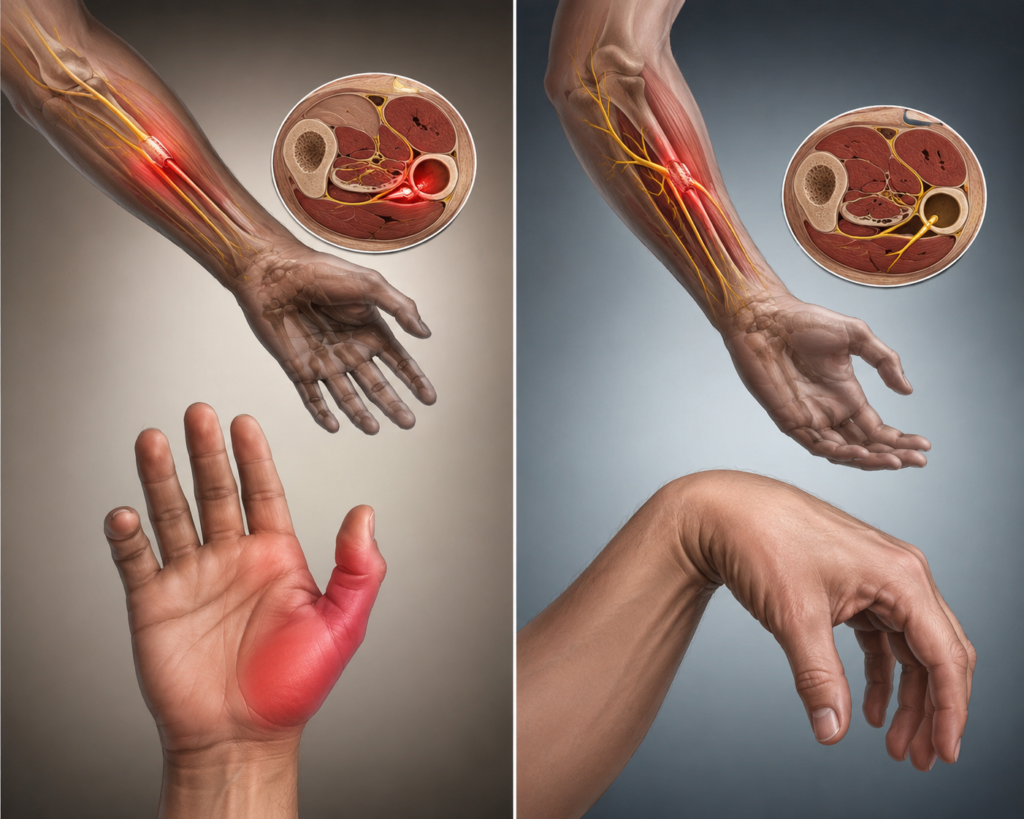
Median nerve injury refers to damage or compression of the median nerve, which supplies motor and sensory innervation to parts of the forearm and hand. It can result in weakness, sensory loss, and impaired hand movements.
Etiology
- Trauma, such as wrist or forearm fractures
- Compression conditions like Carpal Tunnel Syndrome
- Penetrating injuries or deep lacerations
- Repetitive strain or overuse
- Iatrogenic causes (surgical complications)
- Prolonged pressure on the nerve
Clinical Features
- Weakness of thumb opposition and flexion
- Loss of fine motor coordination
- Difficulty in gripping or pinching
- Atrophy of the thenar muscles
- Functional impairment in hand activities
Signs and Symptoms
- Numbness and tingling in the thumb, index, middle, and half of the ring finger
- “Ape thumb” deformity due to loss of opposition
- Decreased sensation in the median nerve distribution
- Positive Tinel’s or Phalen’s test
- Weak wrist and finger flexion
Complications
- Permanent sensory deficits
- Muscle wasting and thenar atrophy
- Loss of hand dexterity
- Chronic pain or neuropathic pain
- Functional disability in daily tasks
Risk Factors
- Repetitive hand movements (typing, manual work)
- Wrist trauma or fractures
- Diabetes and other metabolic disorders
- Poor ergonomics
- Occupational hazards (vibration tools)
- Prolonged immobilization
Physiotherapy Management
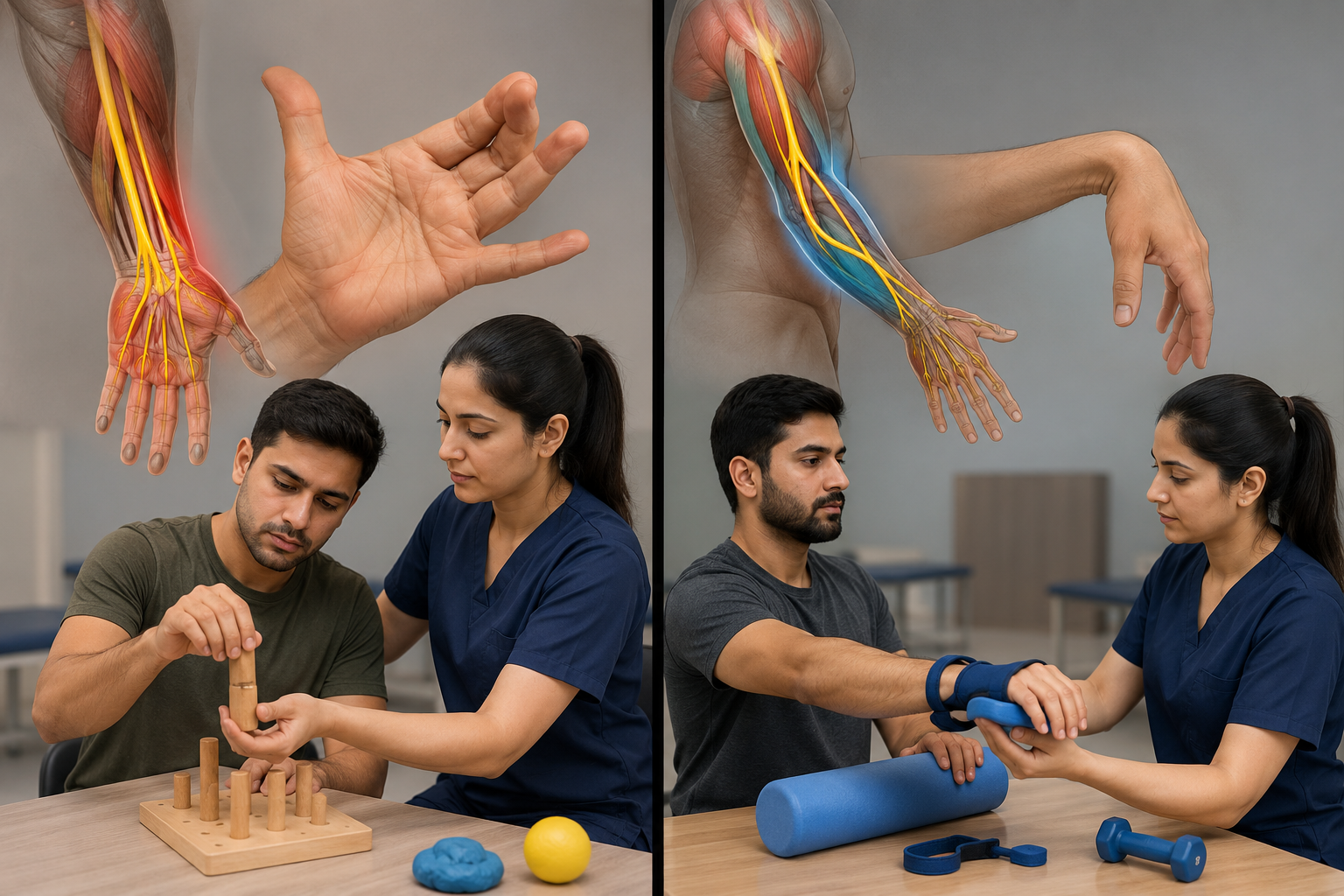
- Pain Management: Use of TENS, ice, or heat therapy
- Range of Motion Exercises: Maintain joint flexibility
- Splinting: Wrist splints to decrease nerve compression
- Nerve Gliding Exercises: Improve nerve mobility
- Strengthening Exercises: Focus on the thenar muscles and grip strength
- Ergonomic Training: Correct posture and work modifications
- Functional Training: Restore hand coordination and daily activities
- Patient Education: Prevent recurrence and promote compliance
Conclusion
Median Nerve Injury can remarkably impair hand function, but early diagnosis and targeted rehabilitation can lead to excellent recovery. A structured physiotherapy program plays a crucial role in restoring strength, mobility, and functional independence.
What is Median nerve injury?
Median nerve injury is damage or compression of the median nerve causing weakness, sensory loss, and impaired hand movements.
What are common symptoms of median nerve injury?
Numbness, tingling in fingers, “ape thumb” deformity, weak grip, and decreased sensation in the hand.
How is median nerve injury managed physiotherapeutically?
It is managed with splinting, ROM exercises, nerve gliding, strengthening, pain management, and ergonomic training.
Need Personalized Guidance for Physiotherapy?
Our senior certified therapists at Aaziban Care Center provide customized 1-on-1 evaluation and treatment plans at our care centers.