Introduction
Ulnar nerve injury is a significant peripheral nerve disorder affecting hand function, grip strength, and coordination. It commonly interferes with fine motor activities and daily tasks, especially those requiring precision.
Definition
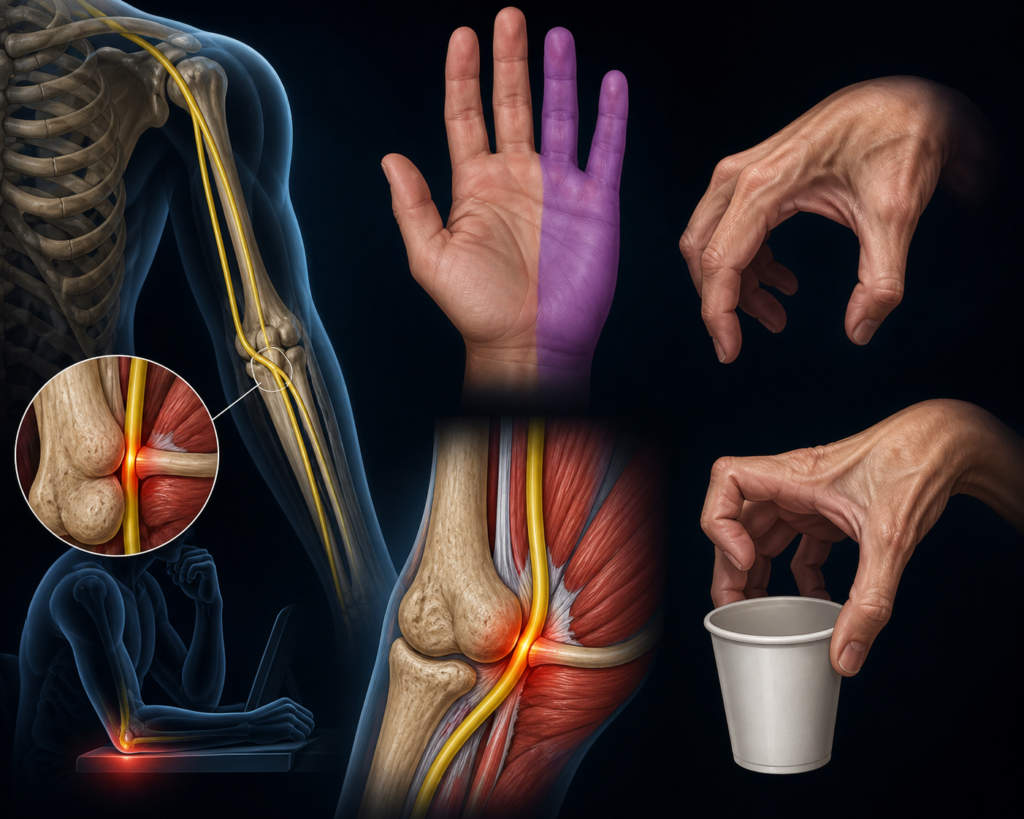
Ulnar nerve injury refers to damage or compression of the ulnar nerve along its anatomical pathway, most frequently at the elbow (cubital tunnel) or wrist (Guyon’s canal), resulting in sensory and motor deficits.
Etiology
- Trauma (fractures, dislocations around the elbow)
- Prolonged compression (leaning on elbows)
- Repetitive strain or overuse
- Entrapment neuropathy (cubital tunnel syndrome)
- Iatrogenic causes (post-surgical complications)
Clinical Features
- Weakness in intrinsic hand muscles
- Difficulty in finger abduction and adduction
- Reduced grip strength
- Clawing of the ring and little fingers in chronic cases
Signs and Symptoms
- Numbness and tingling in the 4th and 5th digits
- Positive Tinel’s sign at the elbow
- Froment’s sign (thumb compensation due to weakness)
- Muscle wasting in the hypothenar eminence
- Sensory loss along the ulnar nerve distribution
Complications
- Permanent muscle atrophy
- Claw hand deformity
- Loss of fine motor skills
- Chronic pain and functional disability
Risk Factors
- Occupations involving repetitive elbow flexion
- Prolonged pressure on the elbow
- Diabetes mellitus and other neuropathies
- Previous elbow injuries
- Poor ergonomic posture
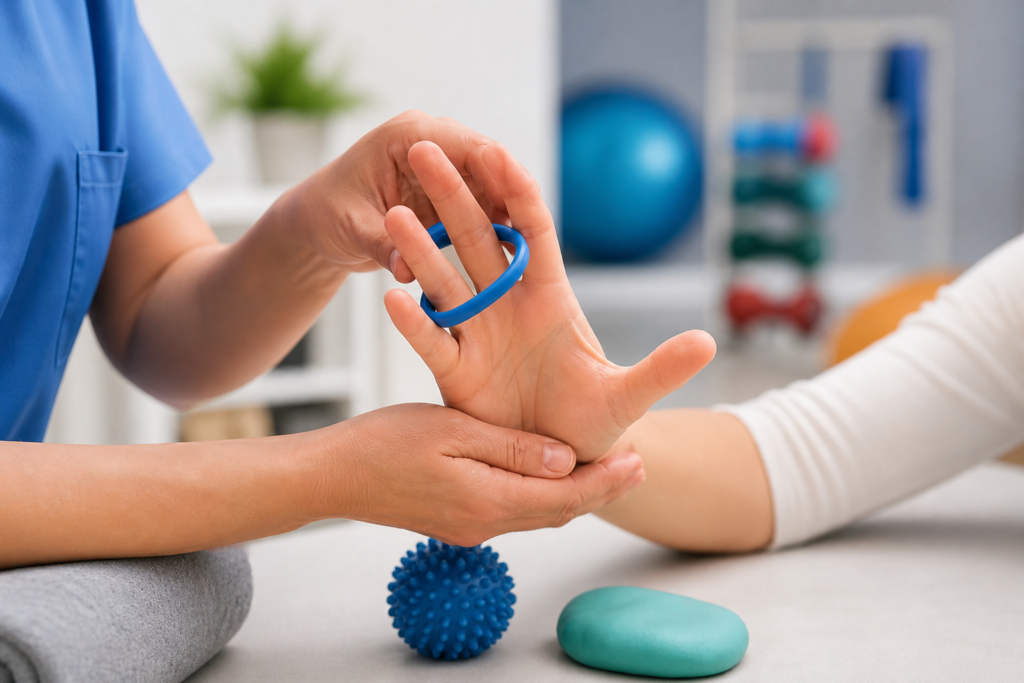
Physiotherapy Management
- Pain Management: Modalities like TENS and ultrasound therapy
- Splinting: Night splints to maintain elbow extension
- Nerve Gliding Exercises: To improve nerve mobility and reduce adhesions
- Strengthening Exercises: Focus on intrinsic hand muscles
- Stretching: Prevent muscle tightness and contractures
- Ergonomic Advice: Avoid prolonged elbow pressure and repetitive strain
- Functional Training: Improve hand coordination and dexterity
Conclusion
Ulnar Nerve Injury can significantly impact hand function and quality of life. Early diagnosis and targeted physiotherapy interventions play a crucial role in recovery, preventing complications, and restoring functional independence.
What is ulnar nerve injury?
Ulnar nerve injury is damage or compression of the ulnar nerve affecting hand sensation and movement.
What are common symptoms of ulnar nerve injury?
Numbness in the ring and little finger, weak grip, and claw hand deformity.
What is the role of physiotherapy in ulnar nerve injury?
Physiotherapy helps improve strength, restore function, and prevent deformity through exercises and splinting.
Need Personalized Guidance for Physiotherapy?
Our senior certified therapists at Aaziban Care Center provide customized 1-on-1 evaluation and treatment plans at our care centers.