Introduction
Radial nerve injury is a common peripheral nerve disorder that remarkably affects upper limb function. It mainly impairs wrist and finger extension, leading to functional limitations in daily activities. Early diagnosis and rehabilitation are essential for optimal recovery.
Definition
Radial nerve injury refers to compression or damage of the radial nerve, which originates from the brachial plexus (C5–T1) and supplies motor and sensory innervation to the posterior aspect of the arm, forearm, and hand.
Etiology
- Trauma (humeral shaft fractures)
- Prolonged external pressure (improper crutch use)
- Compression (Saturday night palsy)
- Tumors or space-occupying lesions
- Penetrating injuries (cuts, stab wounds)
Clinical Features
- Weakness or paralysis of wrist and finger extensors
- Trouble in gripping and releasing objects
- Reduced functional hand use
- Sensory disturbances along the radial nerve distribution
Signs and Symptoms
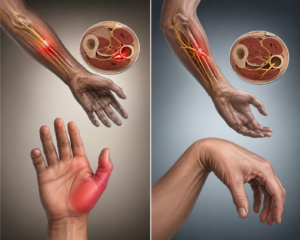
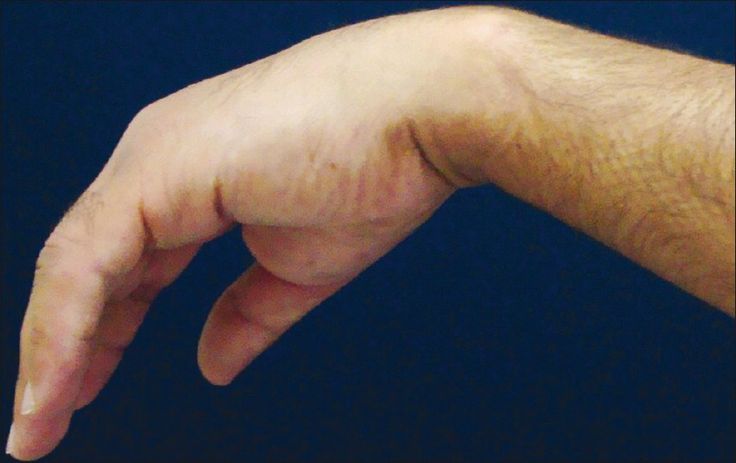
- Wrist drop (inability to extend the wrist)
- Loss of thumb extension and abduction
- Finger extension weakness
- Sensory loss over the dorsum of the hand and forearm
- Decreased or absent triceps reflex (in proximal lesions)
- Tingling or numbness
Complications
- Permanent muscle weakness or paralysis
- Muscle atrophy
- Joint stiffness and contractures
- Functional disability of the hand
- Chronic pain or neuropathic pain
Risk Factors
- High-impact trauma (road traffic accidents)
- Improper use of crutches
- Occupational hazards (repetitive strain)
- Prolonged immobilization or compression
- Poor surgical handling
- Alcohol intoxication (leading to prolonged nerve compression)
Physiotherapy Management
- Assessment: Muscle strength, sensory evaluation, and functional ability
- Electrical Stimulation: To maintain muscle activity and prevent atrophy
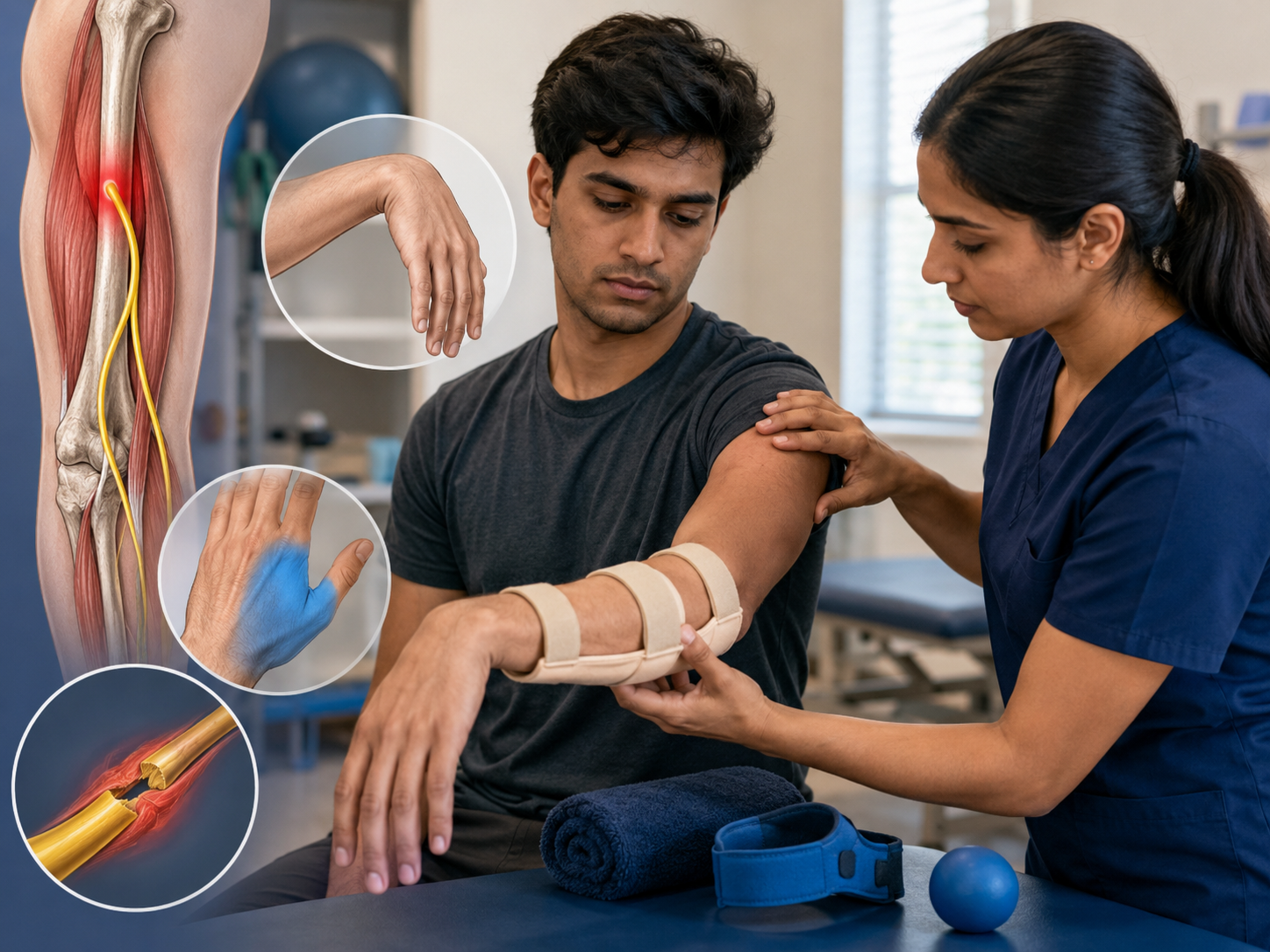
- Splinting: Use of wrist extension splints to decrease deformity
- Range of Motion Exercises: Passive and active exercises to decrease stiffness
- Strengthening Exercises: Gradual strengthening of extensor muscles
- Nerve Gliding Exercises: To promote nerve mobility and decrease adhesions
- Functional Training: Improving hand coordination and daily activities
- Patient Education: Avoiding pressure and maintaining proper positioning
Conclusion
Radial Nerve Injury can severely impact hand function but has a good prognosis with timely intervention. A structured physiotherapy program plays a vital role in restoring mobility, strength, and functional independence.
Q: What is the most common sign of radial nerve injury?
A: Wrist drop, which is the inability to extend the wrist.
Q: What are the main causes of radial nerve injury?
A: Trauma (humeral fractures), prolonged compression, improper crutch use, and penetrating injuries.
Q: How is radial nerve injury managed in physiotherapy?
A: Through splinting, electrical stimulation, exercises, nerve gliding, and functional training.
Need Personalized Guidance for Physiotherapy?
Our senior certified therapists at Aaziban Care Center provide customized 1-on-1 evaluation and treatment plans at our care centers.