Definition:
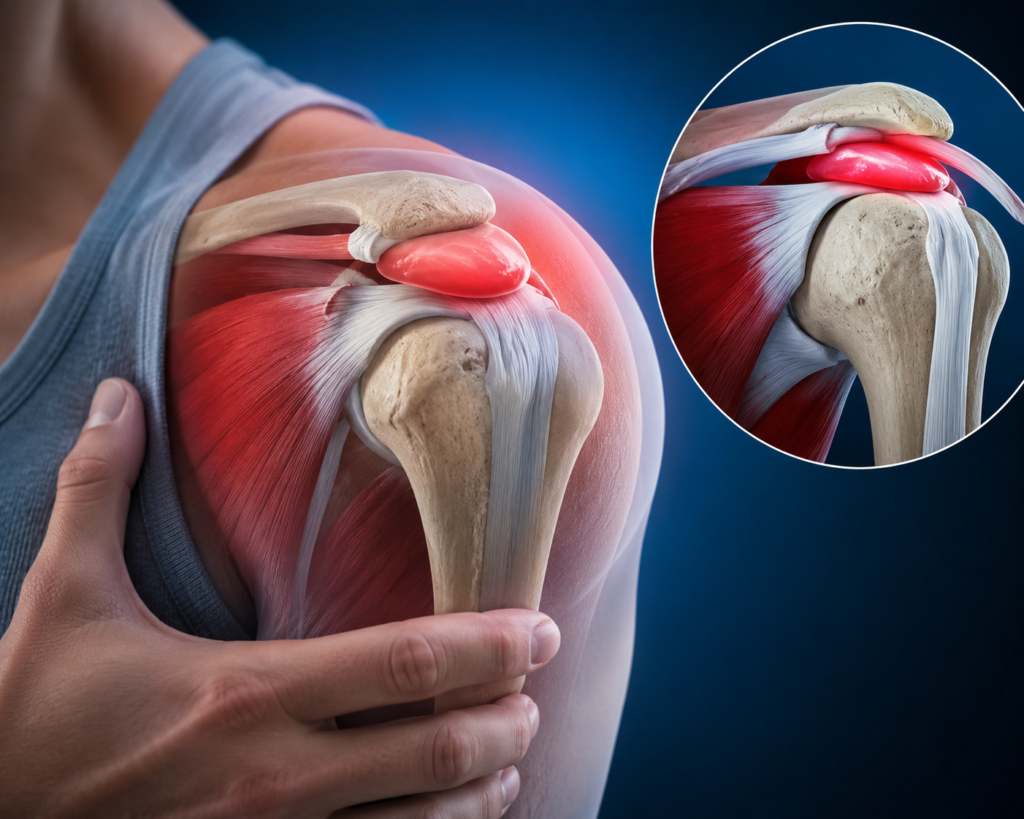
Subacromial Bursitis is the inflammation of the subacromial bursa, a fluid–filled sac located between the rotator cuff tendons and the acromion(part of the shoulder blade). This bursa acts as a cushion, reducing friction during arm movements.
Cause:
The primary cause is often repetitive overhead activities, leading to overuse and irritation of the bursa. Other contributing factors include:
- Trauma: Direct injury to the shoulder.
- Improper Biomechanics: Poor posture or movement patterns.
- Bone spurs: Acromial spurs can impinge on the bursa.
- Underlying Conditions: Rheumatoid arthritis or gout.
Clinical Features:
Patients typically experience:
- Gradual onset of shoulder pain.
- Pain worsens with arm elevation, especially overhead.
- Night pain, particularly when lying on the affected side.
- Limited range of motion due to pain.
Signs & Symptoms:
Key indicators include:
- Localized Tenderness: Pain when pressing on the top of the shoulder.
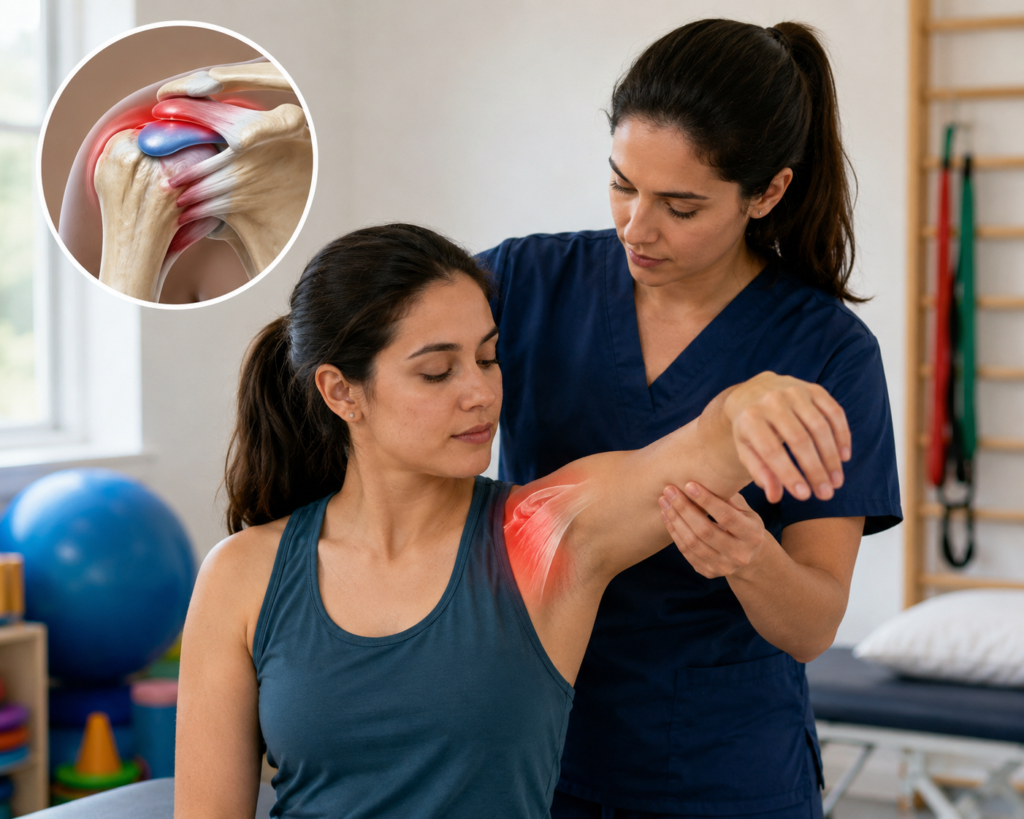
- Painful Arc: Pain between 60 and 120 degrees of arm abduction.
- Weakness: Perceived weakness due to pain, not true muscle weakness.
- Clicking/Grinding: Less common, but can occur with severe inflammation.
Physiotherapy Management:
Physiotherapy is crucial for recovery. Management often includes:
- Pain Management: Ice application, modalities like ultrasound.
- Rest and Activity Modification: Avoiding aggravating activities.
- Stretching: Gentle exercise to restore range of motion.
- Strengthening: Progressive exercise for the rotator cuff and periscapular muscles.
- Postural correction: Addressing poor posture that contributes to impingement.
- Education: guidance on proper body mechanics and activity modification.
complications:
Chronic Shoulder Pain: Persistent inflammation can lead to long-term irritation.
Reduced Range of Motion: Ongoing swelling may limit shoulder mobility.
Rotator Cuff Tendinopathy: Increased friction can irritate or damage the rotator cuff tendons.
Rotator Cuff Tear: Severe or long-standing bursitis may increase the risk of partial or full-thickness tears.
Shoulder Impingement Syndrome: Ongoing irritation can worsen impingement under the acromion.
Muscle Weakness: Due to pain inhibition, leading to reduced functional use of the arm.
Calcific Bursitis: Chronic inflammation may cause calcium deposits within the bursa.
Adhesive Capsulitis: Prolonged pain and limited movement can contribute to stiffness and capsular tightening.
Conclusion:
Subacromial Bursitis can be debilitating, but with appropriate rest, activity modification, and a structured physiotherapy program, most individuals experience significant improvement and return to their normal activities. Early intervention is key for optimal outcomes.
What is Subacromial Bursitis?
Answer: It is the inflammation of the subacromial bursa, a fluid-filled sac that reduces friction between the rotator cuff tendons and the acromion.
What are the common causes of Subacromial Bursitis?
Answer: Repetitive overhead activities, trauma, improper posture, bone spurs, and conditions like rheumatoid arthritis or gout.
How is Subacromial Bursitis managed in physiotherapy?
Answer: Treatment includes pain control, rest, stretching, strengthening exercises, postural correction, and guidance on proper body mechanics.
Need Personalized Guidance for Physiotherapy?
Our senior certified therapists at Aaziban Care Center provide customized 1-on-1 evaluation and treatment plans at our care centers.