Definition:
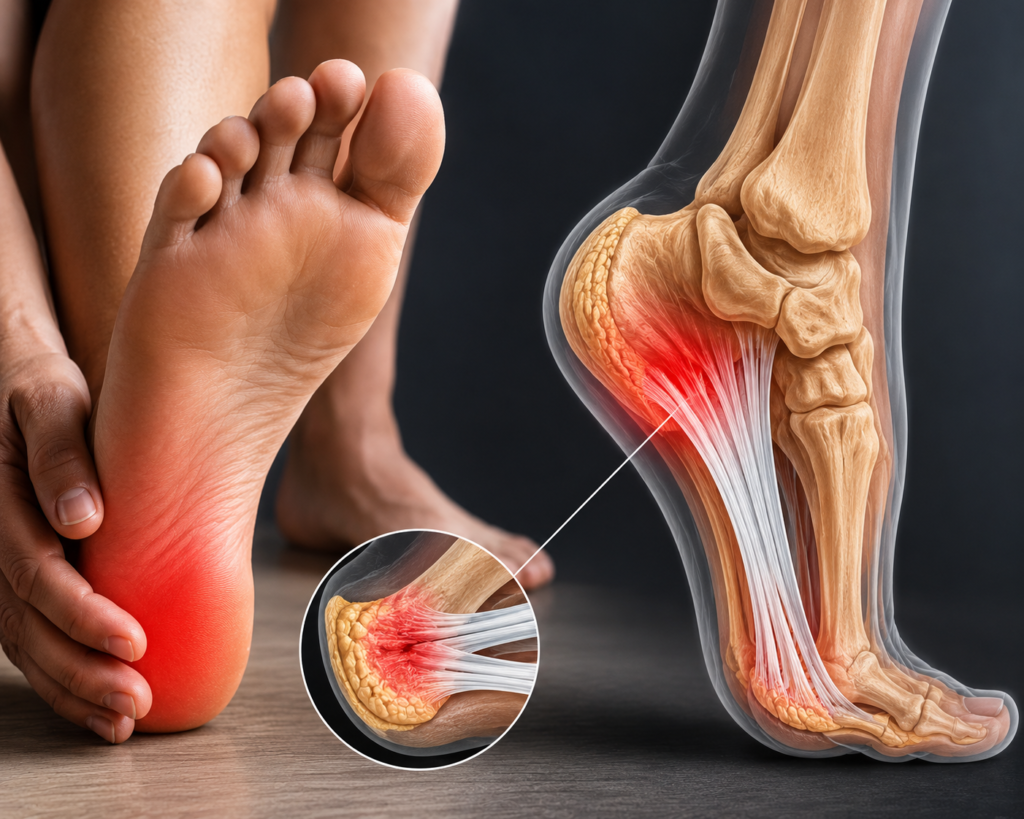
Plantar Fasciitis is defined as the inflammation or degeneration of the plantar fascia, a thick band of tissue that runs along the bottom of the foot, connecting the heel bone to the toes. This tissue acts as a natural shock absorber and supports the arch of the foot.
Causes:
The primary cause of plantar fasciitis is repetitive strain and micro–tears to the plantar fascia. Common contributing factors include:
- Overpronation: Flat feet or arches that collapse inward.
- High Arches: Insufficient shock absorption.
- Tight Calf Muscles/Achilles Tendon: Increased stress on the fascia.
- lfitting footwear: Lack of arch support or cushioning.
- Sudden increase in inactivity: Too much stress on the feet too quickly.
- Obesity: Increased load on the plantar fascia.
- Prolonged Standing: Occupations requiring long periods on one’s feet.
Clinical features:
Plantar Fasciitis typically presents with specific clinical features:
- Gradual Onset: Pain usually develops over time.
- Unilateral Pain: Most characteristic symptoms are severe with the first steps in the morning or after a period of rest.
- Pain after Activity: Worsens after exercise, not during.
Signs & Symptoms:
The hallmark signs and symptoms include:
- Sharp, stabbing Pain: Localised at the bottom of the heel.
- Tenderness to Touch: Particularly at the inner part of the heel.
- Stiffness: Especially after inactivity.
- Pain Worsens with Weight-Bearing: Especially on hard surfaces.

Physiotherapy Management:
- Stretching Exercises: Targeting the plantar fascia, calf muscle, and Achilles tendon.
- Strengthening Exercises: For intrinsic foot muscles and ankle stabilisers.
- Manual Therapy: Soft tissue mobilisation and joint mobilisations.
- Taping/Orthotics: To support the arch and reduce stress.
- Activity Modification: Advice on reducing aggravating activities.
- Footwear Advice: Recommendations for supportive shoes.
- Night Splints: To keep the foot in a dorsiflexed position overnight.
Conclusion:
Plantar Fasciitis, while painful, is a highly treatable condition. Early diagnosis and consistent adherence to a physiotherapy program are key to successful recovery and preventing chronic heel pain. Consulting a healthcare professional for a proper diagnosis and personalised treatment plan is always recommended.
What is plantar fasciitis?
Plantar fasciitis is inflammation or degeneration of the plantar fascia, the tissue that supports the foot arch and connects the heel to the toes.
What commonly causes plantar fasciitis?
It is mainly caused by repetitive strain, flat feet, high arches, tight calf muscles, poor footwear, obesity, prolonged standing, or sudden activity increases.
How is plantar fasciitis treated through physiotherapy?
Physiotherapy includes stretching, strengthening foot muscles, manual therapy, taping or orthotics, activity modification, footwear advice, and night splints.
Need Personalized Guidance for Physiotherapy?
Our senior certified therapists at Aaziban Care Center provide customized 1-on-1 evaluation and treatment plans at our care centers.