Introduction
The Paralysed Foot is a disabling condition where weakness or loss of movement affects the foot and ankle. This leads to difficulty walking, impaired balance, and long-term deformities if untreated. Early diagnosis and physiotherapy play a crucial role in restoring function and preventing complications.
Definition
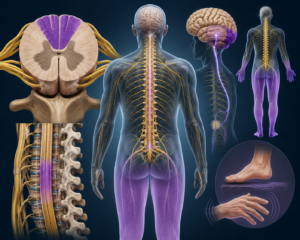
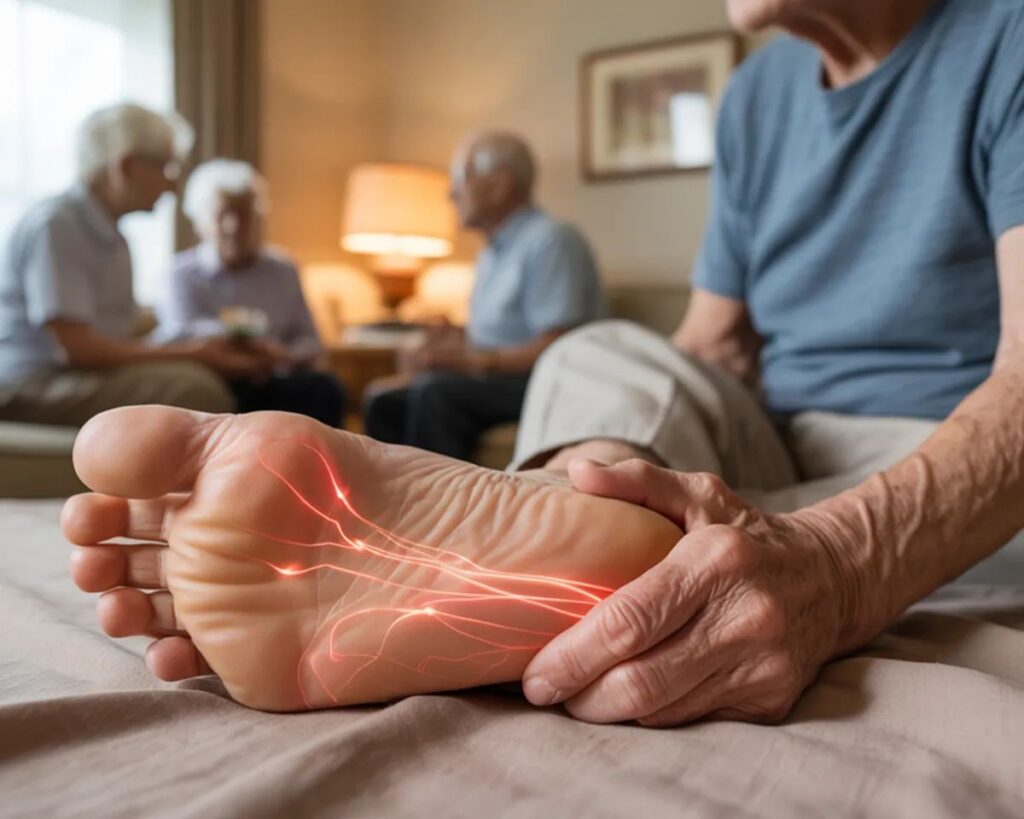
The paralysed foot refers to the partial or complete loss of motor control in foot muscles due to nerve damage, muscle disorders, or spinal involvement. It commonly results in foot drop, inability to lift the foot, and altered gait patterns.
Cause
Major causes include:
- Peripheral Nerve Injury
– Damage to the common peroneal nerve
– Compression at the fibular head
- Spinal Conditions
– Lumbar disc herniation affecting L4–L5 roots
- Neurological Disorders
– Stroke, multiple sclerosis, cerebral palsy
- Trauma
– Fractures, ligament injuries, or direct nerve trauma
- Muscle Diseases
– Muscular dystrophy, neuropathies
- Post-Surgical Complications
– After knee, hip, or spine surgeries
- Systemic Conditions
– Diabetes mellitus causing neuropathy
Clinical Features
- Difficulty lifting the front part of the foot
- High-stepping gait to avoid dragging
- Weak ankle dorsiflexion and toe extension
- Instability while walking
- Reduced muscle bulk in the lower leg
- Altered foot alignment leading to deformity
Signs and Symptoms
- Foot slapping during gait
- Numbness or tingling in the foot and toes
- Muscle weakness or complete paralysis
- Difficulty climbing stairs or walking on uneven surfaces
- Frequent stumble due to foot drag
- Pain or discomfort, depending on the underlying cause

Physiotherapy Treatment
- An orthosis, basically a ‘Foot drop splint,’ is the primary choice of treatment.
- In case of spastic cases (CP), stretching of the tibialis anterior, Ankle, and foot mobilization exercises are mandatory.
- For peripheral nerve injury and lower motor neuron lesions, a physiotherapist must arrange an S-D curve test prior to the given stimulation. According to the S-D curve, if there is denervation, start the galvanic current as early as possible.
- Motor point stimulation re-educates the muscle, especially dorsiflexors, including the Tibialis anterior, extensor digitorum, extensor hallucis longus, along with evertors, which are the target area.
- Orthotic and PT management are both important. The splint should be used overnight.
Conclusion
The Paralysed Foot significantly affects mobility, but early diagnosis and structured physiotherapy can greatly improve function. With proper strengthening, gait training, and orthotic support, many patients regain independence and prevent long-term deformities.
Q1. What is a paralysed foot?
A paralysed foot is the partial or complete loss of foot muscle control due to nerve, muscle, or spinal damage, often causing foot drop and gait abnormalities.
Q2. What are the common causes of a paralysed foot?
It is commonly caused by peroneal nerve injury, spinal conditions, neurological disorders, trauma, muscle diseases, post-surgical complications, or diabetic neuropathy.
Q3. How does physiotherapy help in paralysed foot?
Physiotherapy uses foot-drop splints, stretching, muscle stimulation, gait training, and strengthening exercises to improve mobility and prevent deformities.
Need Personalized Guidance for Physiotherapy?
Our senior certified therapists at Aaziban Care Center provide customized 1-on-1 evaluation and treatment plans at our care centers.