
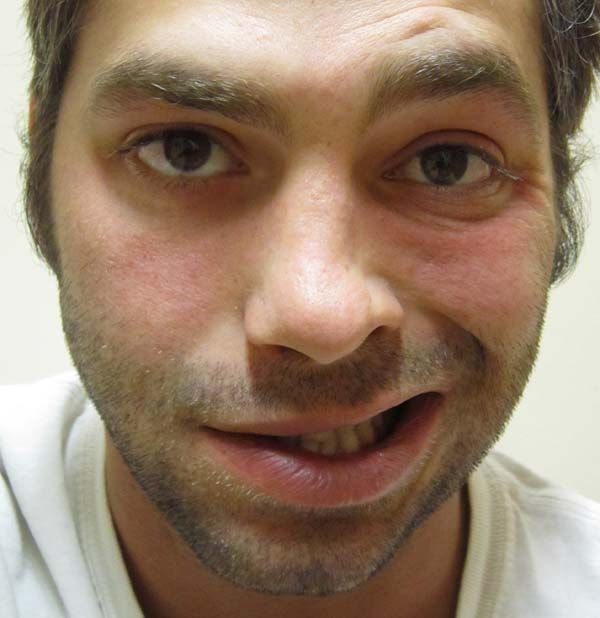
Introduction
Bell’s phenomenon is an important clinical sign commonly observed in patients with facial nerve disorders, particularly Bell’s palsy. It serves as a protective reflex of the eye, helping to prevent corneal damage when eyelid closure is impaired. Understanding this phenomenon is essential for clinicians involved in neurological and physiotherapy rehabilitation.
Definition
Bell’s phenomenon is defined as the upward and outward rolling of the eyeball that occurs when an individual attempts to close the eyes forcefully, especially when eyelid closure is incomplete due to facial nerve weakness.
Etiology
Bell’s phenomenon itself is a normal physiological response, but it becomes clinically crucial in pathological conditions such as:
- Bell’s palsy (facial nerve paralysis)
- Facial nerve injury or trauma
- Neurological disorders affecting cranial nerve VII
- Post-surgical facial nerve damage
- Central nervous system lesions in rare cases
It is primarily associated with dysfunction of the orbicularis oculi muscle due to facial nerve involvement.
Clinical Features
Key clinical features include:
- Upward deviation of the eyeball on attempted eye closure
- Visible sclera when trying to close the eyes
- Incomplete or absent eyelid closure
- Associated facial muscle weakness
- Dryness or irritation of the affected eye
This sign is often used clinically to assess facial nerve integrity.
Complications
If not properly managed, associated conditions may lead to:
- Exposure keratitis due to incomplete eye closure
- Increased risk of eye infections
- Corneal dryness and ulceration
- Visual discomfort and blurred vision
- Long-term ocular complications in severe cases
Investigation
Diagnosis is mainly clinical, supported by:
- Physical examination of facial movements
- Cranial nerve assessment (especially the facial nerve)
- Imaging studies (MRI/CT) in suspected central lesions
- Electromyography (EMG) for nerve function evaluation
- Ophthalmological evaluation for corneal integrity

Physiotherapy Management
Physiotherapy plays an important role in managing underlying facial nerve dysfunction:
- Facial muscle exercises: Improve strength and coordination
- Electrical stimulation: Facilitate muscle activation when indicated
- Neuromuscular re-education: Enhance facial symmetry and control
- Eye care education: Teach protective strategies like eye patching or lubrication
- Biofeedback training: Improve voluntary muscle control
- Massage techniques: Decreased stiffness and improved circulation
A multidisciplinary approach involving physiotherapists, neurologists, and ophthalmologists is essential.
Conclusion
Bell’s phenomenon is a protective ocular reflex that becomes clinically relevant in facial nerve paralysis. Early identification and appropriate management of the underlying condition, along with physiotherapy and eye care, are vital to prevent complications and ensure optimal recovery.
Q: What is Bell’s phenomenon?
A: It is the upward and outward movement of the eyeball when attempting to close the eyes, especially in facial nerve weakness.
Q: In which condition is Bell’s phenomenon commonly seen?
A: It is commonly observed in Bell’s palsy and other facial nerve disorders.
Q: What is the clinical importance of Bell’s phenomenon?
A: It helps protect the cornea when eyelid closure is incomplete and aids in assessing facial nerve function.