
Introduction
Hallux valgus, commonly known as a bunion, is a progressive foot deformity affecting the big toe joint. It often leads to pain, difficulty walking, and reduced quality of life. Understanding the condition and its management is crucial for preventing long-term complications.
Definition
Hallux valgus is the commonest of the foot deformities and probably of all musculoskeletal deformities. Here, the big toe is not in line and assumes a valgus position, but only if the angulation is excessive is it referred to as ‘hallux valgus’. Hallux valgus is common in rheumatoid arthritis. A family history is obtained in about 60% of cases.
Cause
Common causes and contributing factors include:
- Genetic Predisposition: Family history of bunions increases risk.
- Footwear: Tight, narrow, or high-heeled shoes contribute to deformity.
- Foot Structure: Flat feet, hypermobility, and ligament laxity can accelerate misalignment.
- Arthritis: Conditions like rheumatoid arthritis affect joint stability.
- Trauma: Previous injuries to the big toe joint may change alignment.
- Muscle Imbalance: Weak intrinsic foot muscles fail to support the arch.
Clinical Features
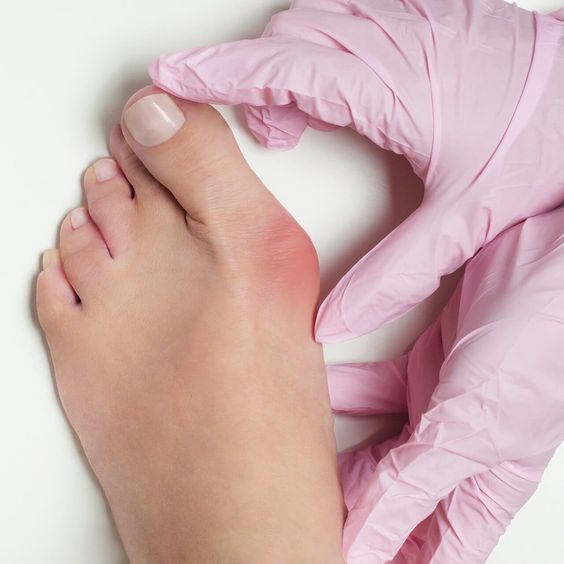
- Visible bony bump at the base of the big toe.
- Lateral deviation of the hallux toward the second toe.
- Redness or swelling around the first metatarsophalangeal (MTP) joint.
- Decreased toe mobility and altered foot biomechanics.
- Footwear difficulty due to pressure on the bunion.
Signs and Symptoms
- Pain around the big toe joint, especially during walking.
- Burning or aching sensation over the bunion.
- Callus formation under the second metatarsal head.
- Overlapping or crowding of toes.
- Reduced balance and gait changes.
- Difficulty wearing fashionable footwear.

Physiotherapy Treatment
1) A Rocker-soled shoe stops pain by allowing the foot to ‘roll’ without the necessity for dorsiflexion at the metatarsophalangeal joint.
2) A silicon toe separator is sometimes used for pain relief and to prevent deformity. 3) Orthotic management, as well as exercises, is a very important part of treatment.
4) Joint mobilisation and specially designated intrinsic strengthening exercises are helpful to prevent the deformity.
5) Faradic foot baths are also helpful for strengthening and re-educational purposes of intrinsic.
Conclusion
Hallux valgus is a common but manageable condition. Early intervention through proper footwear, physiotherapy, and lifestyle adjustments can slow progression, relieve pain, and improve foot function. Tracking timely professional care ensures better long-term outcomes.
What is Hallux Valgus?
Hallux valgus is a deformity where the big toe deviates outward, forming a bony bump (bunion) at the big toe joint.
What causes Hallux Valgus?
It is commonly caused by genetics, improper footwear, flat feet, arthritis, trauma, and muscle imbalance.
How is Hallux Valgus managed with physiotherapy?
Physiotherapy includes orthotics, toe separators, joint mobilization, intrinsic foot strengthening, rocker-soled shoes, and faradic foot baths.