Introduction
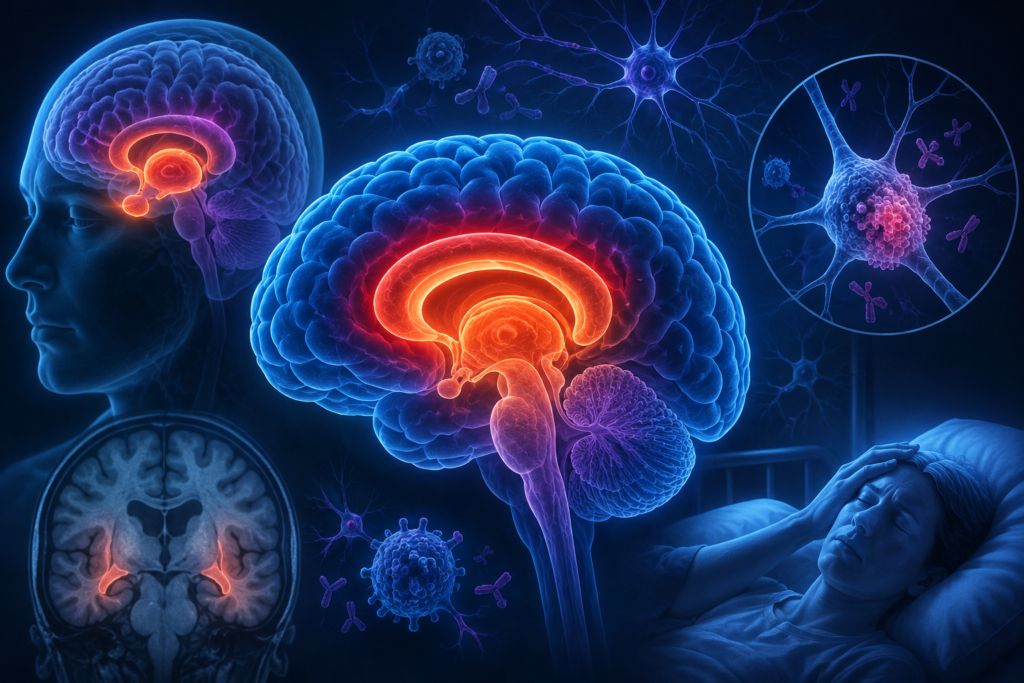
Limbic encephalitis is a rare but serious neurological disorder that causes inflammation of the limbic system, the part of the brain responsible for memory, emotions, and behavior. It may develop rapidly over days or weeks and can affect people of all ages. Early diagnosis and prompt treatment improve the chances of recovery and help decreased long-term neurological complications.
Definition
Limbic encephalitis is an inflammatory condition involving the limbic structures of the brain. It is commonly associated with autoimmune reactions, infections, or certain cancers (paraneoplastic syndrome), leading to cognitive, emotional, and neurological dysfunction.
Etiology
- Autoimmune disorders (e.g., anti-NMDA receptor, LGI1, CASPR2 antibodies)
- Paraneoplastic syndromes linked to lung, breast, ovarian, or testicular cancers
- Viral infections, especially herpes simplex virus (HSV)
- Other immune-mediated inflammatory conditions
- Rarely, unknown (idiopathic) causes
Clinical Features
- Sudden or gradual memory impairment
- Mood disturbances such as anxiety or depression
- Behavioral and personality changes
- Confusion and decreased concentration
- Seizures
- Difficulty performing daily activities
- Sleep disturbances
- Cognitive decline
Signs and Symptoms
- Short-term memory loss
- Recurrent seizures
- Hallucinations or psychosis
- Confusion or disorientation
- Emotional instability or irritability
- Speech and language difficulties
- Decreased level of consciousness in severe cases
- Balance and coordination problems
- Fatigue and generalized weakness

Physiotherapy Management
- Assess mobility, balance, muscle strength, and functional abilities.
- Provide gait training to improve walking safety and independence.
- Perform balance and coordination exercises to decreased fall risk.
- Use strengthening exercises to restore muscle function after prolonged illness.
- Incorporate flexibility and range-of-motion exercises to prevent stiffness.
- Introduce endurance training to improve physical capacity.
- Teach functional task training for activities of daily living.
- Recommend posture correction and ergonomic strategies.
- Educate caregivers on safe mobility and home exercise programs.
- Collaborate with neurologists, occupational therapists, and speech therapists for comprehensive rehabilitation.
Complications
- Persistent memory impairment
- Chronic epilepsy
- Depression and anxiety disorders
- Cognitive dysfunction
- Functional disability
- Sleep disorders
- decreased quality of life
- Rarely, life-threatening neurological deterioration
Risk Factors
- Autoimmune diseases
- Previous viral encephalitis
- Underlying malignancy
- Family history of autoimmune disorders
- Middle-aged and older adults (certain autoimmune forms)
- Delayed diagnosis or treatment
- Immunological abnormalities
Conclusion
Limbic encephalitis is a neurological emergency that requires early recognition and multidisciplinary treatment. Appropriate medical care combined with physiotherapy rehabilitation can improve mobility, functional independence, balance, and overall quality of life. Continuous follow-up and individualized rehabilitation programs play a crucial role in achieving the best possible recovery.
What is limbic encephalitis?
Answer: Limbic encephalitis is a rare neurological disorder that causes inflammation of the brain’s limbic system, affecting memory, emotions, behavior, and thinking.
What are the common symptoms of limbic encephalitis?
Answer: Common symptoms include memory loss, seizures, confusion, personality changes, hallucinations, speech difficulties, and balance problems.
How does physiotherapy help in limbic encephalitis?
Answer: Physiotherapy improves balance, walking, muscle strength, mobility, endurance, and independence while reducing the risk of falls during recovery.
Need Personalized Guidance for Physiotherapy?
Our senior certified therapists at Aaziban Care Center provide customized 1-on-1 evaluation and treatment plans at our care centers.