Introduction
Lower motor neuron (LMN) lesions are neurological conditions that directly affect the peripheral motor pathways responsible for muscle contraction. These lesions remarkably impair voluntary movements and can lead to long-term disability if not managed early.
Definition
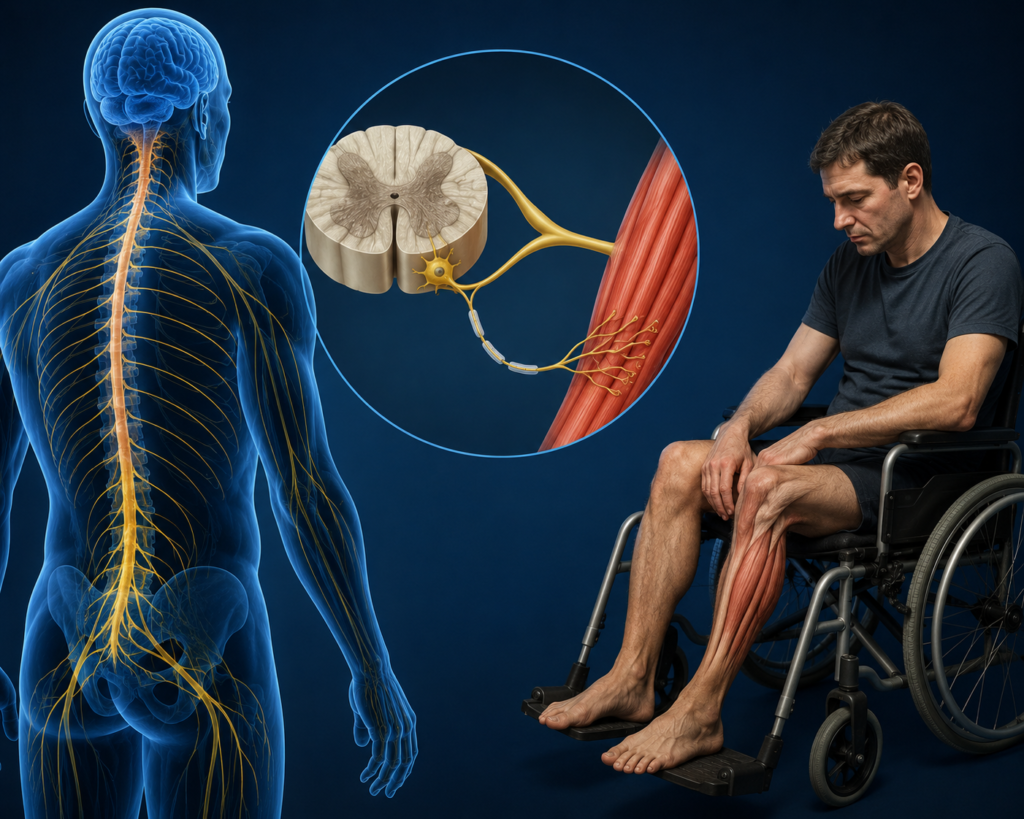
A lower motor neuron lesion refers to damage to the motor neurons that originate in the anterior horn of the spinal cord or cranial nerve nuclei and extend to innervate skeletal muscles. These neurons form the final common pathway for movement.
Etiology
Common causes of LMN lesions include:
- Peripheral nerve injuries (trauma or compression)
- Guillain-Barré syndrome
- Poliomyelitis
- Diabetic neuropathy
- Spinal cord injuries affecting the anterior horn cells
- Motor neuron diseases (e.g., ALS affecting the LMN component)
Clinical Features
LMN lesions present with distinct characteristics due to direct muscle denervation:
- Decreased or absent muscle tone (flaccidity)
- Muscle atrophy (wasting)
- Loss of deep tendon reflexes (hyporeflexia or areflexia)
- Fasciculations (visible muscle twitching)
Signs and Symptoms
Patients may experience:
- Weakness or paralysis of affected muscles
- Decreased voluntary movement
- Muscle cramps and twitching
- Difficulty performing daily functional activities
- Decreased coordination in specific muscle groups
Complications
If untreated, LMN lesions may result in:
- Severe muscle wasting
- Joint stiffness and contractures
- Chronic pain and fatigue
- Functional dependence
- Increased risk of injury due to weakness
Risk Factors
Factors increasing the likelihood of LMN lesions include:
- Trauma or accidents
- Viral infections (e.g., polio)
- Chronic diseases like diabetes
- Poor nutrition affects nerve health
- Exposure to toxins
- Genetic predisposition

Physiotherapy Management
Physiotherapy plays a vital role in maintaining function and preventing complications:
- Muscle-strengthening exercises to improve residual power
- Range of motion (ROM) exercises to maintain joint mobility
- Electrical stimulation to prevent muscle atrophy
- Splinting and positioning to prevent deformities
- Functional training for daily activities
- Patient education on self-care and prevention strategies
Conclusion
Lower motor neuron lesions lead to remarkable motor impairment due to the disruption of nerve supply to muscles. Early diagnosis combined with targeted physiotherapy intervention can enhance recovery, prevent complications, and improve quality of life.
What is a lower motor neuron lesion?
It is damage to motor neurons that connect the spinal cord or brainstem to muscles, affecting movement.
What are the main features of LMN lesions?
Flaccidity, muscle atrophy, loss of reflexes, and fasciculations.
How does physiotherapy help in LMN lesions?
It improves strength, maintains joint mobility, prevents deformities, and enhances daily functional activities.
Need Personalized Guidance for Physiotherapy?
Our senior certified therapists at Aaziban Care Center provide customized 1-on-1 evaluation and treatment plans at our care centers.