Introduction
Upper motor neuron (UMN) lesions are a remarkably neurological condition affecting voluntary movement control. They commonly occur due to damage in the brain or spinal cord pathways responsible for motor function. Early recognition is vital for effective management and rehabilitation.
Definition
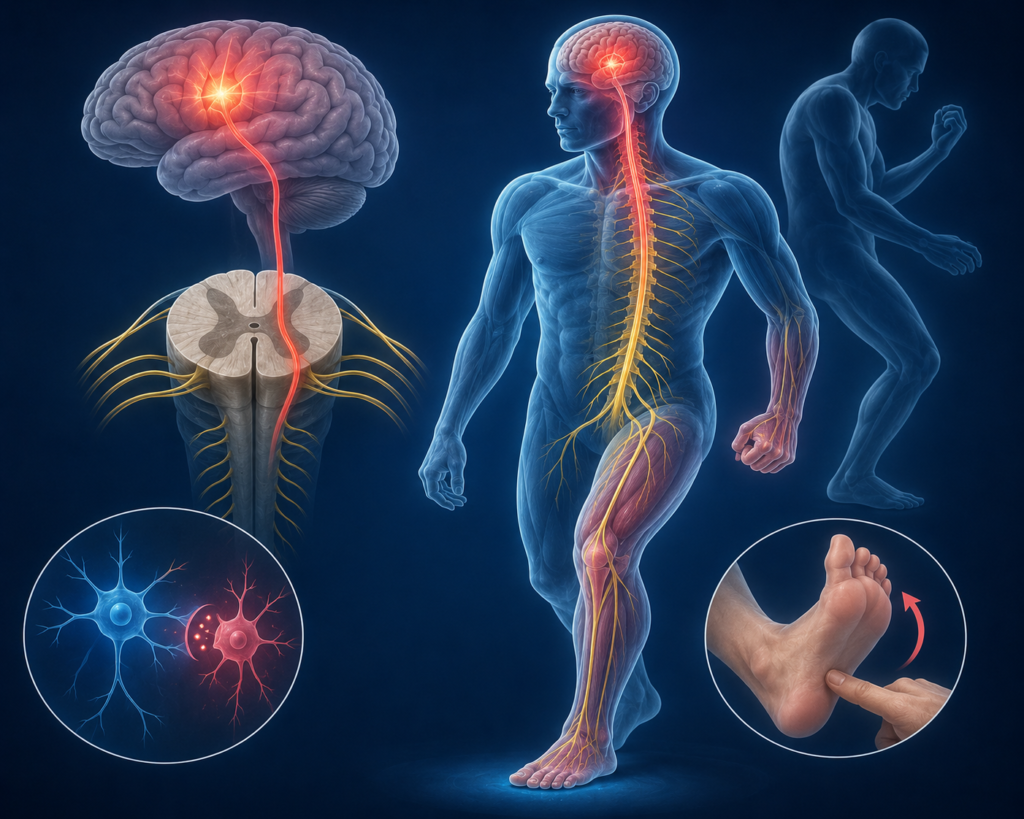
An upper motor neuron lesion refers to damage to the motor neurons that originate in the cerebral cortex and descend to the spinal cord. These neurons are part of the pyramidal tract and play a crucial role in initiating and modulating voluntary movements.
Etiology
UMN lesions can arise from various causes, including:
- Stroke (the most common cause)
- Traumatic Brain Injury
- Multiple Sclerosis
- Cerebral Palsy
- Spinal cord injury
- Brain tumors or infections
Clinical Features
UMN lesions present with characteristic motor abnormalities due to loss of inhibitory control over reflexes. Common features include:
- Increased muscle tone (spasticity)
- Clonus (rhythmic muscle contractions)
- Hyperactive deep tendon reflexes
- Positive Babinski sign
- Weakness without remarkable muscle atrophy
Signs and Symptoms
Patients may experience:
- Difficulty in voluntary movements
- Stiffness and tightness in muscles
- Poor balance and coordination
- Slowed motor responses
- Abnormal gait patterns (e.g., spastic gait)
Complications
If untreated or poorly managed, UMN lesions may lead to:
- Contractures and joint deformities
- Chronic pain and discomfort
- Functional disability
- Pressure sores due to immobility
- Reduced quality of life
Risk Factors
Several factors increase the likelihood of developing UMN lesions:
- Hypertension and cardiovascular diseasese
- Genetic predisposition (e.g., cerebral palsy)
- Head trauma or accidents
- Infections affecting the central nervous system
- Sedentary lifestyle and poor health habits
Physiotherapy Management
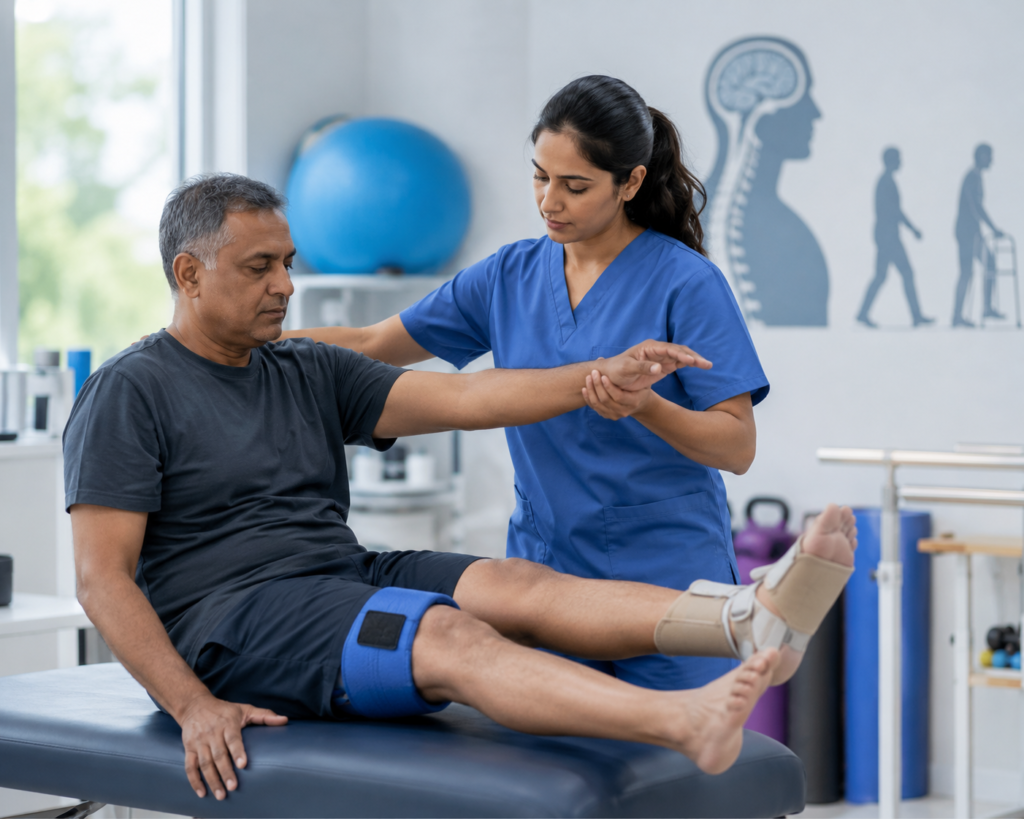
Physiotherapy plays a vital role in improving function and preventing complications:
- Spasticity management: Stretching, positioning, and splinting
- Strength training: Focus on weak muscle groups
- Balance and coordination exercises: Enhance stability and mobility
- Gait training: Use of assistive devices if necessary
- Neurofacilitation techniques: Such as Bobath or PNF approaches
- Functional training: Activities of daily living (ADL) retraining
Conclusion
Upper motor neuron lesions remarkably impact motor control and functional independence. Early diagnosis, combined with targeted physiotherapy and medical management, can improve outcomes and enhance quality of life for affected individuals.
What is an upper motor neuron lesion?
It is damage to motor neurons in the brain or spinal cord that control voluntary movement.
What are common signs of UMN lesions?
Spasticity, hyperreflexia, clonus, positive Babinski sign, and muscle weakness.
How does physiotherapy help in UMN lesions?
It improves mobility, reduces spasticity, strengthens muscles, and enhances balance and functional independence.
Need Personalized Guidance for Physiotherapy?
Our senior certified therapists at Aaziban Care Center provide customized 1-on-1 evaluation and treatment plans at our care centers.