
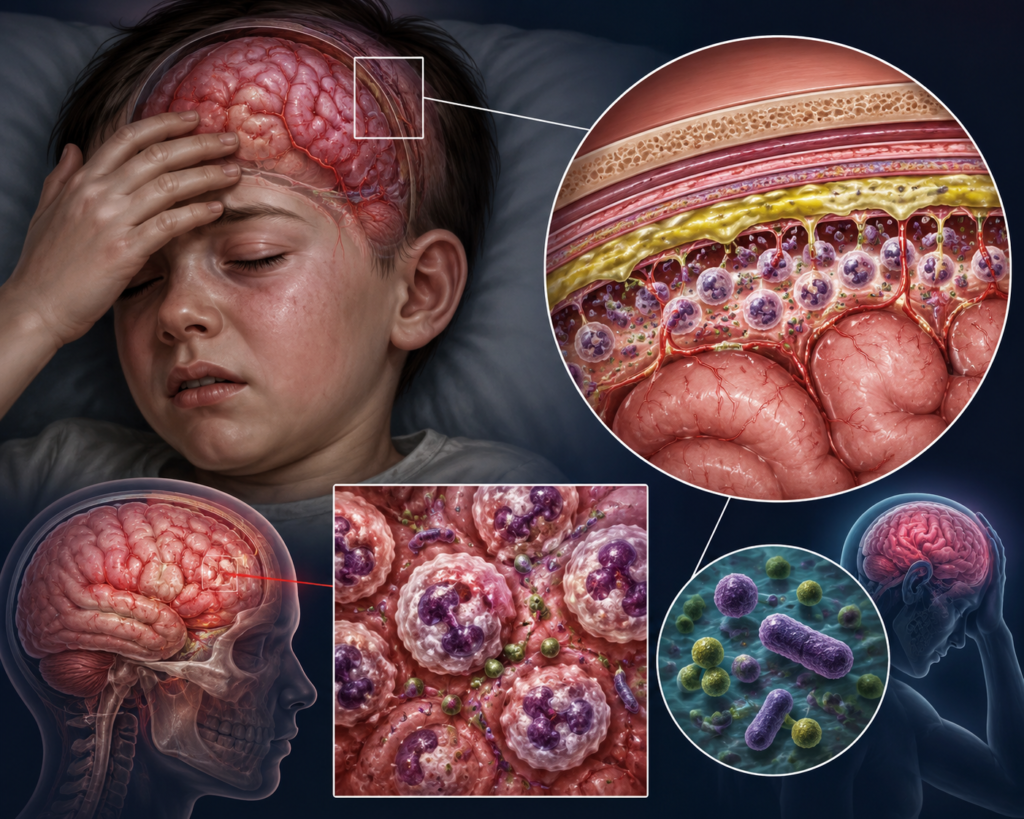
Introduction
Pyogenic meningitis is a life-threatening infection of the meninges caused by pus-forming (bacterial) organisms. It is a medical emergency that requires prompt diagnosis and treatment to prevent severe neurological damage and mortality.
Definition
Pyogenic meningitis is defined as an acute bacterial infection of the meninges, leading to inflammation, accumulation of purulent exudate, and increased intracranial pressure, which can impair brain function.
Clinical Features
- Rapid onset of illness
- Altered level of consciousness
- High-grade fever with chills
- Severe headache
- Neck stiffness
- Nausea and vomiting
- Photophobia and phonophobia
Signs and Symptoms
- Positive Kernig’s sign and Brudzinski’s sign
- Seizures in severe cases
- Bulging fontanelle in infants
- Irritability (especially in children)
- Focal neurological deficits (e.g., weakness, cranial nerve palsies)
- Signs of raised intracranial pressure (papilledema)
Complication
- Brain edema and increased intracranial pressure
- Hearing loss or other cranial nerve deficits
- Hydrocephalus
- Septicemia and shock
- Cognitive impairment or long-term neurological disability
- Seizure disorders
- Death if untreated or delayed treatment

Physiotherapy Management
Physiotherapy plays a crucial role during recovery:
- Positioning: To decrease intracranial pressure and prevent complications
- Chest Physiotherapy: Helps clear secretions in bedridden patients
- Early Mobilization: Improves circulation and decreases complications like DVT
- Passive Range of Motion (ROM): Prevents joint stiffness and contractures
- Neurological Rehabilitation: For patients with residual deficits (balance, coordination, strength)
- Patient and Caregiver Education: Focus on positioning, mobility, and prevention of complications
- Postural Training: Improves functional independence
Risk factors
- Young age (infants and young children)
- Elderly population (reduced immunity)
- Immunocompromised state (HIV/AIDS, cancer, diabetes)
- Recent infections (ear, sinus, or respiratory infections)
- Neurosurgical procedures
- Head injury or skull fractures
- Chronic illnesses (e.g., kidney disease, alcoholism)
- Poor living conditions or overcrowding
- CSF leaks or congenital defects (e.g., spina bifida)
- Close contact with infected individuals
Conclusion
Pyogenic meningitis is a critical neurological condition requiring urgent medical management. While antibiotics are the primary treatment, physiotherapy plays an important role in preventing complications and aiding functional recovery. Early intervention and multidisciplinary care significantly improve outcomes and quality of life.
Q: What is pyogenic meningitis?
A: It is an acute bacterial infection of the meninges causing inflammation and increased intracranial pressure.
Q: What are common signs of pyogenic meningitis?
A: Fever, severe headache, neck stiffness, and positive Kernig’s and Brudzinski’s signs.
Q: What is a key role of physiotherapy in pyogenic meningitis?
A: To prevent complications and aid recovery through positioning, mobilization, and rehabilitation exercises.
Need Personalized Guidance for Rehabilitation?
Our senior certified therapists at Aaziban Care Center provide customized 1-on-1 evaluation and treatment plans at our care centers.