
Introduction
Flexion synergy is a common motor pattern observed in individuals with neurological impairments, especially after stroke. It reflects abnormal, involuntary coordination of muscles, leading to difficulty in performing isolated and controlled movements.
Definition
Flexion synergy is a stereotyped movement pattern characterized by simultaneous activation of multiple muscle groups, resulting in flexion of the upper or lower limb. It is typically seen due to loss of normal motor control following upper motor neuron lesions.
Etiology
Flexion synergy may occur due to:
- Stroke (most common cause)
- Spinal cord injury
- Traumatic brain injury
- Multiple sclerosis
- Cerebral palsy
- Other upper motor neuron disorders
Clinical Features
Typical presentation includes:
- Involuntary flexion movement patterns
- Difficulty performing isolated joint movements
- Loss of selective motor control
- Increased muscle tone (spasticity)
- Abnormal posture of limbs
Signs and Symptoms
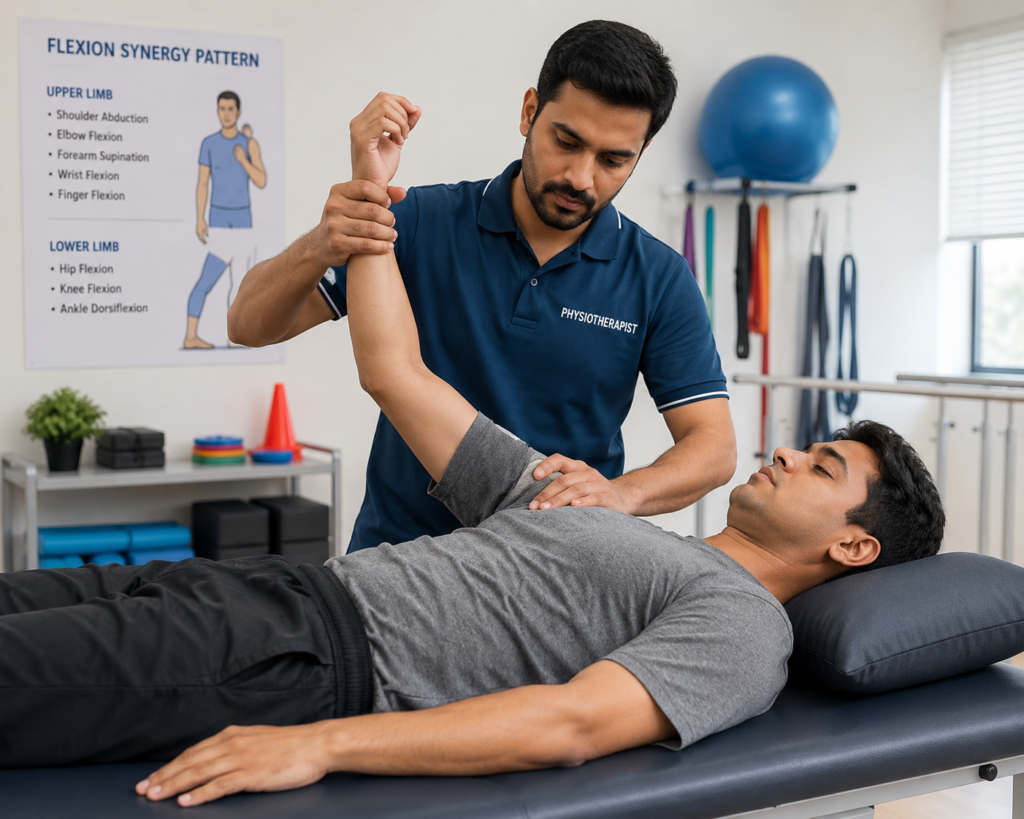
In the upper limb, flexion synergy includes:
- Shoulder abduction and external rotation
- Elbow flexion
- Forearm supination
- Wrist and finger flexion
In the lower limb, flexion synergy includes:
- Hip flexion
- Knee flexion
- Ankle dorsiflexion
Patients may also experience:
- Decreased functional use of limbs
- Poor coordination
- Difficulty in daily activities
Physiotherapy Management
Physiotherapy focuses on breaking abnormal synergy patterns:
- Neurofacilitation techniques (e.g., Bobath, PNF)
- Stretching exercises to decreased spasticity
- Strengthening of antagonist muscles
- Weight-bearing activities to improve control
- Task-specific training to promote functional movements
- Functional electrical stimulation (FES)
- Balance and coordination training
Complications
If untreated, flexion synergy may lead to:
- Contractures and joint deformities
- Loss of functional independence
- Pain and discomfort
- Chronic spasticity
- Dereased quality of life
Risk Factors
Factors increasing risk include:
- Stroke or brain injury
- Poor rehabilitation or delayed treatment
- Severe neurological damage
- Advanced age
- Sedentary lifestyle
Conclusion
It is a important motor impairment seen in neurological conditions, particularly after upper motor neuron lesions. Early physiotherapy intervention plays avital role in improving motor control,decreased abnormal patterns, and enhancing functional independence.
What is flexion synergy?
It is an abnormal movement pattern where multiple muscles contract together, causing involuntary limb flexion.
What are common features of flexion synergy?
Spasticity, loss of selective control, involuntary flexion, and difficulty in isolated movements.
How is flexion synergy managed?
Through physiotherapy techniques like stretching, strengthening, neurofacilitation, and task-specific training.
Need Personalized Guidance for Physiotherapy?
Our senior certified therapists at Aaziban Care Center provide customized 1-on-1 evaluation and treatment plans at our care centers.