Introduction
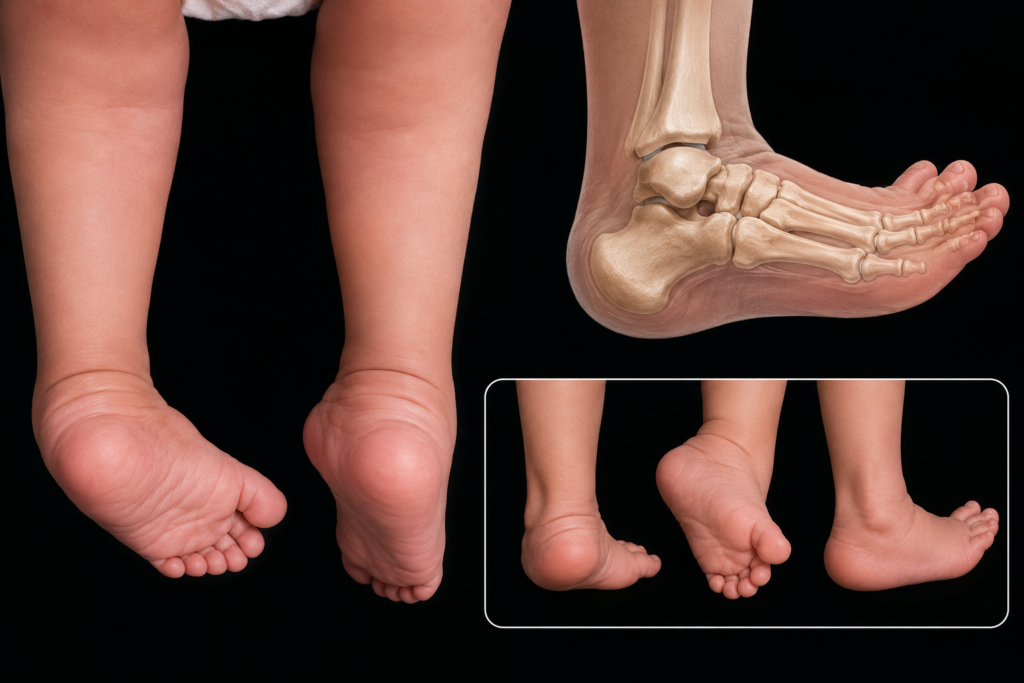
Talipes calcaneovalgus deformity is a common congenital foot condition seen in newborns. It is characterized by excessive dorsiflexion of the foot, causing the foot to rest against the front of the leg. The condition is usually flexible and often results from the baby’s position within the uterus during pregnancy. Early diagnosis and appropriate management help achieve better outcomes.
Definition
Talipes calcaneovalgus is a positional deformity of the foot in which the ankle is excessively dorsiflexed and the heel is elevated while the forefoot is turned outward (valgus position). The condition is generally present at birth and is usually correctable with gentle stretching and physiotherapy.
Etiology
The common causes of talipes calcaneovalgus include:
- Intrauterine positioning or crowding during fetal development.
- Breech presentation during pregnancy.
- Limited space within the uterus, especially in first pregnancies.
- Associated neuromuscular conditions in rare cases.
- Congenital ligamentous laxity.
Clinical Features
The characteristic clinical features include:
- Foot positioned in extreme dorsiflexion.
- Forefoot directed upward and outward.
- Heel in valgus alignment.
- Flexible deformity that can often be corrected manually.
- Usually unilateral, but may occur bilaterally.
Signs and Symptoms
Common signs and symptoms are:
- Abnormal foot appearance at birth.
- Limited plantarflexion range of motion.
- Foot touching or nearly touching the anterior aspect of the leg.
- Problem placing the foot flat on the ground in severe cases.
- Generally painless in infancy.
- Delayed standing or walking in untreated severe cases.
Physiotherapy Management
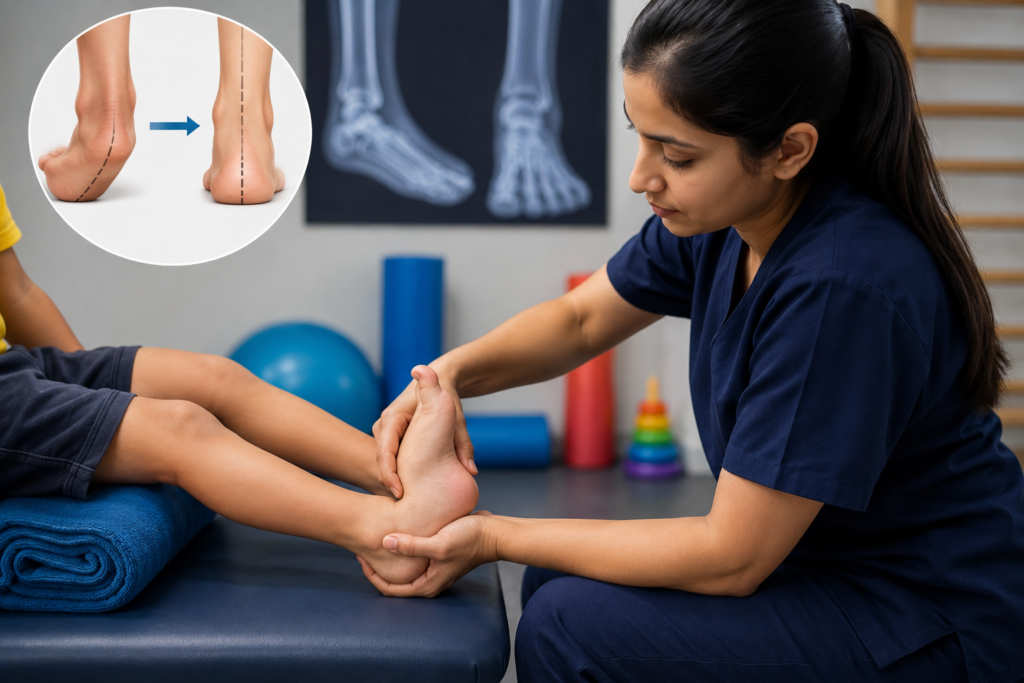
Physiotherapy plays a vital role in correcting the deformity and improving function.
- Gentle passive stretching exercises to increase plantarflexion.
- Range-of-motion exercises performed several times daily.
- Parent education regarding proper stretching techniques.
- Positioning strategies to encourage normal foot alignment.
- Strengthening exercises for foot and ankle muscles as the child grows.
- Gait training if walking difficulties develop.
- Regular monitoring of progress and joint mobility.
Complications
If left untreated, potential complications may include:
- Persistent foot deformity.
- Decreased ankle mobility.
- Abnormal gait pattern.
- Difficulty wearing footwear.
- Functional limitations during walking and physical activities.
Risk Factors
Several factors increase the likelihood of developing talipes calcaneovalgus:
- First pregnancy.
- Breech fetal position.
- Multiple pregnancies.
- Oligohydramnios (reduced amniotic fluid).
- Family history of congenital musculoskeletal abnormalities.
- Intrauterine crowding.
Conclusion
Talipes calcaneovalgus deformity is a generally benign and correctable congenital foot condition. Early identification, parental education, and timely physiotherapy intervention are essential for restoring normal foot alignment and function. Most infants respond well to conservative treatment and achieve normal developmental milestones without long-term complications.
What is Talipes Calcaneovalgus Deformity?
Answer: Talipes calcaneovalgus deformity is a congenital foot condition in newborns where the foot bends excessively upward and outward, often due to the baby’s position in the womb.
What are the common causes of Talipes Calcaneovalgus?
Answer: Common causes include intrauterine crowding, breech presentation, limited uterine space, congenital ligament laxity, and, in rare cases, neuromuscular conditions.
How is Talipes Calcaneovalgus treated?
Answer: Treatment mainly involves physiotherapy, including gentle stretching exercises, range-of-motion activities, proper positioning, strengthening exercises, and parental guidance to improve foot alignment and function.
Need Personalized Guidance for Physiotherapy?
Our senior certified therapists at Aaziban Care Center provide customized 1-on-1 evaluation and treatment plans at our care centers.