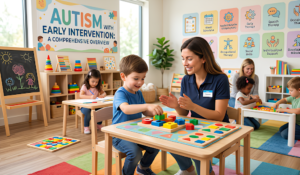
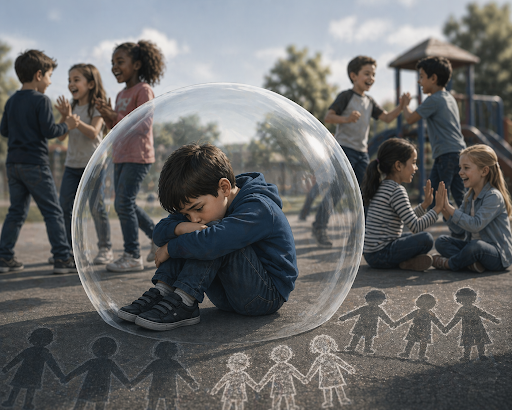
In today’s world, understanding Autism & Social Communication is important for supporting a child’s development. Autism & Social Communication challenges can affect how children connect with others, express their thoughts and feelings, and respond in social situations. Recognizing these differences early can help parents and caregivers provide the guidance and support children need to grow with confidence.
Let’s walk through this together—simply and clearly.
1. What is Social Communication in Autism?
Imagine calling your child’s name, smiling, or pointing at something exciting—these are all parts of social communication. It’s how we use words, expressions, gestures, and emotions to connect with others.
In autism, your child may:
- Communicate differently
- Take more time to respond
- Express themselves in ways that are not typical
This doesn’t mean they don’t want to connect-it just means they need a different way to learn how.
2. How Social Interaction is Affected
Let’s understand this through everyday situations you might already be experiencing:
- Difficulty with Eye Contact & Non-Verbal Cues
You may notice your child looks away when you talk or doesn’t follow your gestures. While this can feel like disinterest, it’s often because eye contact and body language can feel overwhelming or confusing for them.
- Problems with Joint Attention
Picture this: you point at a bird, but your child doesn’t look. This is called joint attention- sharing focus with someone else. Many children with autism find this difficult, which can affect early learning and bonding.
- Delayed or Atypical Language Use
Some children may start speaking late, while others may:
- Repeat words they hear (echolalia)
- Use unusual tones
- Struggle to express needs clearly
If your child communicates differently, it doesn’t mean they can’t learn-it just means they may need extra support and patience.
- Difficulty Forming Relationships
You might see your child playing alone while others play together. This doesn’t always mean they don’t want friends- they may simply not know how to start or join interactions.
- Reduced Social Reciprocity
Conversations are like a game of catch—back and forth. Your child may:
- Not respond when called
- Find it hard to take turns
- Not share interests naturally
This is called reduced social reciprocity, and it’s a common part of autism.
- Difficulty Starting Interaction (Initiation Problem)
Sometimes, your child may want attention but doesn’t know how to ask. They may not say “look at me” or “play with me,” even if they feel it inside.
- Difficulty Understanding Emotions (Emotional Recognition)
You may wonder if your child understands how you feel. Many children with autism find it hard to read emotions, which relates to something called Theory of Mind—the ability to understand what others are thinking or feeling.
- Unusual Play Patterns
Instead of pretend play, your child may:
- Line up toys
- Focus on small parts
- Repeat the same activity
This kind of play helps them feel safe and in control, even if it looks different from other children.
3. Why Does This Happen?
You might ask yourself, “Why is my child facing this?”
The answer is simple: your child’s brain processes social information differently. Sounds, expressions, and interactions may feel confusing or overwhelming.
It’s important to remember—this is not caused by parenting, and it’s not something your child is choosing. It’s simply how their brain is wired.
4. Important Message for Parents
Every child with autism is unique. Some need more help, some less—but all can grow with the right support.
What matters most is:
- Your patience
- Your understanding
- Your willingness to support your child step by step
Small progress is still progress.
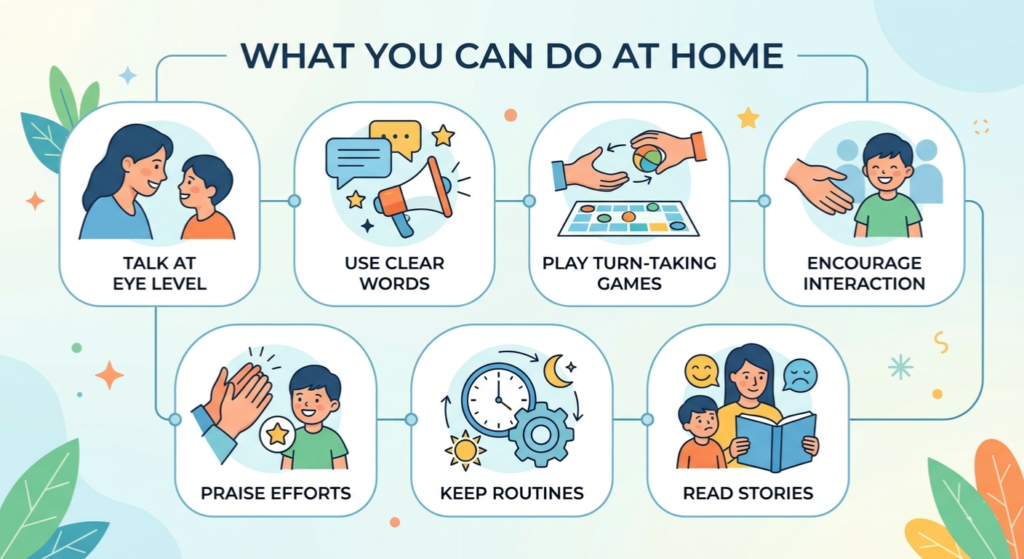
Final Thoughts
Your child may experience the world differently—but that doesn’t mean they can’t connect, love, or grow. With your support, understanding, and early guidance, they can develop meaningful ways to interact and express themselves.Support systems can also make this journey easier. Aaziban Care Center aim to guide parents with practical strategies, expert-backed insights, and everyday tools to improve communication and developmental outcomes. Having the right guidance at the right time can empower you to support your child with more confidence and clarity.
1. Why does my child with autism avoid eye contact or not respond to their name?
Children with autism may find eye contact and social cues overwhelming or difficult to process. It’s not a lack of interest, but a difference in how they understand and respond to social interaction.
2. What is joint attention, and why is it important in autism?
Joint attention is the ability to share focus on an object or event with another person. Many children with autism struggle with this, which can impact communication, learning, and bonding.
3. Can children with autism improve their social communication skills?
Yes, with early intervention, patience, and the right support, children with autism can gradually develop better communication and social interaction skills over time.
Need Personalized Guidance for Speech Therapy?
Our senior certified therapists at Aaziban Care Center provide customized 1-on-1 evaluation and treatment plans at our care centers.