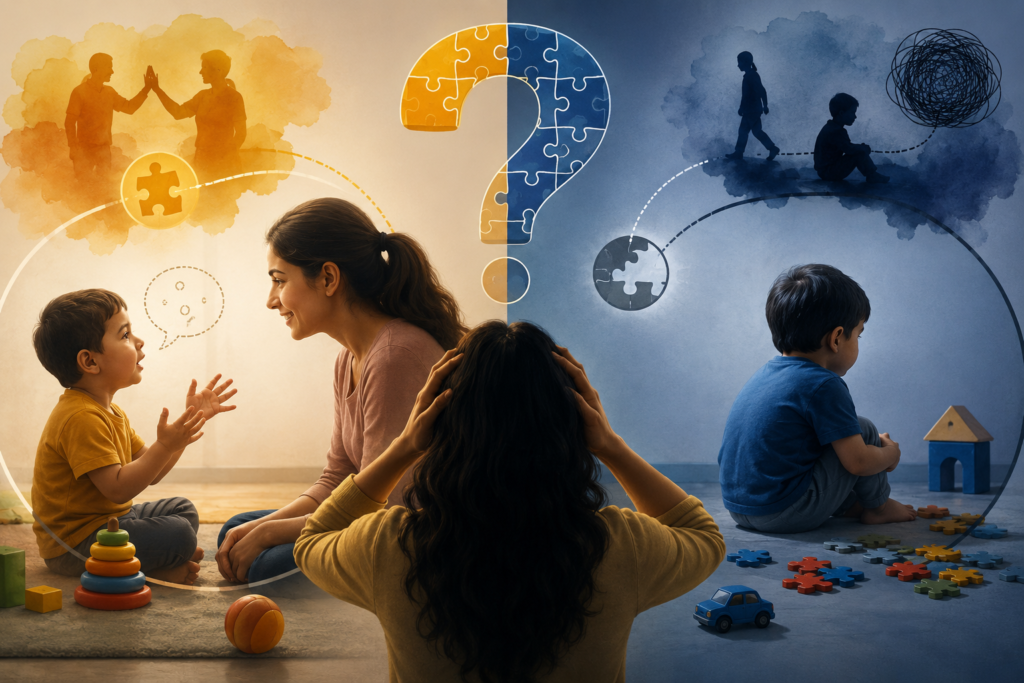
Many parents worry when their child is not speaking on time. This is why understanding Speech Delay vs Autism is so important. There is often confusion between the two conditions because both can involve communication difficulties. A speech delay mainly affects how a child learns to talk, while autism affects communication along with social interaction, behavior, and how a child relates to the world around them.
Because some signs may look similar in the early years, many people misunderstand the difference between this two. Understanding how speech delay and autism differ helps parents and caregivers seek the right support and early intervention for the child. Early awareness can make a big difference in a child’s communication and overall development.
Understanding Speech Delay (Late Language Emergence)
Speech delay, also known as Late Language Emergence (LLE), occurs when a young child develops speech and language skills slower than expected for their age. In simple terms, a child with speech delay may take longer to start speaking words, forming sentences, or expressing their needs compared to other children of the same age.
In many cases, children with speech delay have normal development in other areas such as thinking ability, hearing, social interaction, and physical growth.
Causes of Speech Delay
Here are some common causes:
1. Hearing Problems
Children learn to speak by listening to sounds around them. If a child has hearing problems, it may be harder for them to learn words. Common issues include frequent ear infections or hearing loss. Doctors often suggest a hearing test if speech delay is noticed.
2. Late Talking (Developmental Delay)
Some children simply start speaking later than others. These children understand language and interact well but have a smaller vocabulary at first. Many of them catch up naturally by the age of 3-4 years.
3. Difficulty Moving Speech Muscles
Sometimes children have trouble controlling the lips, tongue, or mouth muscles used for speaking. This can make their speech unclear or inconsistent.
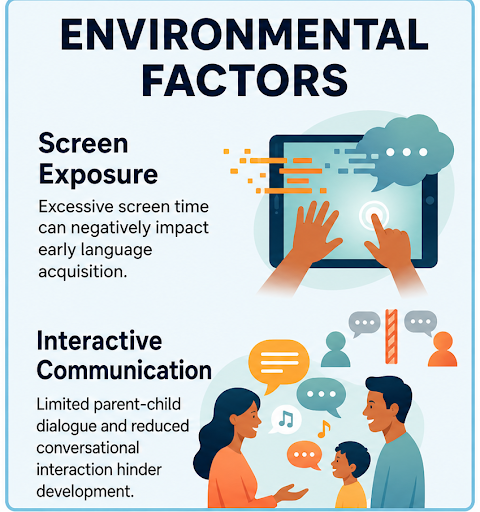
4. Environmental Factors
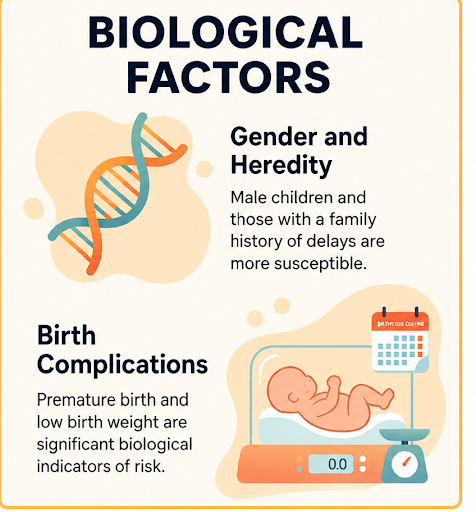
A child needs regular conversation to develop language skills. Limited talking at home, less interaction with parents, or too much screen time may slow speech development.
5. Other Developmental Conditions
In some cases, speech delay may be linked with other conditions such as autism, learning difficulties, or neurological disorders.
Now,Lets quickly find out what is Autism –
Autism (Autism Spectrum Disorder – ASD)
Autism, also called Autism Spectrum Disorder (ASD), is a developmental condition that affects how a person communicates, interacts with others, and behaves. It usually appears in early childhood, often before the age of 3.
Children with autism may develop skills differently from other children. Some may have delayed speech, while others may speak well but have difficulty understanding social situations.
So, coming to the most important part,that is-
Speech Delay Vs Autism
Clinical Differences Between Speech Delay and Autism Spectrum Disorder
Speech delay and Autism Spectrum Disorder (ASD) can both cause late speech in young children, but they are not the same.
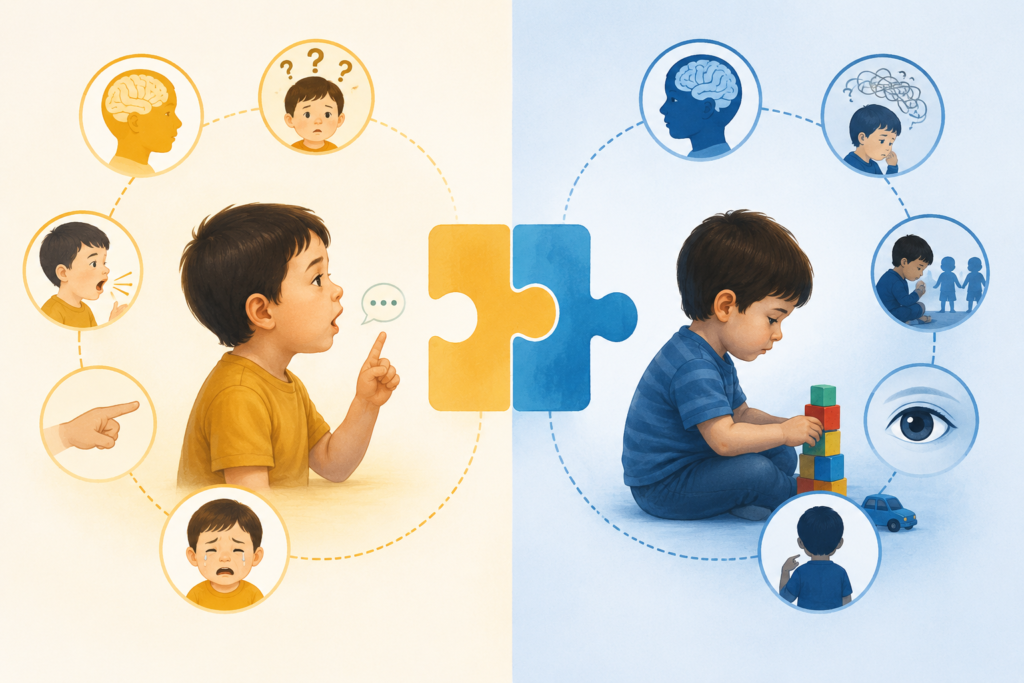
- Speech Delay: Children mainly have trouble speaking or forming words. However, they usually understand what others say and try to communicate in other ways.
- Autism Spectrum Disorder: The challenge is mostly in social communication. Children may find it difficult to interact with others, share attention, or communicate socially.
Key Differences
- Eye Contact:
Children with speech delay usually maintain normal eye contact. Children with autism may avoid or have limited eye contact. - Response to Name:
Children with speech delay often respond when their name is called. Children with autism may not respond consistently. - Joint Attention:
Children with speech delay often point at objects or show things to others. Children with autism may struggle to share attention or point things out.
In simple terms:
Speech delay mainly affects speaking ability, while autism affects social interaction and communication. Early identification and professional support can help children develop the right skills.
Behavioral Differences Between Speech Delay and Autism Spectrum Disorder
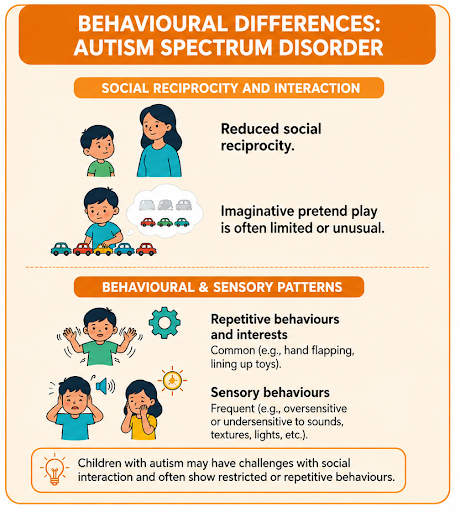
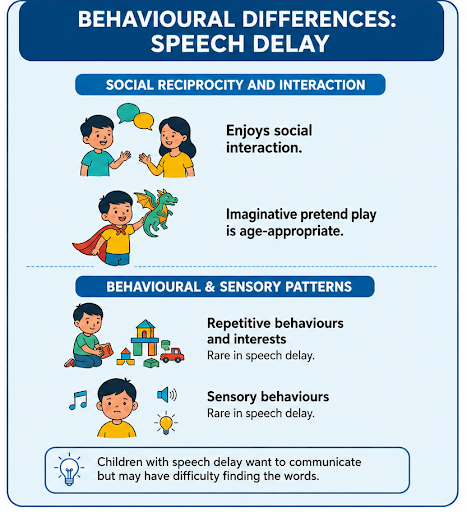
Children with speech delay mainly struggle with speaking or forming words. However, their social behavior is usually normal for their age. They like playing with others, enjoy pretend games, and generally do not show repetitive or unusual behaviors.
Children with Autism Spectrum Disorder (ASD) may have speech difficulties along with other behavioral differences. These can include repetitive actions like hand flapping or lining up toys, strong focus on specific interests, and limited pretend play. They may also have less eye contact, find it hard to respond to social cues, or be sensitive to sounds, textures, or lights.
Knowing these differences can help parents notice early signs and seek the right evaluation and support for their child.
Final Takeaway
Understanding the difference between Speech Delay vs Autism helps parents recognize early signs and seek the right guidance for their child’s communication and developmental needs.
Aaziban – A Rehabilitation Center supports this journey by providing speech therapy, special education, and many other services in a warm, nurturing environment. Whether a child is experiencing speech delay, autism, or both, skilled professionals help them develop communication skills and reach their full potential with confidence and care.
What is the main difference between speech delay and autism?
Speech delay mainly affects a child’s ability to speak or form words, while autism affects communication, social interaction, and behavior. Children with speech delay usually interact socially in a typical way, whereas children with autism may struggle with eye contact, social cues, and shared attention.
Can a child with speech delay still understand language?
Yes. Many children with speech delay understand what others say but have difficulty expressing themselves verbally. They may use gestures, pointing, or facial expressions to communicate their needs.
What are common signs of autism compared to speech delay?
Children with autism may avoid eye contact, not respond consistently to their name, show repetitive behaviors, or have limited pretend play. Children with speech delay generally maintain social interaction, respond to people, and enjoy playing with others.
When should parents seek professional help for speech or communication concerns?
Parents should seek professional evaluation if a child is not meeting expected speech milestones, has difficulty interacting socially, or shows behaviors linked to autism. Early intervention and therapy can greatly support a child’s communication and overall development.
Need Personalized Guidance for Speech Therapy?
Our senior certified therapists at Aaziban Care Center provide customized 1-on-1 evaluation and treatment plans at our care centers.