Introduction
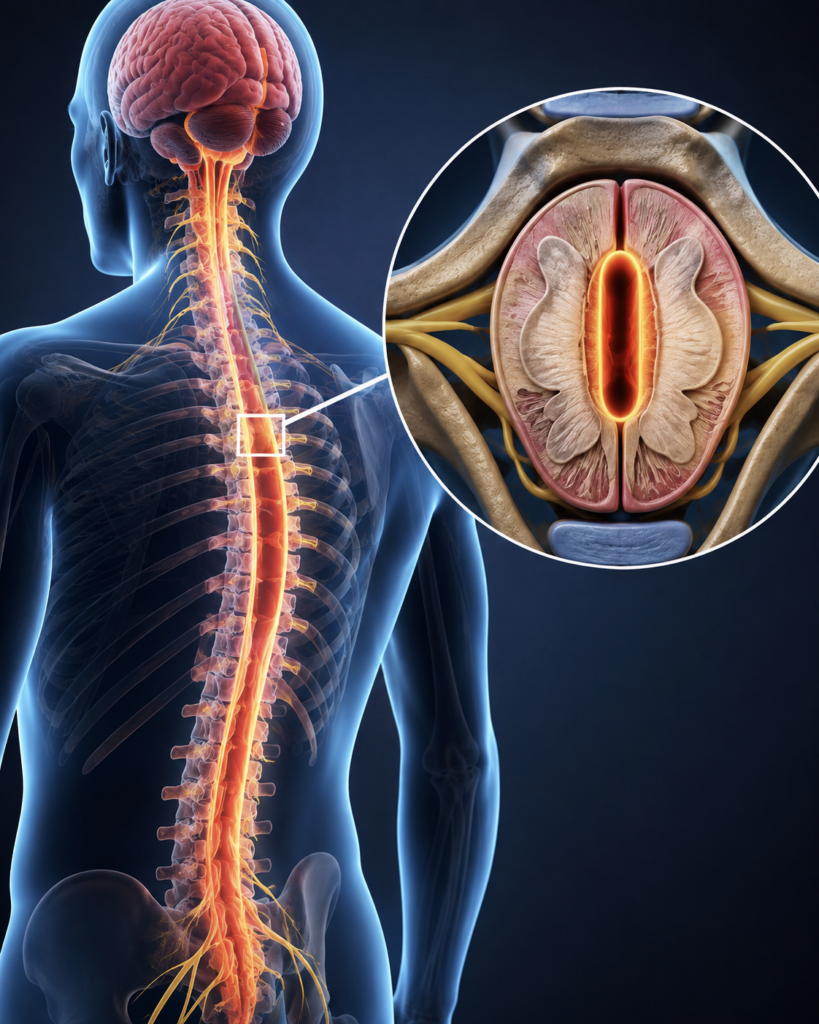
Hydromyelia is a rare neurological condition in which the central canal of the spinal cord becomes abnormally widened due to the accumulation of cerebrospinal fluid (CSF). This enlargement may compress nearby nerve tissues, resulting in various neurological symptoms. The condition may be present at birth (congenital) or develop later because of injury, infection, or structural abnormalities. Early diagnosis and appropriate rehabilitation can help improve functional outcomes and quality of life.
Definition
Hydromyelia is defined as the abnormal dilation of the central canal of the spinal cord caused by excessive cerebrospinal fluid. Unlike syringomyelia, where a fluid-filled cavity forms within the spinal cord tissue itself, hydromyelia specifically involves expansion of the natural central canal.
Etiology
Common causes of hydromyelia include:
- Congenital abnormalities such as Chiari malformation
- Spinal cord tumors
- Congenital spinal defects
- Spinal cord injury or trauma
- Infections affecting the spinal cord
- Inflammatory disorders involving the spinal cord
- Obstruction of normal cerebrospinal fluid circulation
Clinical Features
Patients with hydromyelia may experience:
- Progressive weakness of the upper or lower limbs
- Decreased muscle strength
- Impaired coordination and balance
- Sensory disturbances
- Muscle wasting in advanced stages
- Difficulty performing daily activities
- Changes in walking pattern
Signs and Symptoms
The severity depends on the size and location of the dilated canal.
- Neck or back pain
- Numbness or tingling sensations
- Loss of pain and temperature sensation
- Muscle stiffness or spasticity
- Weakness in the arms or legs
- In severe cases, bladder or bowel dysfunction
- Reduced reflexes or exaggerated reflexes
- Difficulty with fine motor tasks

Physiotherapy Management
Physiotherapy aims to improve function, decreased disability, and maintain independence.
- Assess muscle strength, sensation, balance, and mobility.
- Perform range-of-motion exercises to prevent joint stiffness.
- Strengthening exercises for weakened muscle groups.
- Gait training using assistive devices if necessary.
- Postural correction and spinal alignment education.
- Balance and coordination training.
- Stretching exercises to dfecreased muscle tightness.
- Functional training for daily living activities.
- Patient education on posture, energy conservation, and fall prevention.
- Breathing exercises when respiratory muscles are affected.
Complications
If untreated, hydromyelia may lead to:
- Permanent neurological deficits
- Progressive muscle weakness
- Chronic pain
- Difficulty walking
- Loss of independence
- Joint contractures
- Bladder and bowel dysfunction
- Decreased quality of life
Risk Factors
Several factors increase the likelihood of developing hydromyelia:
- Congenital spinal abnormalities
- Chiari malformation
- Previous spinal trauma
- Spinal tumors
- Central nervous system infections
- Disorders affecting cerebrospinal fluid flow
- Family history of congenital spinal defects
Conclusion
Hydromyelia is an uncommon spinal cord disorder that can remarkably affect movement, sensation, and daily functioning. Early diagnosis, regular medical follow-up, and a structured physiotherapy rehabilitation program are essential to preserve mobility, decreased complications, and improve overall quality of life. A multidisciplinary approach involving neurologists, neurosurgeons, and physiotherapists provides the best long-term outcomes.
What is Hydromyelia?
Answer: Hydromyelia is a rare spinal cord disorder in which the central canal becomes enlarged due to excess cerebrospinal fluid (CSF), potentially causing neurological problems.
What are the common symptoms of Hydromyelia?
Answer: Common symptoms include neck or back pain, muscle weakness, numbness or tingling, balance problems, muscle stiffness, and difficulty walking.
How does physiotherapy help in Hydromyelia?
Answer: Physiotherapy helps improve muscle strength, balance, mobility, posture, coordination, and walking ability while reducing disability and promoting independence in daily activities.
Need Personalized Guidance for Physiotherapy?
Our senior certified therapists at Aaziban Care Center provide customized 1-on-1 evaluation and treatment plans at our care centers.