When your child is diagnosed with cerebral palsy (CP), it is natural to have many questions. Cerebral Palsy and Communication is an important concern for many parents. You may wonder, “Will my child be able to talk?” or “How can I help my child express their needs, feelings, and thoughts?”
The good news is that every child has the ability to communicate in their own way. Some children use spoken words, while others use gestures, pictures, or communication devices. With early support, patience, and encouragement, your child can learn to connect with the people around them.
This guide explains how cerebral palsy affects communication and what you can do to support your child’s journey.
How Cerebral Palsy Can Impact Your Child’s Ability to Communicate
Imagine your child wants to tell you they are hungry, excited, or scared—but the muscles needed for speaking don’t cooperate. This can be frustrating for both the child and the family.
Cerebral palsy affects the brain areas that control movement. Sometimes it also affects the muscles of the face, tongue, lips, and breathing, making speech difficult. Some children understand everything they hear but struggle to say the words clearly.
Remember, difficulty speaking does not always mean difficulty thinking. Many children with CP understand far more than they can express.
| When Words Are Hard: Understanding Speech Challenges in Cerebral Palsy |
Every child with cerebral palsy is unique. Some children speak clearly, while others need extra support.
Your child may experience:
- Speech that is difficult to understand
- Delayed speech development
- Trouble moving the tongue or lips
- Speaking slowly or with great effort
- Difficulty controlling breathing while talking
- Limited vocabulary during early childhood
These challenges can sometimes make children feel shy or frustrated. The important thing is to focus on what they can do instead of what they cannot.With regular speech therapy for cerebral palsy, many children improve their communication skills over time.
Feeding and Swallowing Difficulties in Cerebral Palsy
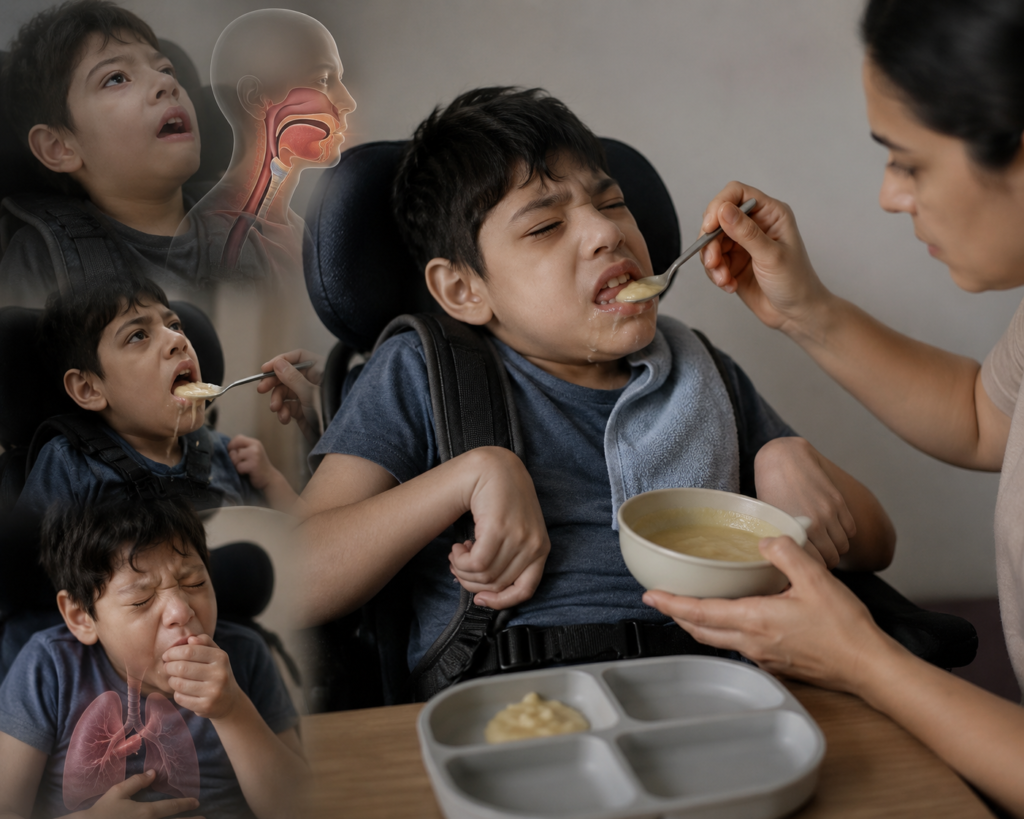
For many parents, mealtime can become stressful.Some children with cerebral palsy find it difficult to chew or swallow food safely because the same muscles used for speaking are also used for eating and drinking.
You may notice:
- Frequent coughing while eating
- Difficulty chewing food
- Food staying in the mouth
- Drooling
- Slow eating
- Poor weight gain
If you notice these signs, don’t blame yourself. Feeding difficulties are common in children with CP.
A speech-language therapist can teach safe feeding techniques, recommend suitable food textures, and make mealtimes more comfortable and enjoyable.
Early Intervention for Children with Cerebral Palsy
Parents often ask, “Should we wait until our child is older?”
The answer is simple—the earlier, the better.
Early intervention gives your child the best opportunity to develop communication, movement, and everyday life skills.
Early support may include:
- Speech therapy
- Physiotherapy
- Occupational therapy
- Parent training
- Play-based learning activities
Even small improvements during the early years can have a lasting impact on your child’s confidence and independence.
Alternative and Augmentative Communication (AAC)
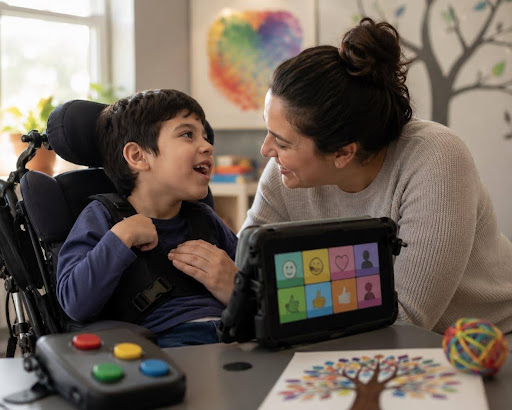
Not every child communicates through speech—and that’s perfectly okay. Some children use Alternative and Augmentative Communication (AAC) to express themselves.
AAC may include:
- Picture cards
- Communication books
- Sign language
- Tablets with communication apps
- Speech-generating devices
- Eye-gaze communication systems
Using AAC does not stop a child from learning to speak. In fact, it often encourages communication and reduces frustration by giving children a reliable way to express themselves.
Helping Your Child Become More Independent Through Communication
Communication is about much more than talking.
When your child can express choices, ask questions, or share feelings, they become more confident and independent.
Simple daily opportunities can make a big difference:
- Let your child choose their clothes.
- Ask what snack they would like.
- Encourage them to greet family members.
- Give them time to answer.
- Celebrate every attempt to communicate.
These everyday moments help your child build important life skills and self-confidence.
| Separating Myths from Facts: What Every Parent Should Know About Cerebral Palsy |
There are many misunderstandings about cerebral palsy. Let’s clear up a few.
Myth: A child who cannot speak cannot understand.
Fact: Many children understand much more than they can express.
Myth: Speech therapy only helps children who can already talk.
Fact: Speech therapy helps children at every communication level, including those who use AAC.
Myth: Children with cerebral palsy cannot become independent.
Fact: With the right support, many children develop valuable communication, learning, and daily living skills.
The Role of Speech Therapy in Cerebral Palsy
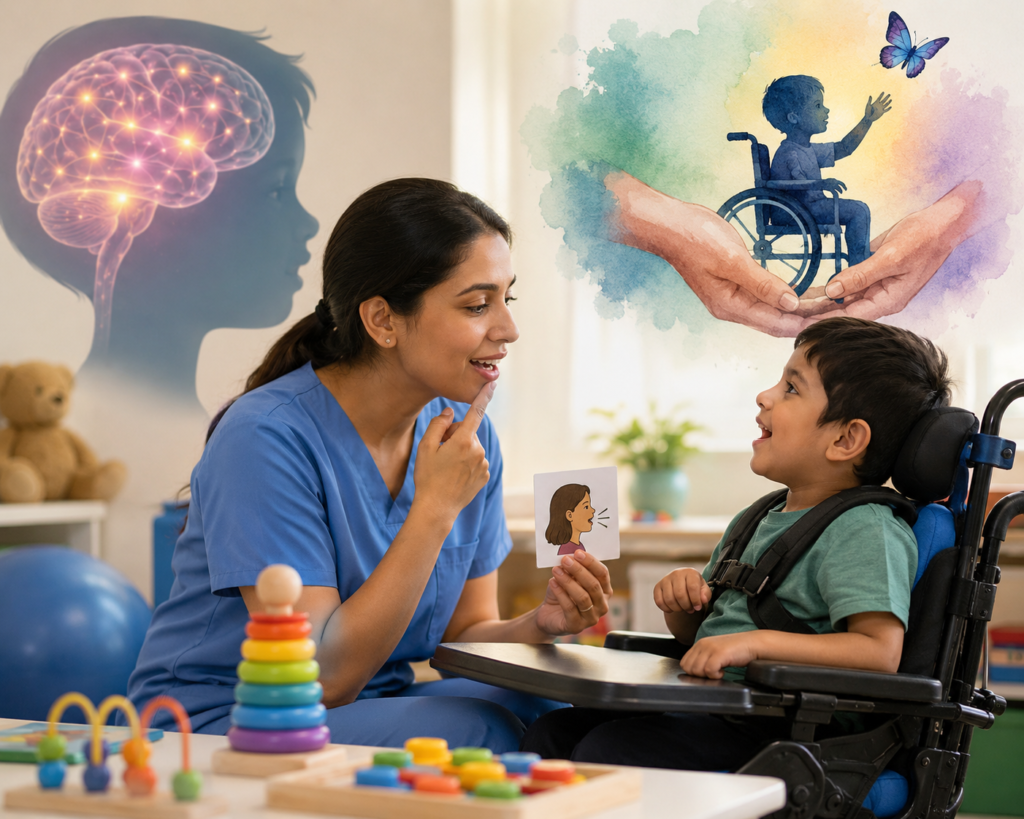
Speech therapy is about much more than improving speech.
A speech-language therapist helps children:
- Speak more clearly
- Understand language
- Build vocabulary
- Improve mouth muscle control
- Learn safe feeding and swallowing
- Develop social communication skills
- Use AAC devices confidently
Therapy is always tailored to your child’s strengths, needs, and goals.
Simple Everyday Ways to Encourage Meaningful Conversations
The best communication practice happens at home.
Here are a few simple ways you can help:
- Give your child enough time to respond.
- Listen without interrupting.
- Use simple language.
- Read books together.
- Encourage eye contact.
- Use pictures or gestures if needed.
- Praise every communication attempt.
Remember, every conversation—no matter how small—is a learning opportunity.
Building Communication Confidence
Learning to communicate is a journey, not a race.
There may be days when progress feels slow, but every new sound, word, gesture, or smile is a meaningful achievement. Celebrate the small victories.
Encourage your child to participate in family activities, school, and social events. Confidence grows when children feel heard, respected, and included.
As a parent or caregiver, you are your child’s biggest source of encouragement. Your patience, belief, and unconditional support can help them develop the confidence to communicate with the world.
Final Thoughts
A diagnosis of cerebral palsy does not define your child’s future. In Cerebral Palsy and Communication, every child has unique strengths and their own way of expressing thoughts, emotions, needs, and dreams. Whether through speech, gestures, pictures, sign language, or assistive technology, every child deserves the opportunity to communicate and be heard.
With early intervention, speech therapy, family support, and consistent encouragement, children can develop stronger communication skills, gain independence, build confidence, and enjoy meaningful relationships throughout life.
At Aaziban Care Center, we understand that every child’s journey is unique. Our experienced team of speech-language pathologists, physiotherapists, occupational therapists, psychologists, and special educators works together to create personalized therapy plans based on each child’s strengths and individual needs. We believe in partnering with families, empowering parents, and celebrating every milestone—because even the smallest step forward is meaningful. Our goal is to help every child communicate with confidence, participate actively in daily life, and achieve their fullest potential.
1: Can a child with cerebral palsy learn to communicate?
Yes. Every child with cerebral palsy can communicate in their own way. Some use speech, while others communicate through gestures, pictures, sign language, or AAC devices. Early support and speech therapy can help improve communication skills.
2: When should speech therapy begin for a child with cerebral palsy?
Speech therapy should begin as early as possible. Early intervention helps children develop speech, language, feeding, and communication skills, giving them the best opportunity to build confidence and independence.
3: What is AAC, and how does it help children with cerebral palsy?
Alternative and Augmentative Communication (AAC) includes tools like picture cards, communication boards, tablets, and speech-generating devices. AAC helps children express their thoughts, needs, and feelings when spoken communication is difficult.
4. Can speech therapy help with feeding and swallowing problems in cerebral palsy?
Yes. Speech-language therapists also treat feeding and swallowing difficulties. They can recommend safe eating techniques, suitable food textures, and exercises to improve oral muscle control, making mealtimes safer and more comfortable.
Need Personalized Guidance for Speech Therapy?
Our senior certified therapists at Aaziban Care Center provide customized 1-on-1 evaluation and treatment plans at our care centers.