Introduction
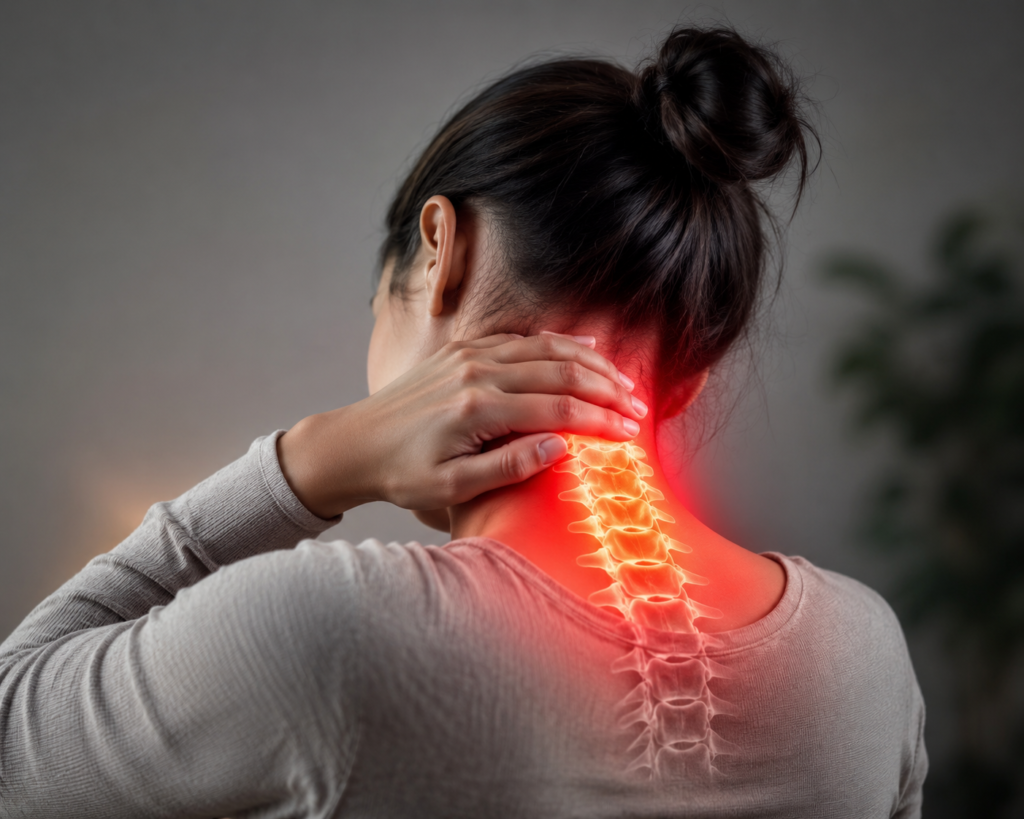
Neck pain is one of the most common musculoskeletal conditions affecting people of all ages. It can interfere with daily activities, work productivity, and quality of life. Modern lifestyles involving prolonged computer use, poor posture, and stress have contributed to an increasing prevalence of neck pain worldwide.
Definition
It refers to discomfort, stiffness, or soreness arising from the cervical spine, muscles, ligaments, nerves, or surrounding soft tissues. It may be acute or chronic and can range from mild discomfort to severe disabling pain.
Etiology
The common causes of neck pain include:
- Poor posture and prolonged sitting.
- Cervical spondylosis.
- Muscle strain and ligament sprain.
- Intervertebral disc prolapse.
- Degenerative changes associated with aging.
- Stress and muscle tension.
- Rheumatoid arthritis.
- Cervical nerve compression.
- Trauma and sports injuries.
Clinical Features
Patients with neck pain commonly present with:
- Reduced cervical range of motion.
- Muscle tightness and tenderness.
- Difficulty turning the head.
- Postural abnormalities.
- Weakness of neck and shoulder muscles.
- Radiating pain to the arm in some cases.
- Functional limitations during daily activities.
Signs and Symptoms
Common signs and symptoms include:
- Pain and stiffness in the neck.
- Headaches, particularly at the base of the skull.
- Shoulder and upper back pain.
- Muscle spasm.
- Tingling or numbness in the upper extremity.
- Dizziness in some individuals.
- Fatigue and sleep disturbances.
- Pain aggravated by prolonged sitting or computer work.
Physiotherapy Management
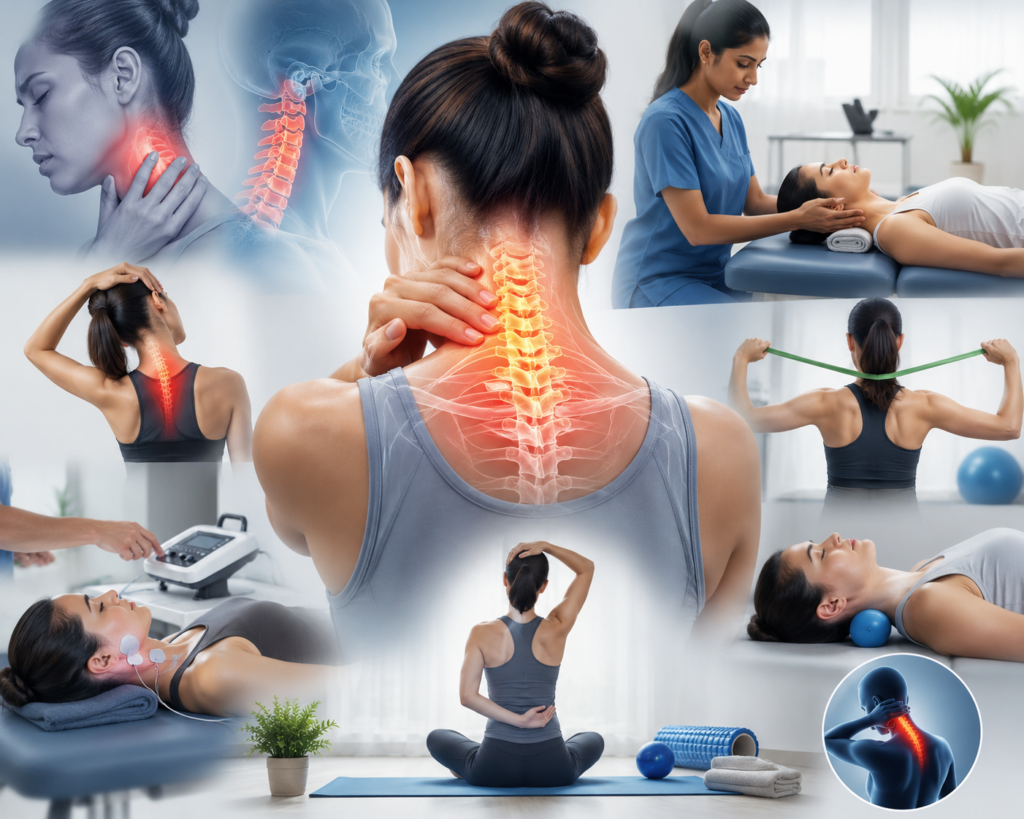
Physiotherapy is highly effective in managing neck pain and improving function.
Exercise Therapy
- Cervical range of motion exercises.
- Strengthening exercises for neck and shoulder muscles.
- Stretching exercises for tight muscles.
- Scapular stabilization exercises.
Manual Therapy
- Joint mobilization techniques.
- Soft tissue mobilization.
- Myofascial release techniques.
Electrotherapy
- Transcutaneous Electrical Nerve Stimulation (TENS).
- Ultrasound therapy.
Postural Correction
- Ergonomic advice.
- Workplace modifications.
- Education regarding proper sitting and sleeping posture.
Functional Rehabilitation
- Activity modification.
- Home exercise programs.
- Stress management techniques.
Complications
Untreated neck pain may lead to:
- Chronic pain syndrome.
- Reduced mobility.
- Cervical radiculopathy.
- Sleep disturbances.
- Functional disability.
- Reduced quality of life.
- Psychological stress and anxiety.
Risk Factors
Factors increasing the risk of neck pain include:
- Poor posture.
- Sedentary lifestyle.
- Advancing age.
- Repetitive work activities.
- Obesity.
- Stress and anxiety.
- Previous neck injuries.
- Prolonged smartphone and computer use.
Conclusion
It is a common but manageable condition. Early diagnosis, proper posture, lifestyle modifications, and physiotherapy interventions can effectively reduce pain, restore mobility, and prevent recurrence. Maintaining an active lifestyle and following ergonomic principles are essential for long-term neck health.
What are the common causes of neck pain?
Answer: Poor posture, prolonged computer use, muscle strain, cervical spondylosis, disc prolapse, stress, and aging are common causes of neck pain.
What are the common symptoms of neck pain?
Answer: Neck pain may cause stiffness, reduced neck movement, headaches, shoulder pain, muscle spasm, tingling or numbness in the arm, and difficulty performing daily activities.
How does physiotherapy help manage neck pain?
Answer: Physiotherapy reduces pain through exercises, manual therapy, electrotherapy, posture correction, ergonomic advice, and home exercise programs to restore movement and prevent recurrence.
Need Personalized Guidance for Physiotherapy?
Our senior certified therapists at Aaziban Care Center provide customized 1-on-1 evaluation and treatment plans at our care centers.