
Imagine your child excitedly running to tell you about something wonderful that happened at school. They begin speaking, but the words seem to get stuck. They repeat sounds, pause unexpectedly, or struggle to get their message out. As a parent, you may wonder, “Is this normal?” or “Should I be worried?” Stuttering is one possible reason for these speech disruptions. If you have ever experienced this situation, you are not alone. It is a common speech disorder that affects many children. Understanding stuttering can help you support your child with confidence, patience, and compassion.
This guide explains stuttering in simple language so that parents, caregivers, and teachers can better understand and help children who stutter.
What is Stuttering? Understanding the Basics
It is a speech disorder that affects the flow of speech. A child who stutters knows exactly what they want to say but may have difficulty saying it smoothly.Common signs include:
- Repeating sounds, syllables, or words
- Prolonging sounds
- Getting “stuck” on words
- Pausing unexpectedly while speaking
Example
A child may say:
- “M-m-m-mom, look at this.”
- “I waaaant the toy.”
- “Can I… can I… can I go outside?”
It is not caused by low intelligence, laziness, or lack of effort. It is a communication disorder that can affect people of all ages.
A Parent’s Story
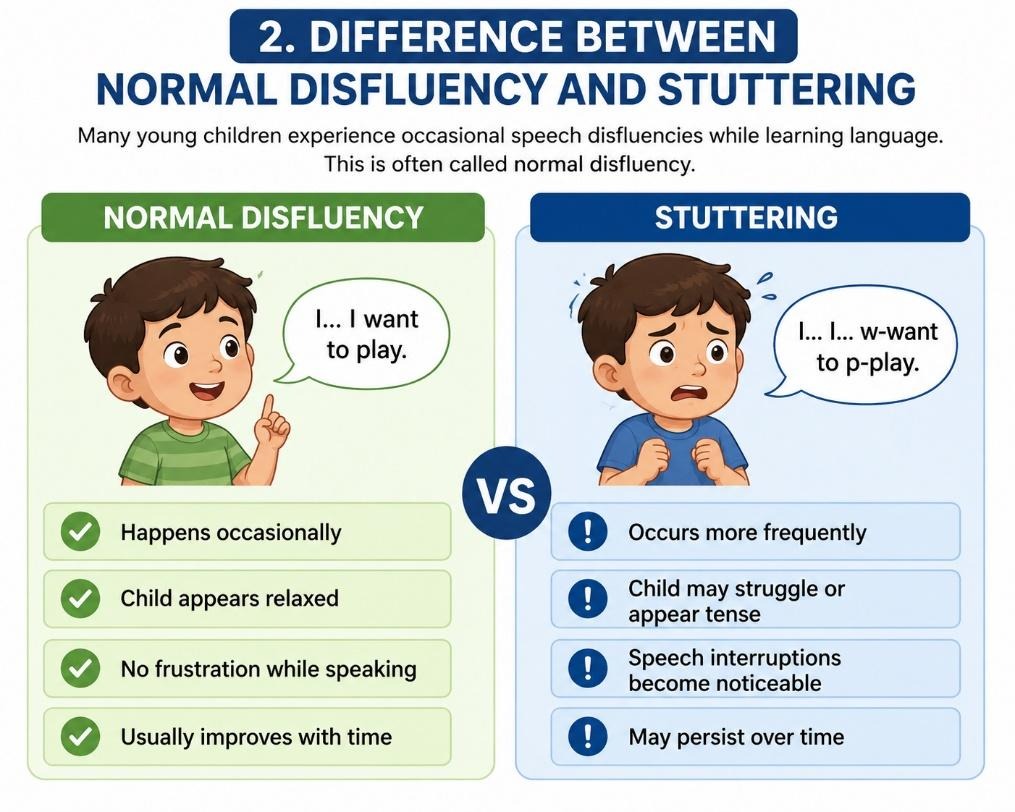
Four-year-old Aarav often repeated words when excited. His parents initially worried, but a speech therapist explained that occasional repetitions were common during language development. Over time, his speech became smoother naturally.
However, persistent and increasing speech disruptions should be evaluated by a professional.
Early Signs of Stuttering Parents Should Never Ignore
Early identification can make a significant difference. Watch for:
- Frequent sound repetitions
- Long pauses before words
- Facial tension during speech
- Eye blinking while talking
- Avoiding speaking situations
- Frustration when trying to communicate
Real-Life Example
Five-year-old Meera started avoiding answering questions in class because she feared getting stuck on words. Early therapy helped her regain confidence and improve her communication skills.
Can Stuttering Go Away Naturally?
Many children recover naturally, especially during the preschool years.Factors that increase the chances of natural recovery include:
- Symptoms present for a short period
- No family history of stuttering
- Mild speech disruptions
- Strong language development
However, some children continue to stutter and may benefit from professional support. If it lasts more than six months or worsens over time, consult a speech therapist.
Why Early Intervention Matters in Stuttering
Early intervention can:
- Improve speech fluency
- Reduce frustration
- Prevent emotional difficulties
- Build communication confidence
Success Story
Six-year-old Rohan began therapy shortly after his parents noticed persistent stuttering. Through regular sessions and family support, he became more confident and comfortable speaking in school and social situations.
The earlier support begins, the better the outcomes are often likely to be.
Common Myths and Facts About Stuttering
| Myth | Fact |
|---|---|
| Children stutter because they are nervous. | Nervousness does not cause stuttering, although stress or anxiety may make stuttering more noticeable. |
| All children will outgrow stuttering on their own. | Some children recover naturally, but others may require professional assessment and therapy. |
| Stuttering means a child is less intelligent. | It has no connection to intelligence. Children who stutter have the same range of abilities as their peers. |
| Telling a child to “slow down” will fix stuttering. | Simple instructions like “slow down” rarely resolve stuttering and may increase pressure or frustration. |
Does Fast Talking Cause Stuttering?
Fast talking does not cause stuttering.
However, some children may appear more disfluent when: Excited,Tired,Rushed,Under pressure.
Creating a calm communication environment can help reduce speaking stress.
Is Stuttering Genetic? What Research Says
Research suggests that genetics can play a role in this situation.Children may have a higher chance of stuttering if:
- A parent stutters
- A sibling stutters
- Other family members have a history of stuttering
Genetics does not guarantee a child will stutter, but it can increase the likelihood.
How Stress and Anxiety Affect Stuttering
Stress does not cause stutter, but it can influence its severity. Children may stutter more when they:
- Feel anxious
- Face unfamiliar situations
- Are being hurried
- Fear being judged
As a caregiver, your calm and supportive response can make a huge difference.
Supportive Approach
Instead of saying:
“Slow down.”
Try saying:
“Take your time. I’m listening.”
This simple change can help reduce pressure and encourage communication.

Can Screen Time Affect Speech Fluency?
Excessive screen time may reduce opportunities for real-life conversations.
Children develop communication skills through:
- Face-to-face interactions
- Storytelling
- Family discussions
- Play with peers
While screen time does not directly cause stuttering, too much screen exposure may limit valuable language-learning experiences.
Balanced screen use and regular conversation can support healthy communication development.
Final Takeaway
Stuttering is a common communication disorder that affects the flow of speech, but it does not define a child’s intelligence, potential, or future success. With patience, understanding, and early support when needed, children who stutter can become confident and effective communicators.
If you have concerns about your child’s speech, professional guidance can help. Aaziban Care Center offers expert assessment and therapy services to support children and families on their communication journey.
Most importantly, listen with patience, encourage open communication, and help your child feel confident in sharing their thoughts and ideas.
FAQ 1: What are the early signs of stuttering in children?
Early signs of stuttering may include repeating sounds, syllables, or words, stretching out sounds, getting stuck on certain words, frequent pauses during speech, facial tension, eye blinking while speaking, and frustration when trying to communicate. If these signs persist or worsen, it may be helpful to consult a speech therapist.
FAQ 2: Can stuttering go away on its own?
Yes, many children naturally recover from stuttering, especially during the preschool years. Children with mild symptoms, strong language skills, and no family history of stuttering may have a higher chance of recovery. However, if stuttering lasts longer than six months or becomes more severe, professional evaluation is recommended.
FAQ 3: How can parents support a child who stutters?
Parents can help by listening patiently, maintaining eye contact, allowing the child to finish speaking without interruption, and creating a calm communication environment. Instead of saying “slow down,” try saying, “Take your time, I’m listening.” This can reduce pressure and encourage confident communication.
Need Personalized Guidance for Speech Therapy?
Our senior certified therapists at Aaziban Care Center provide customized 1-on-1 evaluation and treatment plans at our care centers.