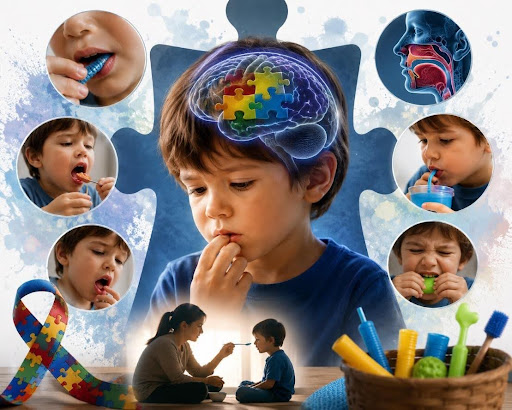
If your child has autism and struggles with eating, chewing, speech clarity, or constantly putting objects in their mouth, you may sometimes feel confused, worried, or emotionally exhausted. Many parents are told their child is simply a “picky eater” or that they will “grow out of it.” But in many cases, these difficulties are connected to something called oral sensory motor deficit.
This condition is common in children with Autism Spectrum Disorder (ASD) and can affect daily life in ways many people do not immediately recognize.
The good news is that with understanding, patience, and the right support, children can gradually improve these skills and become more comfortable during meals, communication, and everyday activities.
What Is Oral Sensory Motor Deficit?
Oral sensory motor deficit means a child has difficulty with:
- Feeling and processing sensations inside the mouth
- Coordinating the muscles used for chewing, swallowing, speaking, and saliva control
The mouth contains many sensitive muscles and nerves. In children with autism, the brain may process these sensations differently. As a result, simple activities like eating certain foods or brushing teeth can feel uncomfortable, stressful, or overwhelming.
For some children, the mouth feels “too sensitive.” For others, it may not feel enough sensation at all.
Why Parents Often Notice Feeding Problems First

Many parents first notice oral sensory motor difficulties during mealtimes.
You may notice that your child:
- Eats only a few specific foods
- Refuses foods with certain textures
- Gags easily
- Avoids chewing
- Holds food in the mouth for a long time
- Prefers crunchy snacks over soft foods
At first, it may seem like stubbornness or food preference. But often, your child is reacting to how the food feels inside their mouth.
Imagine trying to eat something that feels too slimy, too hard, too soft, or even painful. That is how some children with autism experience food textures every day.
“Picky Eating” Is Often More Than Just Behavior
Parents sometimes feel blamed when their child eats very limited foods. Family members or others may say:
- “Just make them hungry.”
- “Don’t give in.”
- “They are being difficult.”
But oral sensory challenges are real.
For example, a child may refuse rice because it feels sticky inside the mouth. Another child may avoid fruits because the texture feels unpredictable. Some children only feel comfortable eating dry or crunchy foods because they provide stronger sensory feedback.
When you understand the reason behind the behavior, it becomes easier to respond with patience instead of pressure.
Some Children Feel Too Much Inside the Mouth
Children with oral hypersensitivity may feel overwhelmed by: Toothbrush bristles,Mixed food textures, Certain temperatures, Sticky foods, Strong flavors.
These children may: Gag easily, Cry during toothbrushing, Avoid trying new foods,Become anxious during meals.
Even small sensations that seem normal to others may feel extremely intense for them.
Some Children Do Not Feel Enough Sensation Inside the Mouth
Other children may constantly seek oral input because they do not feel enough sensation.
You may notice your child: Chewing clothes or toys ,Biting objects ,Overstuffing food into the mouth ,Grinding teeth,Seeking crunchy or spicy foods .
These behaviors are often a way for the child to regulate their sensory system and feel more aware of their mouth and facial muscles.
Difficulty Chewing Is Common in Autism
Chewing requires strong coordination between the jaw, tongue, cheeks, and lips. Some children with autism struggle with this coordination.
They may: Swallow food without chewing properly ,Avoid harder foods ,Take a very long time to eat ,Pocket food inside their cheeks .
This can increase stress during mealtimes and may even affect nutrition over time.
Speech Clarity Can Also Be Affected
Oral motor difficulties do not only affect eating. They can also affect speech development.
Some children may: Speak unclearly ,Have difficulty forming certain sounds, Struggle with lip or tongue movements, Speak less because talking feels difficult.
As a parent, you may sometimes understand your child better than others do because you are familiar with their speech patterns.
Drooling Is Not Always About “Too Much Saliva”
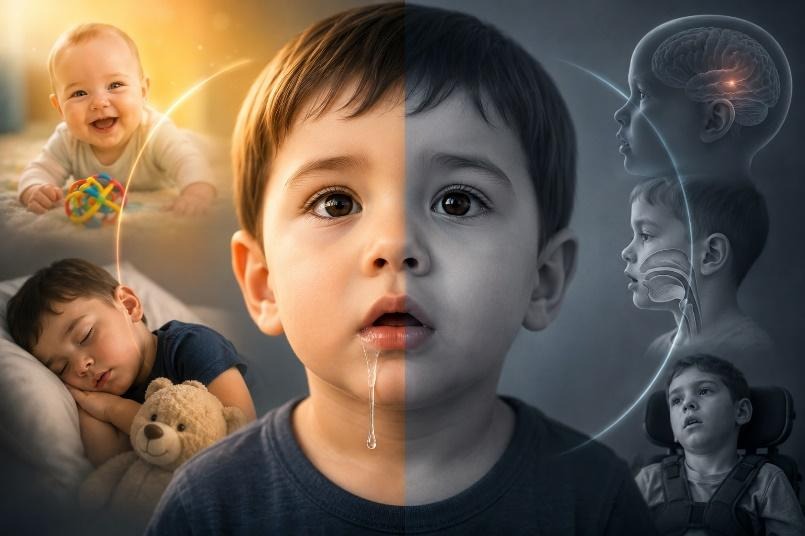
Many parents worry when their child drools frequently. But drooling is usually not caused by producing too much saliva.
Instead, the child may: Have weak oral muscles,Have reduced awareness of saliva, Forget to swallow regularly.
With therapy and practice, many children improve oral control over time.
Tooth Brushing Can Feel Like a Battle
If your child cries, resists, or becomes upset during toothbrushing, you are not alone.
For children with autism, toothbrushing may feel overwhelming because of: Strong mint flavors,Bristle sensations, Foam textures, Water inside the mouth .
Instead of forcing the process quickly, gradual exposure and gentle routines often work better.
Mealtimes Can Become Emotionally Exhausting for Families
Parents often carry silent stress around feeding difficulties.
You may worry about: Nutrition, Weight gain,Social judgment,School lunches, Family gatherings.
Some parents prepare separate meals daily just to ensure their child eats something. Others avoid restaurants or social events because eating outside the home feels too difficult.
These struggles are emotionally real and deserve understanding, not criticism.
Why Some Children Prefer Crunchy Foods
Many children with autism prefer crunchy foods because crunchy textures provide strong sensory feedback inside the mouth.
Foods like: Crackers, Chips, Toast ,Crispy snacks.
may help the child feel more organized and aware during eating.
This preference is often sensory-based rather than simply taste-based.
Oral Sensory Difficulties Can Affect Social Life
Eating is a social activity. When a child struggles with food textures, chewing, or oral sensitivity, social situations can become stressful.
Some children may avoid: Birthday parties, School meals, Eating with relatives, Trying unfamiliar foods in public.
This can sometimes lead to anxiety, embarrassment, or isolation.
Early Support Can Make a Big Difference
The earlier oral sensory motor difficulties are identified, the easier it becomes to support your child.
Professional support may include: Speech therapy ,Occupational therapy, Feeding therapy, Sensory integration strategies .
Therapists can help children improve:
- Chewing skills
- Oral muscle strength
- Speech clarity
- Sensory tolerance
- Feeding confidence
Even small progress over time can make daily life easier for both the child and family.
Parents Should Not Force Feeding

One of the most important things to remember is this:
Forcing a child to eat often increases anxiety and food refusal.
Instead:
- Introduce new foods slowly
- Keep mealtimes calm
- Celebrate small successes
- Respect sensory boundaries
- Focus on progress, not perfection
Your child needs support and safety during meals, not fear or pressure.
Final Thoughts
If your child struggles with eating, chewing, speech clarity, drooling, or oral sensitivity, these challenges may be linked to oral sensory motor difficulties associated with autism.These behaviors are not signs of “bad parenting” or a “difficult child.” They are often connected to how your child experiences sensations and controls movements inside the mouth.
With patience, therapy, and supportive care, many children gradually improve their feeding, speech, and oral motor skills. In aaziban Autism Care and Learning Center help children and families through specialized therapies, guidance, and individualized support.
Most importantly, every small step your child takes is meaningful progress, and your support plays a powerful role in their journey.
What causes oral sensory motor deficit in children with autism?
It is usually related to differences in sensory processing and oral muscle coordination. Children may either feel too much or too little sensation inside the mouth.
Why does my child with autism only eat certain foods?
Many children avoid foods because of texture, smell, temperature, or chewing difficulties rather than taste alone.
Can speech problems be related to oral motor difficulties?
Yes. Weak oral coordination can affect pronunciation, speech clarity, and sound production.
Which therapies help oral sensory motor difficulties?
Speech therapy, occupational therapy, and feeding therapy are commonly recommended to improve oral sensory and motor skills.
Should parents force children with autism to eat new foods?
No. Pressure and force can increase anxiety and food refusal. Gentle exposure and supportive mealtime experiences are more effective.
Need Personalized Guidance for Speech Therapy?
Our senior certified therapists at Aaziban Care Center provide customized 1-on-1 evaluation and treatment plans at our care centers.