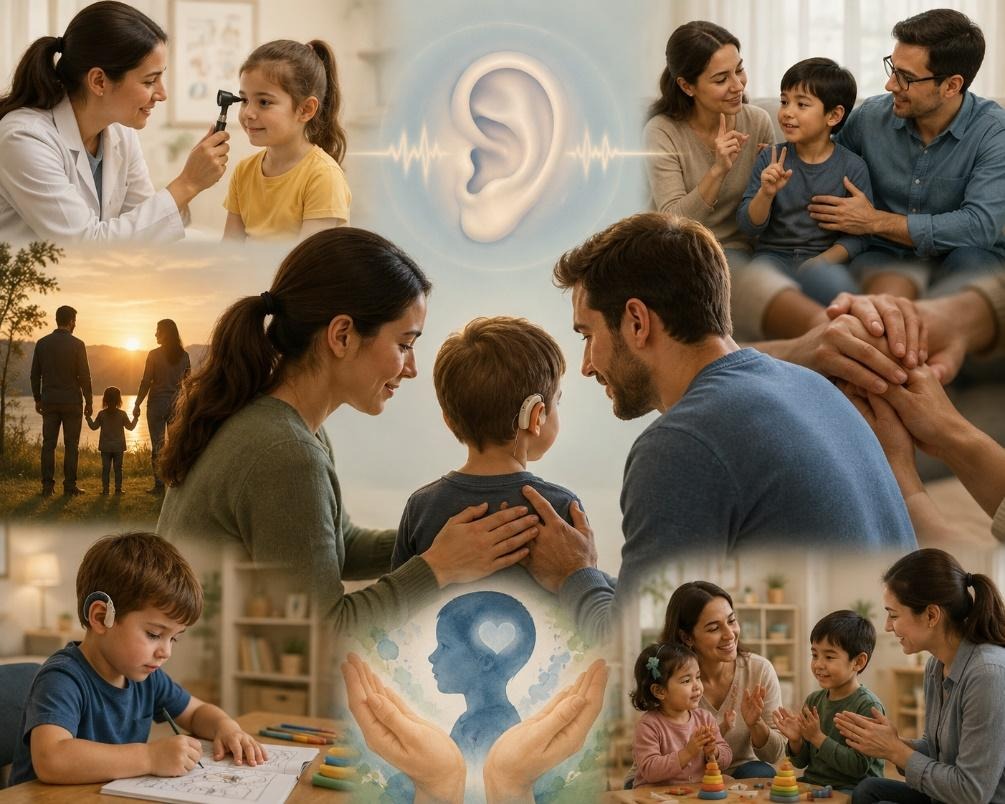
Imagine calling your child’s name several times and noticing that they do not always respond. Or perhaps your elderly parent keeps asking everyone to repeat themselves and turns the television volume up louder than before. These situations are common, and they may be early signs of hearing loss.
Hearing loss can affect people of any age. It influences communication, speech development, learning, confidence, and social relationships. The good news is that early detection and proper support can make a tremendous difference.
Whether you are a parent, caregiver, or family member, understanding hearing loss is the first step toward helping your loved one live a happier and more confident life.
Early Signs of Hearing Loss in Children
Many parents first notice something unusual during everyday activities. A child may not respond when called, may speak less than other children of the same age, or may seem inattentive. Often, these children are simply unable to hear sounds clearly.
Some common signs include:
- Delayed speech and language development.
- Not reacting to their name consistently.
- Frequently saying “What?” or needing repetition.
- Difficulty following instructions.
- Turning up the volume of the television or mobile device.
- Appearing withdrawn or frustrated during conversations.
If you notice these signs, trust your instincts. Early evaluation can help identify the problem and provide timely support.
Why Hearing Is the Foundation of Speech and Language Development
Children learn to speak by listening to the voices and sounds around them. When hearing is reduced, learning speech and language becomes more challenging.
A child with hearing difficulties may:
- Learn words more slowly.
- Have unclear pronunciation.
- Find it difficult to understand instructions.
- Struggle to express thoughts and feelings.
- Experience delays in communication skills.
Fortunately, with early intervention, speech therapy, hearing devices, and family support, many children can develop strong communication skills and thrive.
Why Early Hearing Screening Matters
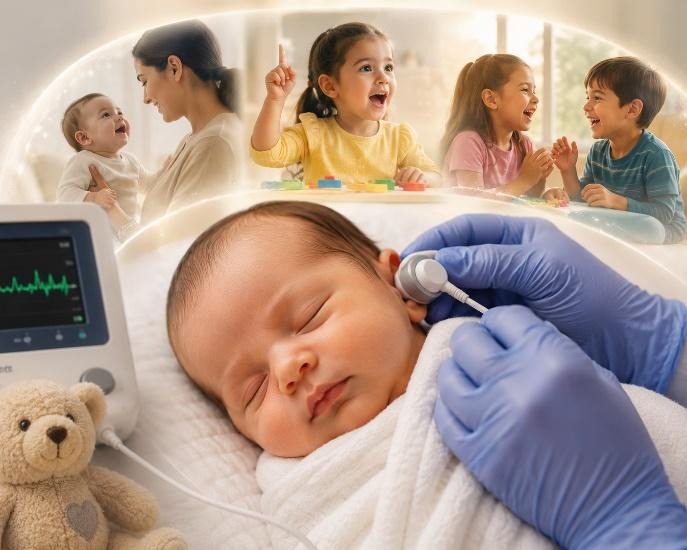
Consider hearing screening as a simple step that can change a child’s future.
Early hearing screening helps identify hearing problems before they begin affecting speech, language, and learning. The earlier a hearing issue is detected, the sooner treatment and support can begin.
Benefits of early screening include:
- Better speech and language development.
- Improved communication skills.
- Greater success in school.
- Stronger social and emotional development.
- Increased confidence and independence.
Early action often leads to better outcomes.
Hearing Loss in Adults: Signs You Shouldn’t Ignore
Hearing loss does not only affect children. Adults often experience hearing changes gradually and may not realize how much it is impacting their daily lives.
Watch for these warning signs:
- Difficulty understanding conversations.
- Frequently asking others to repeat themselves.
- Trouble hearing in crowded or noisy places.
- Ringing or buzzing sounds in the ears.
- Increasing the volume on the television or phone.
- Feeling exhausted after social interactions.
Ignoring these symptoms can lead to frustration and isolation. Seeking professional advice early can help preserve communication and quality of life.
The Connection Between Hearing and Learning

Good hearing plays a major role in a child’s ability to learn.
Imagine trying to understand a teacher when parts of every sentence are missing. This is often what children with hearing loss experience.
Hearing difficulties can affect:
- Attention and concentration.
- Reading and writing skills.
- Memory and comprehension.
- Classroom participation.
- Academic performance.
With appropriate support, children with hearing loss can achieve their educational goals and enjoy learning just like their peers.
Supporting a Child with Hearing Loss at Home
Parents and caregivers play a powerful role in helping children succeed.
Simple things you can do include:
- Speak clearly and face your child when talking.
- Reduce background noise during conversations.
- Encourage reading and storytelling.
- Create opportunities for daily communication.
- Celebrate small achievements.
- Follow the recommendations of healthcare professionals.
Remember, your patience, encouragement, and love can make a world of difference.
An audiologist can recommend the most suitable hearing device based on individual needs.
Preventing Noise-Induced Hearing Loss
Some forms of hearing loss can be prevented.
Simple ways to protect hearing include:
- Keeping headphone volumes at safe levels.
- Limiting exposure to loud sounds.
- Using ear protection in noisy environments.
- Taking listening breaks.
- Teaching children healthy hearing habits from an early age.
Protecting your hearing today can help preserve it for years to come.
Hearing Loss and Social Isolation
Untreated hearing loss affects more than just the ears. It can also impact emotional well-being and relationships.
People with hearing loss may:
- Avoid conversations.
- Feel lonely or isolated.
- Become frustrated or anxious.
- Lose confidence in social situations.
- Withdraw from family gatherings and activities.
The good news is that proper treatment and support can help people reconnect with loved ones and enjoy meaningful relationships again.
Why Early Intervention Can Make a Lifelong Difference
One family’s story beautifully illustrates the power of early intervention.
A young boy who struggled to speak and interact with others was diagnosed with hearing loss during a routine evaluation. With hearing aids, speech therapy, and the support of his parents, he gradually developed language skills and became more confident. Today, he attends school happily and communicates effectively with his friends and teachers.
Stories like these remind us that hearing loss does not define a person’s future.
Early intervention can provide:
- Better speech and language outcomes.
- Improved learning abilities.
- Stronger social skills.
- Greater confidence and independence.
- Enhanced quality of life.
The earlier support begins, the greater the opportunity for success.
Final Thoughts: Helping Every Voice Be Heard with the Right Support
Hearing loss can affect communication, learning, and overall well-being, but early diagnosis and the right support can make a world of difference. With timely intervention, children and adults can develop the skills and confidence they need to thrive.
At Aaziban Care Center, we understand that hearing challenges often affect speech, language, and development as well. Through our multidisciplinary services, including Speech Therapy, Occupational Therapy, Special Education, Child Counseling, Autism Therapy, ADHD Management, and Developmental Assessments, we work closely with families to support every step of the journey.
If you have concerns about your child’s hearing, speech, or developmental milestones, don’t wait. Early support can open the door to better communication and brighter opportunities.
Because every voice matters, and every child deserves the chance to be heard.
Hearing Aids Explained: Answers to Questions Families Often Ask
- Can children use hearing aids?
Yes. Hearing aids are designed for people of all ages, including infants and children. Early use can support speech and language development.
- Do hearing aids restore normal hearing?
Hearing aids improve hearing and communication, but they do not completely restore natural hearing.
- Are hearing aids difficult to use?
Modern hearing aids are smaller, more comfortable, and easier to manage than ever before.
- Should hearing aids be worn every day?
In most cases, regular use provides the greatest benefit and helps the brain adapt to sounds more effectively.
Need Personalized Guidance for Speech Therapy?
Our senior certified therapists at Aaziban Care Center provide customized 1-on-1 evaluation and treatment plans at our care centers.