

One morning, 62-year-old Rajesh woke up after a stroke. When his daughter asked, “Dad, are you feeling okay?” he looked at her, nodded, and tried to answer. But the words simply wouldn’t come out. He knew exactly what he wanted to say, yet speaking had suddenly become difficult.His family feared he had lost his memory or intelligence. The doctor gently explained, “Your father has aphasia. His thinking is still there, but the stroke has affected the part of his brain that controls language.”
many families, they had never heard of aphasia before. They soon learned that while it can make communication challenging, it does not take away a person’s thoughts, feelings, or intelligence. With speech therapy, patience, and daily practice, many people with aphasia learn to communicate more confidently again.
What Is Aphasia? A Simple Explanation for Families
Aphasia is a condition that affects a person’s ability to communicate. It can make speaking, understanding, reading, or writing difficult because the language centers of the brain have been damaged.
A person with aphasia may:
- Know exactly what they want to say but struggle to find the words.
- Understand only parts of a conversation.
- Have difficulty reading books, newspapers, or messages.
- Find writing simple sentences challenging.
Every person experiences this differently. Some have only mild difficulties, while others need more support with communication.
Aphasia After Stroke: Understanding the Basics
The most common cause of is a stroke. A stroke happens when blood flow to part of the brain is interrupted. If the area responsible for language is affected, communication difficulties may develop.
Other causes include:
- Head injuries from accidents
- Brain tumors
- Brain infections
- Certain neurological conditions
- Brain surgery involving language areas
Not everyone who has a stroke develops aphasia. However, for those who do, early speech therapy can make a significant difference.
A Real-Life Example
After his stroke, Rajesh could only say “yes” and “no.” His family worried he would never speak again. With months of speech therapy and daily conversations at home, he gradually began forming short sentences.
His recovery wasn’t overnight, but every new word gave him—and his family—hope.
Aphasia Is Not a Loss of Intelligence
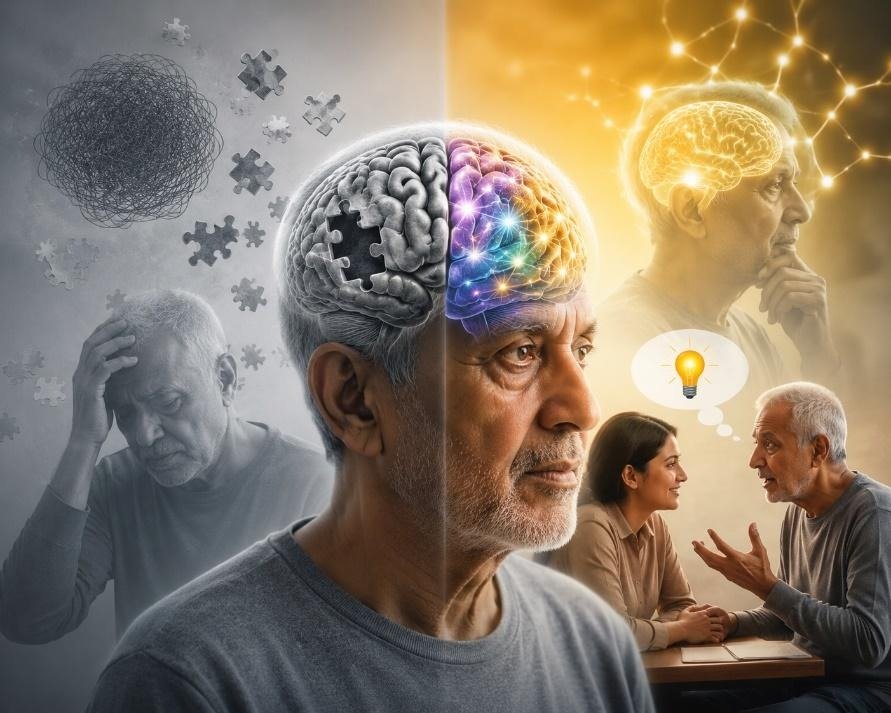
This is one of the most important things every caregiver should know. A person with aphasia has not become less intelligent.
They still:
- Recognize family members.
- Understand emotions.
- Remember important life events.
- Have opinions and ideas.
- Want to participate in conversations.
Imagine being unable to find the right words even though the answer is clear in your mind. That is often how a person with aphasia feels.
Different Types of Aphasia Explained Simply
There are different types of aphasia depending on which part of the brain has been affected.
Expressive (Broca’s) Aphasia
People know what they want to say but struggle to express it.
They may:
- Speak slowly.
- Use only a few words.
- Leave out connecting words.
- Become frustrated while talking.
Receptive (Wernicke’s) Aphasia
People can speak fluently, but their words may not make sense, and they may find it difficult to understand others.
They may:
- Use incorrect words.
- Misunderstand questions.
- Have trouble following conversations.
Global Aphasia
This is the most severe form.
It affects:
- Speaking
- Understanding
- Reading
- Writing
People with global aphasia usually need intensive speech therapy and strong family support.
Anomic Aphasia
People mainly have trouble finding the right word.
For example, instead of saying “chair,” they may say, “the thing you sit on.”
Although this can be frustrating, many people improve with practice and therapy.
How Aphasia Affects Daily Life
Aphasia changes much more than conversations.
Simple daily activities may become difficult, including:
- Talking with family and friends.
- Ordering food at a restaurant.
- Answering phone calls.
- Reading newspapers.
- Sending text messages.
- Shopping independently.
- Returning to work.
Because communication becomes harder, many people begin avoiding social situations.
As a caregiver, your encouragement can help rebuild their confidence. Remember, every conversation—even a short one—is an opportunity to practice communication.
How You Can Support a Family Member with Aphasia Every Day
Recovery does not happen only during therapy sessions. It also happens around the dining table, during family walks, and in everyday conversations.
Here are simple ways you can help:
- Speak slowly and clearly.
- Use short, simple sentences.
- Give plenty of time for answers.
- Maintain eye contact.
- Reduce background noise.
- Use gestures, pictures, or written words if needed.
- Encourage them instead of correcting every mistake.
- Celebrate every small improvement.
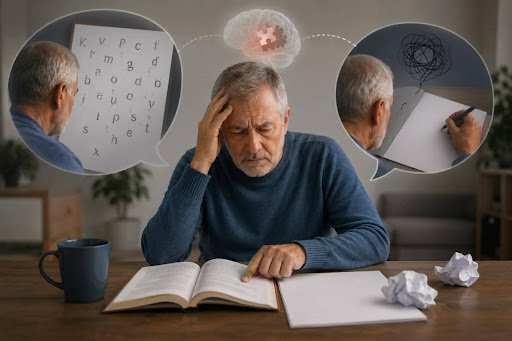
Reading and Writing Difficulties in Aphasia
Many people are surprised to learn that aphasia also affects reading and writing. Your loved one may find it difficult to:
Read
Books,Newspapers,Medicine labels,Text messages,Shopping lists
Write
Their name,Emails,Notes,Forms,Greeting cards
Communication Strategies That Help
Small changes in the way you communicate can make a big difference.
Try These Helpful Tips
- Ask one question at a time.
- Give enough time to respond.
- Use simple language.
- Repeat or rephrase if necessary.
- Use pictures or gestures to support words.
- Encourage all attempts at communication.
Avoid These Common Mistakes
- Interrupting.
- Speaking too quickly.
- Correcting every error.
- Finishing every sentence.
- Pretending to understand if you don’t.
The goal isn’t perfect speech. The goal is helping your loved one feel understood.
The Road to Recovery: How Rehabilitation Helps People with Aphasia
Every person’s recovery journey is different.
Some people improve within a few months, while others continue making progress for years.
Recovery depends on:
- The cause of aphasia.
- The severity of brain damage.
- How early therapy begins.
- Family involvement.
- Regular practice.
Speech-language therapy helps people:
- Improve speaking skills.
- Understand conversations better.
- Strengthen reading and writing.
- Learn new ways to communicate.
- Build confidence in daily life.
There Is Hope: Rebuilding Communication Through Speech Therapy
If your loved one has aphasia, it’s natural to worry about the future.
But remember this:
Recovery is possible.
Progress may seem slow at times, but every word spoken, every sentence completed, and every successful conversation is a meaningful achievement.
With professional guidance, family encouragement, and daily practice, many people with aphasia regain communication skills and reconnect with the people they love.
Your patience, understanding, and belief in their abilities can become one of the most powerful parts of their recovery journey.
How aaziban Care Center Can Help
At aaziban, we understand that aphasia affects the entire family—not just the individual. Our experienced Speech-Language Pathologists provide personalized assessments and evidence-based therapy to improve speaking, understanding, reading, and writing skills. We also guide caregivers with practical communication strategies they can use at home, helping recovery continue beyond the therapy room. With compassionate care, encouragement, and individualized treatment, aaziban supports every person with aphasia in rebuilding confidence, reconnecting with loved ones, and moving toward a more independent and fulfilling life.
1. What is aphasia?
Aphasia is a communication disorder caused by damage to the language areas of the brain. It can affect speaking, understanding, reading, and writing, but it does not affect a person’s intelligence.
2. Can people with aphasia recover?
Yes. Many people with aphasia improve through speech-language therapy, regular practice, and strong support from family members. Recovery varies depending on the cause and severity of the condition.
3. How can I communicate better with someone who has aphasia?
Speak slowly, use short and simple sentences, allow extra time for responses, maintain eye contact, and use gestures, pictures, or written words when needed. Being patient and encouraging can make communication easier.
4. What causes aphasia?
Stroke is the most common cause of aphasia. It can also result from head injuries, brain tumors, brain infections, certain neurological conditions, or surgery involving the language areas of the brain.
Need Personalized Guidance for Speech Therapy?
Our senior certified therapists at Aaziban Care Center provide customized 1-on-1 evaluation and treatment plans at our care centers.