Introduction
Dupuytren’s Contracture is a progressive hand disorder characterized by thickening and tightening of connective tissue in the palm. Over time, it leads to finger deformities that interfere with hand function and daily activities. Early identification and rehabilitation help slow functional decline.
Definition
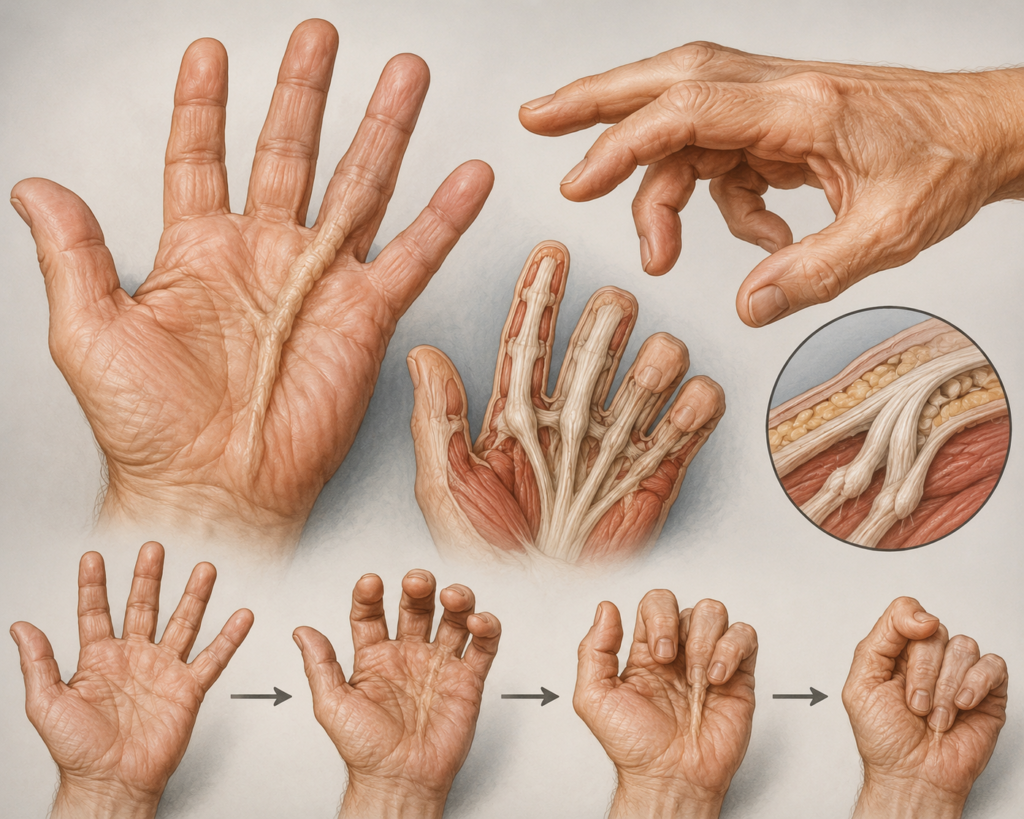
Dupuytren’s Contracture is a benign fibroproliferative condition of the palmar fascia, resulting in nodules and cords that cause progressive flexion deformity of the fingers, most commonly the ring and little fingers.
Mechanism of Injury
The condition develops due to abnormal proliferation of fibroblasts and excessive collagen deposition within the palmar fascia. This leads to fibrotic cord formation, shortening of soft tissues, and gradual finger flexion. It is not caused by acute trauma but progresses slowly over the years.
Clinical Features
- Gradual thickening of the palm
- Formation of firm nodules or cords
- Inability to fully extend affected fingers
- Progressive flexion deformity of fingers
- Commonly bilateral but may be asymmetrical
- More frequent in middle-aged and older adults
Signs and Symptoms
- Painless lump or nodule in the palm
- Complexity, placing the hand flat on a surface
- Decrease grip function
- Skin puckering or dimpling
- Difficulty with activities like writing, shaking hands, or wearing gloves
- Mild discomfort or tightness in the advanced stages

Physiotherapy Management
Physiotherapy plays a supportive role, especially in early and post-surgical stages:
- Stretching exercises to maintain finger extension
- Range of motion exercises for the hand and fingers
- Splinting to prevent the progression of contracture
- Strengthening exercises for hand function
- Soft tissue mobilization to improve tissue flexibility
- Functional task training for daily activities
- Patient education on hand positioning and self-stretching
Physiotherapy helps maintain mobility and improves hand efficiency, but does not reverse established contractures.
Complications
- Permanent finger flexion deformity
- Loss of hand function
- Difficulty performing daily tasks
- Recurrence after surgical intervention
- Reduced grip and dexterity
- Psychological impact due to functional limitation
Conclusion
Dupuytren’s Contracture is a slowly progressive hand condition that can remarkably impair function if untreated. While no definitive cure exists, early diagnosis, physiotherapy, and timely medical or surgical intervention can help preserve hand mobility, reduce disability, and improve quality of life.
Q1. What is Dupuytren’s Contracture?
A: It is a progressive fibroproliferative disorder of the palmar fascia causing nodules, cords, and gradual flexion deformity of the fingers, commonly the ring and little fingers.
Q2. What are the common clinical features of Dupuytren’s Contracture?
A: Thickening of the palm, painless nodules, inability to fully extend fingers, reduced grip strength, and difficulty performing daily hand activities.
Q3. What is the role of physiotherapy in Dupuytren’s Contracture?
A: Physiotherapy helps maintain finger mobility, improve hand function, prevent progression, and support recovery, especially in early and post-surgical stages.
Need Personalized Guidance for Physiotherapy?
Our senior certified therapists at Aaziban Care Center provide customized 1-on-1 evaluation and treatment plans at our care centers.