Introduction
Back pain is one of the most common health complaints affecting people of all ages. It can develop suddenly after an injury or gradually due to poor posture, repetitive movements, or age-related changes. Back pain may interfere with work, household activities, exercise, and sleep. While many cases improve with proper care, persistent pain requires timely evaluation and appropriate treatment to prevent long-term disability.
Definition
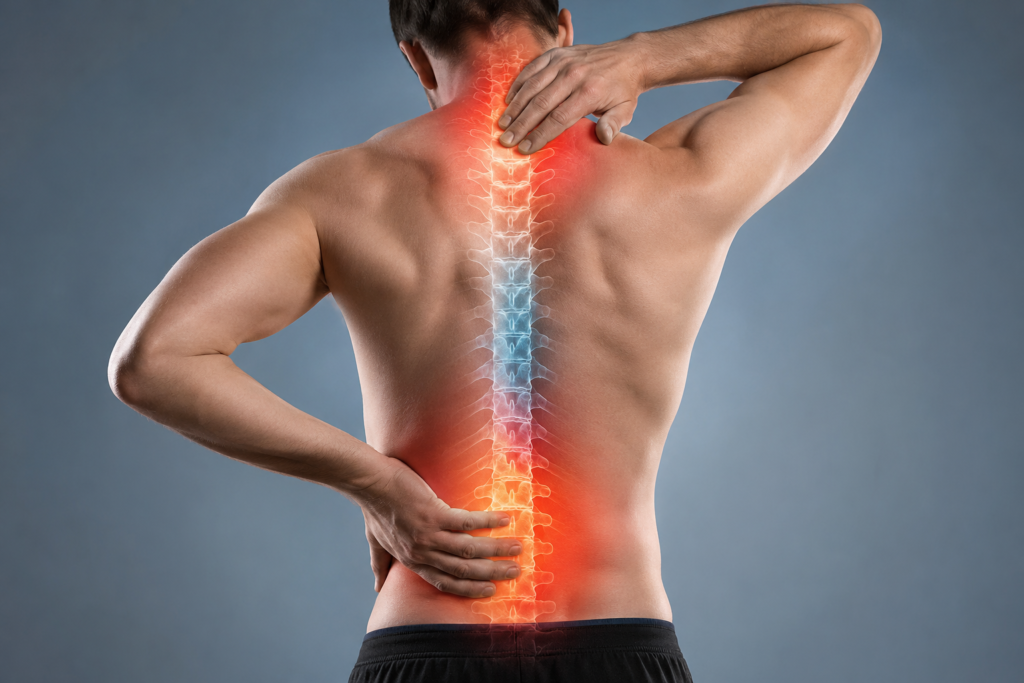
Back pain refers to discomfort, stiffness, or pain arising from the muscles, ligaments, joints, intervertebral discs, nerves, or bones of the spine. It may occur in the upper, middle, or lower back, with lower back pain being the most frequently reported type.
Etiology
- Poor posture during sitting, standing, or lifting.
- Prolonged sitting and sedentary lifestyle.
- Muscle strain or ligament sprain due to overuse.
- Degenerative changes such as osteoarthritis or spinal stenosis.
- Herniated or bulging intervertebral disc.
- Traumatic injuries, including falls and accidents.
- Osteoporosis leading to vertebral compression fractures.
- Inflammatory or infectious spinal conditions.
- Obesity causing increased stress on the spine.
Clinical Features
- Localized or widespread back discomfort.
- Pain aggravated by movement, bending, or prolonged sitting.
- Decreased flexibility and spinal mobility.
- Difficulty performing daily activities.
- Muscle tightness and protective muscle spasm.
- Altered posture due to pain.
- Pain that may radiate to the buttock or lower limb in some cases.
Signs and Symptoms
- Persistent or intermittent back pain.
- Tenderness over the affected spinal region.
- Morning stiffness.
- Limited range of spinal motion.
- Muscle weakness in severe cases.
- Difficulty walking or standing for long periods.
- Tingling or numbness if nerves are compressed.
- Pain relieved or worsened by specific positions.

Physiotherapy Management
- Comprehensive assessment to identify the underlying cause.
- Pain-relieving modalities such as heat, cold therapy, or TENS when indicated.
- Manual therapy to improve joint mobility and decreased stiffness.
- Stretching exercises to increase flexibility.
- Core strengthening exercises to improve spinal stability.
- Postural correction and ergonomic education.
- Gait and movement retraining.
- Functional exercises to restore daily activities.
- Home exercise program for long-term maintenance.
- Patient education on safe lifting techniques and lifestyle modifications.
Complications
- Chronic back pain.
- Decreased physical activity and muscle deconditioning.
- Persistent disability affecting work and daily life.
- Sleep disturbances.
- Anxiety, depression, and Decreased quality of life.
- Increased risk of recurrent episodes.
- Balance impairment and increased fall risk in older adults.
Risk Factors
- Increasing age.
- Sedentary lifestyle.
- Poor physical fitness.
- Obesity.
- Smoking.
- Repetitive heavy lifting.
- Occupations involving prolonged sitting or standing.
- Poor workplace ergonomics.
- Psychological stress.
- Previous history of back pain.
Conclusion
Back pain is a common but manageable condition when recognized and treated early. Identifying the underlying cause, maintaining an active lifestyle, correcting posture, and following a structured physiotherapy program can remarkably reduce pain and improve function. Early intervention, regular exercise, and healthy daily habits play a key role in preventing recurrence and maintaining long-term spinal health.
Q. What are the common causes of back pain?
A. Back pain is commonly caused by poor posture, prolonged sitting, muscle strain, herniated discs, obesity, injuries, and age-related spinal changes.
Q. How can physiotherapy help treat back pain?
A. Physiotherapy helps reduce pain through manual therapy, stretching, core strengthening exercises, posture correction, and personalized exercise programs to improve mobility and function.
Q. How can I prevent back pain?
A. Maintain good posture, exercise regularly, strengthen your core muscles, use proper lifting techniques, stay active, and maintain a healthy body weight to reduce the risk of back pain.
Need Personalized Guidance for Physiotherapy?
Our senior certified therapists at Aaziban Care Center provide customized 1-on-1 evaluation and treatment plans at our care centers.