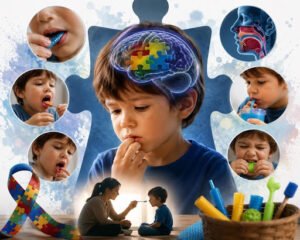

As a parent, few things are more exciting than hearing your child say their first words. Every new word, question, and conversation feels like a milestone worth celebrating. But what if your child seems to understand less than other children their age, struggles to express their thoughts, or finds conversations difficult? It’s natural to wonder, “Will my child catch up?” or “Am I doing something wrong?” The answer is reassuring—you are not alone, and it is not your fault. Some children experience Developmental Language Disorder(DLD), a condition that affects how they understand and use language. It is more common than many people realize, yet it often goes unnoticed because children with DLD may appear bright, playful, and eager to learn.
The good news is that with early support, patience, and the right guidance, children with Developmental Language Disorder(DLD) can make remarkable progress. Understanding the condition is the first step toward helping your child communicate with confidence.
| What Is Developmental Language Disorder (DLD)? A Simple Guide for Parents |
Imagine trying to put together a puzzle when some of the pieces don’t quite fit. That’s similar to what language can feel like for a child with Developmental Language Disorder.
DLD is a developmental condition that makes it difficult for children to understand spoken language, use words correctly, or express their ideas clearly. These challenges are not caused by hearing problems, low intelligence, or poor parenting. Instead, the brain processes language differently.
Your child may know exactly what they want to say but struggle to find the right words. They may also find it difficult to understand long conversations or follow several instructions at once.Every child with Developmental Language Disorder(DLD) is unique. Some mainly struggle to understand language, while others find speaking more challenging. Many experience both.
Signs of DLD Across Different Ages
Every child develops at their own pace, but certain signs may suggest that extra support is needed.
Toddlers (1–3 Years)
You may notice your child:
- Says fewer words than other children their age
- Has trouble following simple instructions
- Uses gestures more than words
- Finds it hard to combine two or three words
- Becomes frustrated when trying to communicate
Preschool Children (3–5 Years)
As language skills become more important, your child may:
- Speak in short, simple sentences
- Make frequent grammar mistakes
- Struggle to learn new words
- Find it difficult to answer questions or tell simple stories
- Need instructions repeated often
School-Age Children
As school demands increase, children with DLD may:
- Have difficulty understanding lessons
- Struggle with reading and writing
- Find it hard to explain ideas clearly
- Misunderstand classroom instructions
- Avoid speaking in class or find making friends more challenging
| Why Developmental Language Disorder Is Often Overlooked |
One of the biggest challenges with DLD is that it isn’t always obvious.
Unlike children with speech disorders, children with DLD may pronounce words clearly. Because they “sound normal,” adults may not realize that understanding and using language is actually difficult for them.
Parents are sometimes told:
- “He’s just a late bloomer.”
- “She’s shy.”
- “Boys usually talk later.”
- “He’ll grow out of it.”
Although these comments are usually well meaning, waiting too long may delay valuable support.
How DLD Can Affect Learning at School
Language is the foundation for almost everything children learn.
Think about a typical classroom. Children are expected to:
- Listen carefully
- Follow instructions
- Answer questions
- Learn new vocabulary
- Read stories
- Write sentences
- Join classroom discussions
For a child with DLD, each of these activities may require much more effort.
This does not mean your child isn’t intelligent. It simply means they process language differently.
Helping Your Child Understand and Use Language
Everyday activities like reading, playing, cooking, and shopping are great opportunities to support your child’s language development.
You can help by:
- Speaking slowly and clearly
- Using short, simple sentences
- Giving one instruction at a time
- Reading together daily
- Talking about everyday activities
- Giving your child time to respond
- Encouraging communication and praising their efforts
Social Challenges Associated with DLD
Making friends depends heavily on communication. Imagine wanting to join a game but not knowing how to explain yourself or understand what others are saying.
Children with DLD may:
- Feel left out during conversations
- Misunderstand jokes or playground rules
- Become frustrated when others don’t understand them
- Avoid speaking in groups
- Lose confidence over time
DLD vs Speech Delay: Understanding the Difference

Many parents confuse DLD with a speech delay, but they are not the same.A child with a speech delay mainly has difficulty producing speech sounds. They usually understand language well but may not pronounce words clearly.
A child with Developmental Language Disorder has difficulty understanding language, expressing ideas, or both. Their challenges involve vocabulary, grammar, sentence building, and conversation. Some children experience both speech and language difficulties, which is why a professional assessment is so important.
| Looking Ahead: The Long-Term Impact of Developmental Language Disorder(DLD) |
Without support, language difficulties can continue into adolescence and adulthood.
Children may experience:
- Difficulty with reading and writing
- Lower confidence
- Challenges making friendships
- Problems expressing emotions
- Academic struggles
- Communication difficulties later in employment
The encouraging news is that children who receive early intervention often develop strong communication skills and learn effective ways to overcome these challenges.
Strategies for Parents and Teachers

Children make the greatest progress when parents, teachers, and therapists work together.
At Home
You can support your child by:
- Talking together every day.
- Reading books regularly.
- Expanding on what your child says.
- Giving plenty of opportunities to communicate.
- Celebrating effort rather than perfection.
- Following your therapist’s home practice activities.
At School
Teachers can help by:
- Using simple, clear instructions.
- Breaking tasks into smaller steps.
- Providing visual supports.
- Checking that the child understands.
- Allowing extra thinking time.
- Creating a supportive classroom where communication is encouraged.
Why Early Identification Can Make a Lifelong Difference
One of the greatest gifts you can give your child is early support.
If you notice ongoing language difficulties, don’t wait for your child to “grow out of it.”
Early assessment allows professionals to understand your child’s strengths and challenges before language difficulties begin affecting learning, friendships, and confidence.
Seeking help is not about placing labels on your child. It’s about opening doors to support, understanding, and opportunity. Remember, early intervention doesn’t change who your child is—it helps them become the best version of themselves.
How Speech and Language Therapy Can Help
Speech and language therapy focuses on helping children communicate more effectively in everyday life.
Therapy may help your child:
- Understand language more easily
- Learn new words
- Build longer sentences
- Improve conversation skills
- Develop storytelling abilities
- Gain confidence when communicating
Supporting Your Child with aaziban
At aaziban, we understand that every child’s communication journey is different. We know how worrying it can feel when your child struggles to understand or express themselves, and we’re here to support you every step of the way. Our experienced speech-language professionals provide detailed assessments, personalized therapy plans, and practical guidance that parents can easily use at home. By working closely with families and schools, we help children strengthen their language skills, improve confidence, and communicate more effectively in everyday situations. At Aaziban, we believe that every child deserves to be heard, understood, and given the opportunity to reach their full potential.
Final Takeaway
If your child has Developmental Language Disorder(DLD), remember that their journey may look different—but different does not mean limited.
Every new word spoken, every instruction understood, every conversation started, and every friendship formed is a meaningful achievement. Progress may come one step at a time, but those small steps lead to lasting growth.
1. What is Developmental Language Disorder (DLD)?
Developmental Language Disorder (DLD) is a condition that affects a child’s ability to understand, use, and express language. It is not caused by hearing loss, low intelligence, or poor parenting.
2. What are the early signs of Developmental Language Disorder (DLD)?
Early signs may include delayed speech, difficulty following instructions, limited vocabulary, trouble forming sentences, and challenges expressing thoughts or answering questions.
3. Can children with Developmental Language Disorder (DLD) improve?
Yes. With early identification, speech and language therapy, and consistent support at home and school, many children make significant progress in their communication skills.
4. When should I seek professional help for my child?
If your child has ongoing difficulties understanding or using language compared with other children of the same age, it is best to seek an assessment from a speech-language professional as early as possible.
Need Personalized Guidance for Speech Therapy?
Our senior certified therapists at Aaziban Care Center provide customized 1-on-1 evaluation and treatment plans at our care centers.