
Introduction
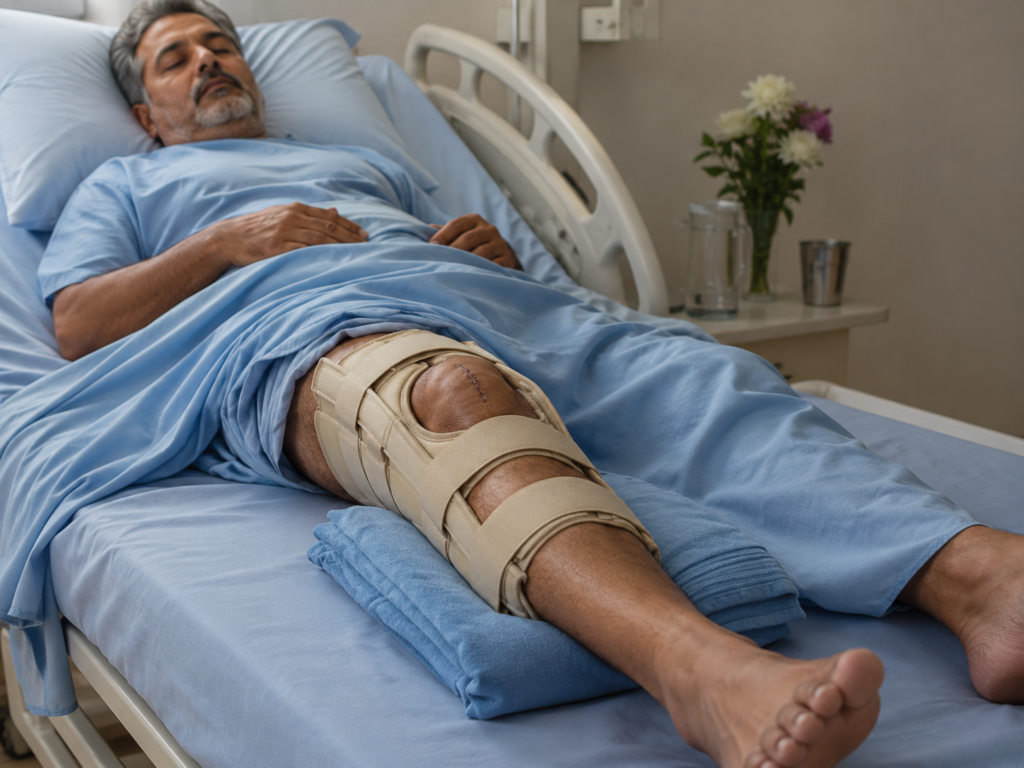
A fracture of the patella refers to a break in the kneecap, a small but crucial bone that protects the knee joint and improves the efficiency of the quadriceps muscle. Patellar fractures can remarkably impair knee extension and walking ability. Early diagnosis and structured physiotherapy are essential for optimal functional recovery.
Mechanism of Injury
- Direct blow to the front of the knee, such as a fall or dashboard injury
- Sudden forceful contraction of the quadriceps muscle
- Fall directly onto a flexed knee
- Road traffic accidents
- Sports-related trauma
Signs and Symptoms
- Severe pain over the front of the knee
- Swelling and redness around the knee joint
- Pain during walking or weight bearing
- Inability or difficulty to straighten the knee
- Visible deformity or gap in displaced fractures
- Tenderness over the patella
Physiotherapy Management
Acute Phase:
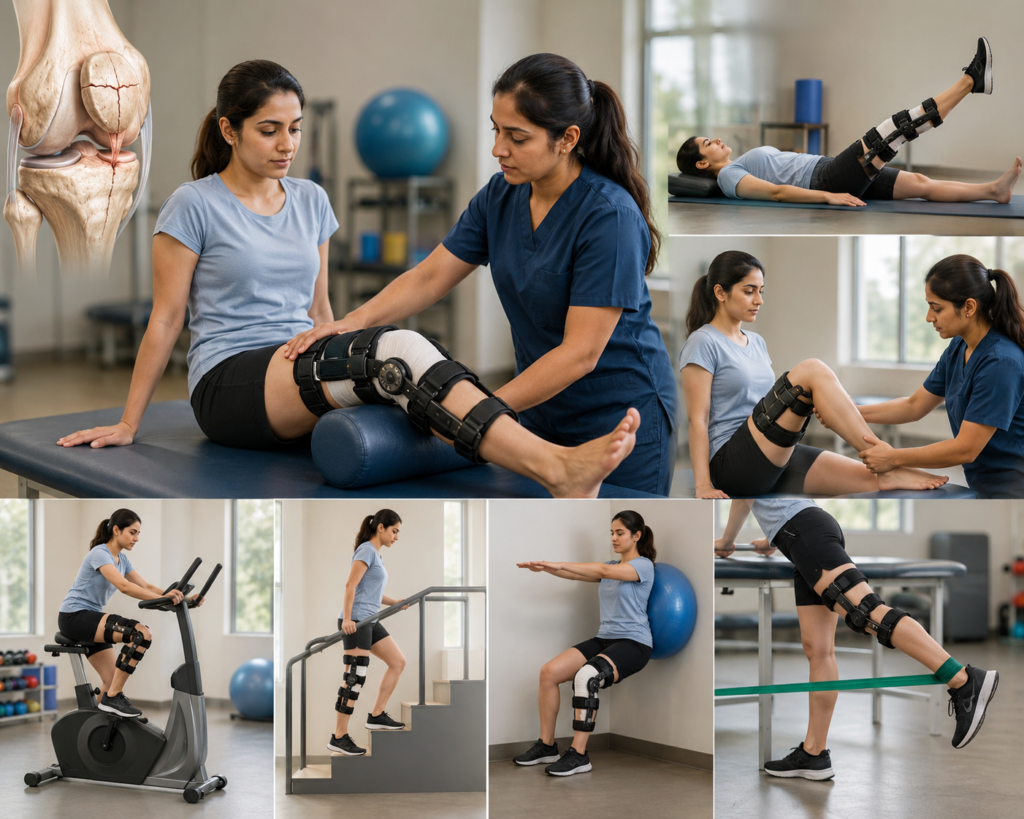
- Pain and swelling control using ice therapy and elevation
- Gentle range of motion exercises for the hip and ankle
- Isometric quadriceps exercises to maintain muscle strength
- Use of a knee brace or immobilizer as prescribed
Rehabilitation Phase:
- Gradual knee range of motion exercises
- Strengthening exercises for quadriceps, hamstrings, and hip muscles
- Patellar mobilization techniques
- Gait training with assistive devices
Functional Phase:
- Progressive weight-bearing exercises
- Functional activities such as stair climbing and squatting
- Balance and proprioception training
- Return-to-sport or activity-specific exercises
Complications
- Knee stiffness and decreased range of motion
- Quadriceps weakness
- Chronic anterior knee pain
- Patellofemoral arthritis
- Malunion or non-union of the fracture
Conclusion
Fracture of the patella can remarkably affect knee function and mobility. Timely medical intervention combined with well-planned physiotherapy rehabilitation is vital to restore strength, range of motion, and functional independence while minimizing long-term complications.
Need Personalized Guidance for Nutrition?
Our senior certified therapists at Aaziban Care Center provide customized 1-on-1 evaluation and treatment plans at our care centers.