Introduction
Lacunar syndromes are a group of neurological conditions caused by small, deep infarcts in the brain, commonly associated with stroke. These syndromes affect motor and sensory pathways, leading to specific clinical patterns. Early identification is essential for effective management and prevention of further complications.
Definition
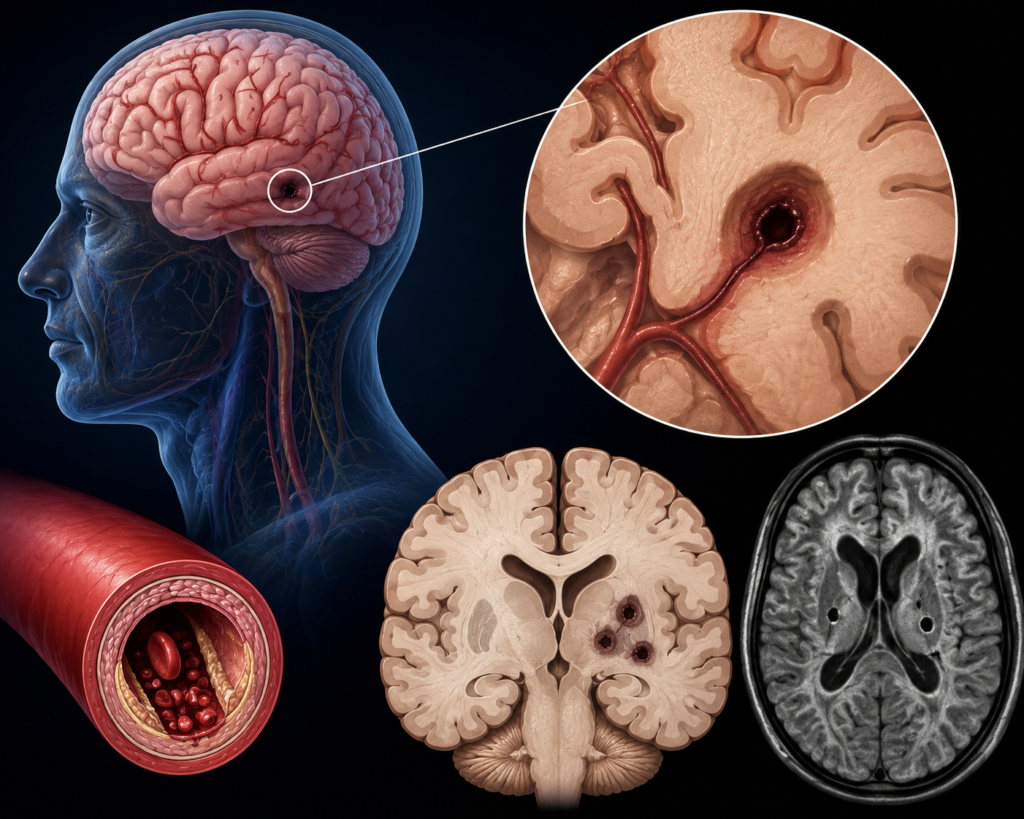
Lacunar syndromes refer to clinical manifestations resulting from lacunar infarcts—small (<15 mm) ischemic strokes occurring in the deep structures of the brain such as the basal ganglia, internal capsule, thalamus, and pons.
Etiology
Common causes include:
- Chronic hypertension (most common)
- Atherosclerosis of small penetrating arteries
- Diabetes mellitus
- Lipohyalinosis (degeneration of vessel walls)
- Microemboli from larger vessels
- Smoking and unhealthy lifestyle
Epidemiology
Lacunar syndromes account for approximately 20–30% of all ischemic strokes, making them one of the most common stroke subtypes.
They are more frequently seen in middle-aged and elderly individuals, particularly those above 55 years.
The incidence is higher in populations with a high prevalence of hypertension and diabetes mellitus, which are the risk factors.
Men are slightly more affected than women, although the difference is not very large.
Clinical Features
Lacunar syndromes present with characteristic patterns depending on the affected area:
- Pure motor hemiparesis
- Sensorimotor stroke
- Pure sensory stroke
- Ataxic hemiparesis
- Dysarthria–clumsy hand syndrome
Signs and Symptoms
Patients may exhibit:
- Weakness on one side of the body (face, arm, or leg)
- Loss of sensation or numbness
- Poor balance and coordination
- Slurred speech (dysarthria)
- Difficulty with fine motor skills
- Absence of cortical signs like aphasia or visual field defects

Physiotherapy Management
Physiotherapy plays a vital role in recovery and functional independence:
- Strengthening exercises to improve muscle power
- Gait training to restore walking ability
- Task-specific training for daily activities
- Postural control exercises to enhance alignment
- Neurofacilitation techniques (e.g., Bobath, PNF)
- Balance and coordination training for stability
- Patient education on lifestyle modification and stroke prevention
Complications
If not managed effectively, lacunar syndromes may lead to:
- Persistent motor or sensory deficits
- Increased risk of recurrent stroke
- Functional disability
- Reduced quality of life
- Cognitive decline over time
Risk Factors
Key risk factors include:
- Hypertension
- Diabetes mellitus
- Hyperlipidemia
- Smoking
- Sedentary lifestyle
- Advanced age
Conclusion
Lacunar syndromes are a common form of ischemic stroke affecting small blood vessels in the brain. Early diagnosis, appropriate medical care, and structured physiotherapy rehabilitation can significantly improve outcomes and help patients regain independence.
What are lacunar syndromes?
They are small vessel strokes caused by deep brain infarcts affecting motor and sensory pathways.
What are common symptoms of lacunar syndromes?
Weakness, sensory loss, poor balance, slurred speech, and difficulty with fine motor skills.
How does physiotherapy help in lacunar syndromes?
It improves strength, balance, gait, and functional independence through targeted rehabilitation exercises.
Need Personalized Guidance for Physiotherapy?
Our senior certified therapists at Aaziban Care Center provide customized 1-on-1 evaluation and treatment plans at our care centers.