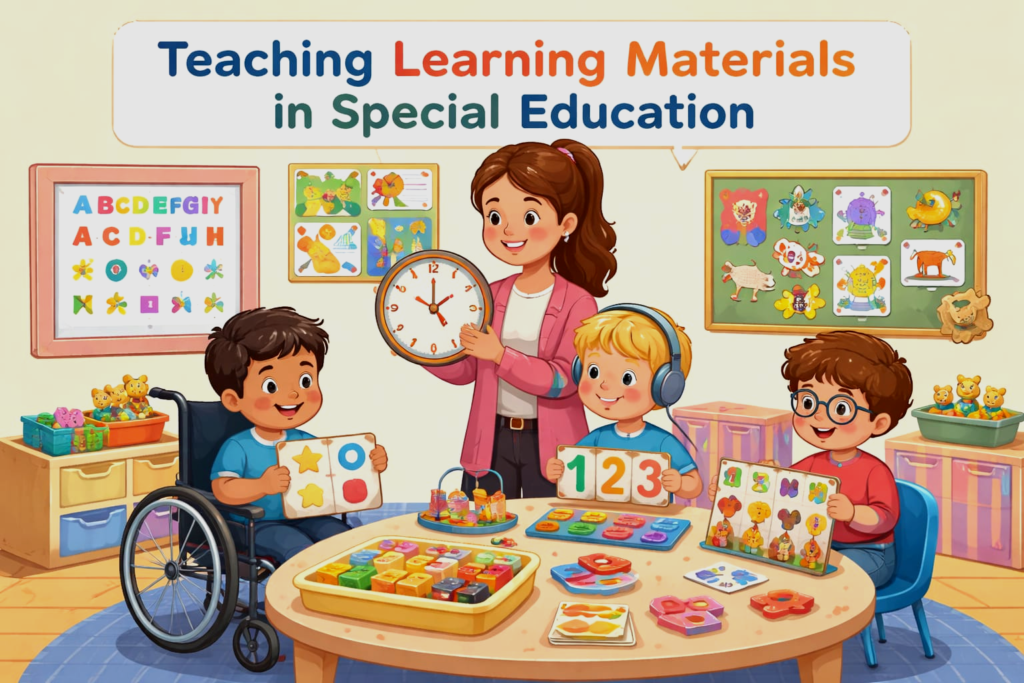
Education is a process that helps children develop their knowledge, skills and abilities. In this process, Teaching Learning Materials (TLM) plays a very important role in making learning more effective, interesting and meaningful. TLM helps teachers present concepts in a simple and understandable way and allows children to learn through seeing, touching and doing.
In the field of Early Intervention and Special Education, the use of TLM becomes even more important. Children with developmental delays or special needs often require structured and visually supported learning experiences. TLM helps special educators provide individualized support and create engaging learning opportunities that promote cognitive, communication, social and motor development. Therefore, TLM are considered an essential part of effective teaching and intervention for children with special needs.
Key Roles of TLMs in Special Education and Early Intervention
Enhances Understanding of Concepts:
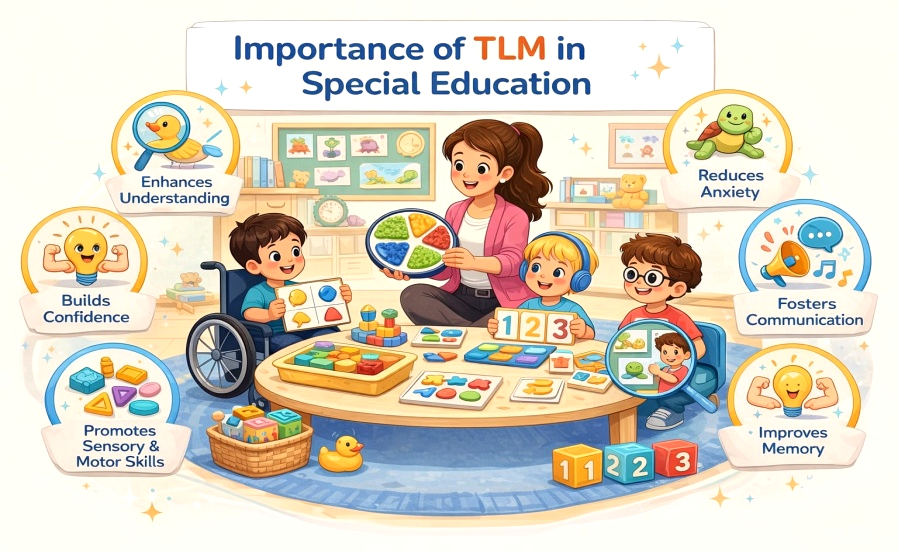
TLM help children understand different concepts in a simple and concrete way. Children with special needs often find abstract ideas difficult to understand, so visual and hands-on materials make learning clearer and easier.
Increases Attention and Interest:
Attractive and interactive materials capture children’s attention and motivate them to participate actively in learning activities. This helps maintain focus and interest during teaching sessions.
Supports Individualized Learning
Every child has different abilities and learning styles. TLM allows special educators to adapt teaching strategies and materials according to the individual needs and pace of each child.
Develops Communication Skills
Materials such as picture cards, communication boards and gesture symbols help children express their needs, thoughts and feelings, thereby improving their language and communication abilities.
Sensory and Motor Skill Development
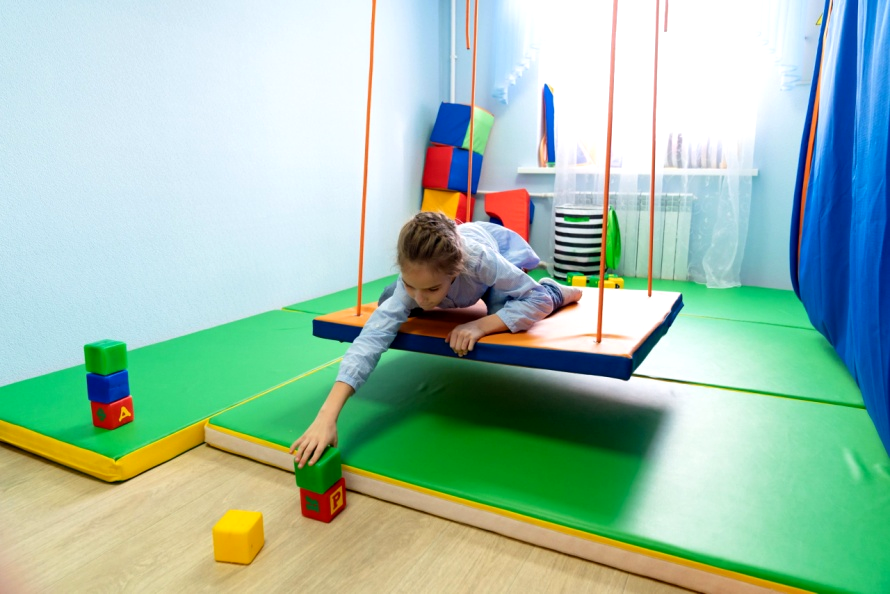
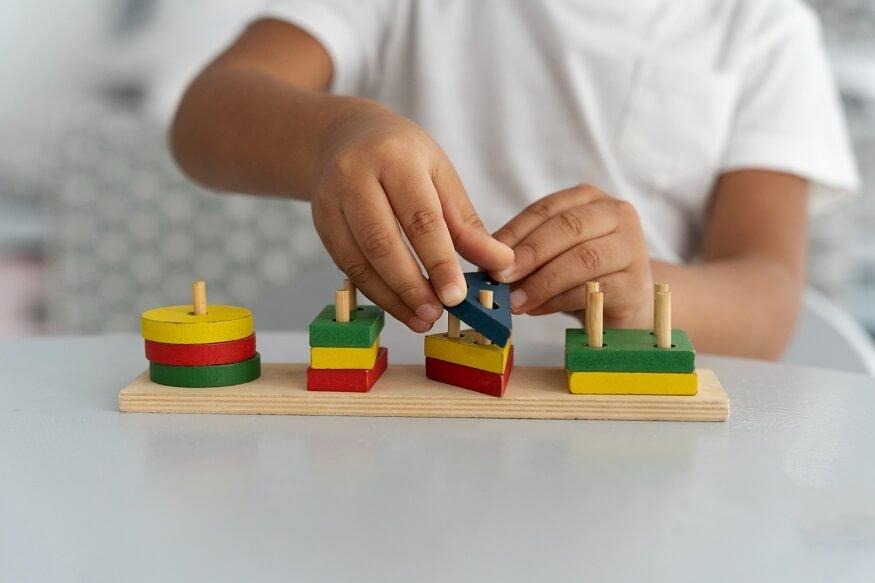
Manipulating materials (blocks, rings, beads, and stacking toys), Tactile, auditory and visual materials help children with sensory processing challenges engage with their environment and develop fine/gross motor skills, hand-eye coordination and overall physical development.
Promotes Social Interaction
Group activities using TLM encourage children to interact with peers and teachers, which helps in developing social skills such as sharing, cooperation and turn-taking.
Enhances Memory and Retention
When children see, touch and do, they remember information for a longer time compared to only listening.
Helps in Behaviour Management
Structured materials and Visual supports such as “sit”, “wait” or “stop” cards help children understand instructions and routines. This helps educators to manage a child’s behavior more effectively.
Supports Various Skill Developments
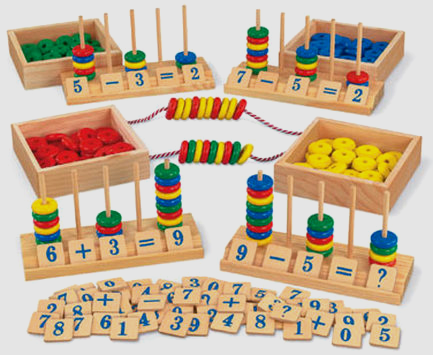
TLM helps in developing many important skills such as: Cognitive skills, Language development, Problem-solving skills and Daily living skills. Various activities using puzzles, matching cards, sorting objects and problem-solving games help develop children’s thinking, reasoning and memory skills.
Specially designed materials allow children to practice skills independently, which is crucial for building self-confidence and self-help skills.
Concrete Representation of Abstract Concepts
For children with cognitive disabilities, physical, tangible objects (concrete manipulative) turn abstract ideas into understandable, “hands-on” experiences.
Increased Engagement and Reduced Anxiety
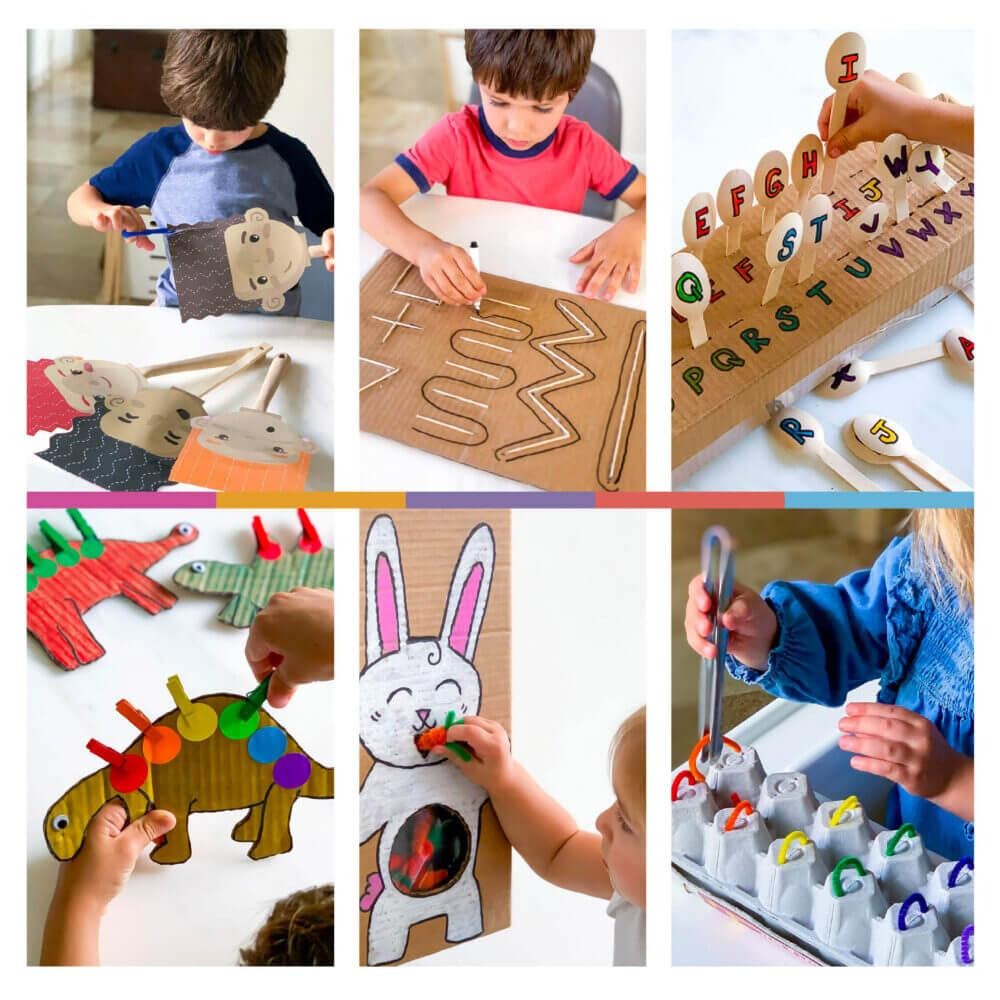
Interactive, fun, and colorful tools, such as toys or games, reduce learning anxiety, combat boredom and promote sustained focus.
Final Thoughts
Teaching Learning Materials (TLM) play a crucial role in making learning more effective and engaging for children with special needs. Through visual, interactive, and hands-on learning experiences, TLM helps children understand concepts better and develop important cognitive, communication, and social skills. Such supportive learning approaches are also emphasized at Aaziban Care Center, where professionals provide specialized services such as special education, occupational therapy, speech therapy, and rehabilitation to support the holistic development of children with special needs. For more information about their services and programs, visit aaziban care center.
1. What are Teaching Learning Materials (TLM) in special education?
Teaching Learning Materials (TLM) are educational tools such as pictures, toys, cards, puzzles, and visual aids that help teachers explain concepts in a simple and engaging way. In special education, TLM support children with developmental delays by providing visual, tactile, and hands-on learning experiences.
2. Why are TLM important for children with special needs?
TLM are important because they make learning easier to understand, especially for children who may struggle with abstract concepts. They improve attention, enhance understanding, support communication, and help develop cognitive, social, and motor skills.
3. How do TLM support communication and social development?
Materials like picture cards, communication boards, and interactive group activities encourage children to express their needs, interact with peers, and practice social skills such as sharing, cooperation, and turn-taking.
4. How do TLM help improve memory and independence in children?
When children learn through seeing, touching, and doing, they remember information better. TLM also allow children to practice tasks independently, which helps build confidence, self-help skills, and greater independence in daily activities.
Need Personalized Guidance for Special Education?
Our senior certified therapists at Aaziban Care Center provide customized 1-on-1 evaluation and treatment plans at our care centers.