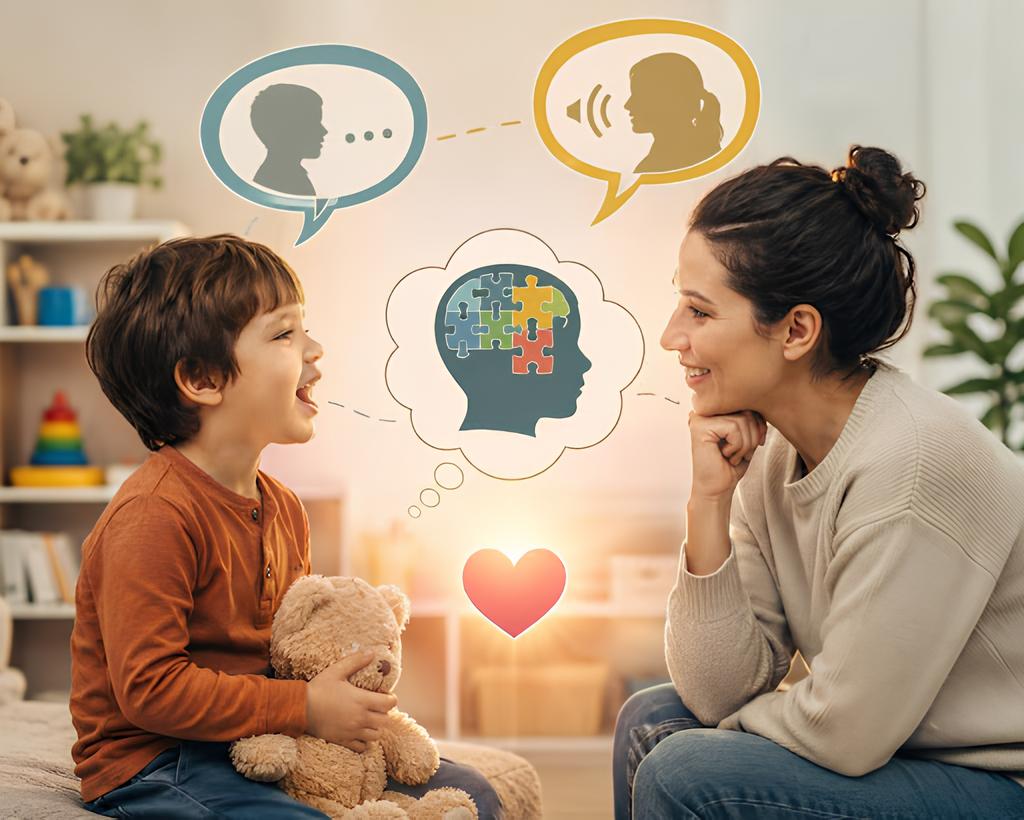
When your child repeats the same words, cartoon dialogues, or questions again and again, it can leave you wondering:
“Why is my child doing this?”
“Are they trying to communicate?”
“Is this a sign of autism?”
If you are a parent or caregiver facing these questions, you are not alone.
Many children with autism use a communication style called echolalia. While repetitive speech may seem confusing at first, it is often your child’s way of learning language, expressing feelings, coping with stress, or trying to connect with the world around them.
Understanding echolalia can help you respond with less worry and more confidence.
What Is Echolalia?
Echolalia means repeating words, phrases, sounds, or sentences heard from other people.
A child may repeat:
- Questions you ask
- Lines from cartoons
- Song lyrics
- School instructions
- Favorite movie dialogues
For example:
You ask: “Do you want juice?”. Your child replies: “Want juice?”
At first, this may sound like “copying.” But in many cases, your child is actually trying to process language or communicate.
A Real-Life Example Parents Often Relate To
A mother once noticed that her 4-year-old son repeated lines from the same cartoon every day.
Whenever he felt upset, he would suddenly say:
“Don’t worry, the hero is coming!”
At first, the family thought it was meaningless repetition. Later, with the help of a speech therapist, they realized something important:
That sentence was his way of comforting himself during stressful moments.What looked unusual was actually emotional communication.This is why understanding the meaning behind echolalia matters so much.
Why Do Children With Autism Repeat Words and Phrases?
Children with autism often experience language differently from other children.
Instead of creating new sentences immediately, many children first learn language by storing and repeating phrases they hear frequently.
Your child may repeat speech to:
- Learn how conversations work
- Ask for something
- Express emotions
- Feel calm during stress
- Practice language patterns
- Join social interaction
- Handle anxiety or sensory overload
For many autistic children, echolalia is not meaningless behavior—it is communication.
Types of Echolalia Parents Should Know
- Immediate Echolalia
This happens when a child repeats words immediately after hearing them.
Example: Parent: “Are you hungry?”
Child: “Are you hungry?”
This may help the child process the question or participate in conversation.
- Delayed Echolalia
This happens when children repeat phrases hours, days, or weeks later.
For example, a child may suddenly repeat a dialogue from a cartoon during bedtime, excitement, or stressful situations.
Delayed echolalia often has emotional meaning connected to past experiences.
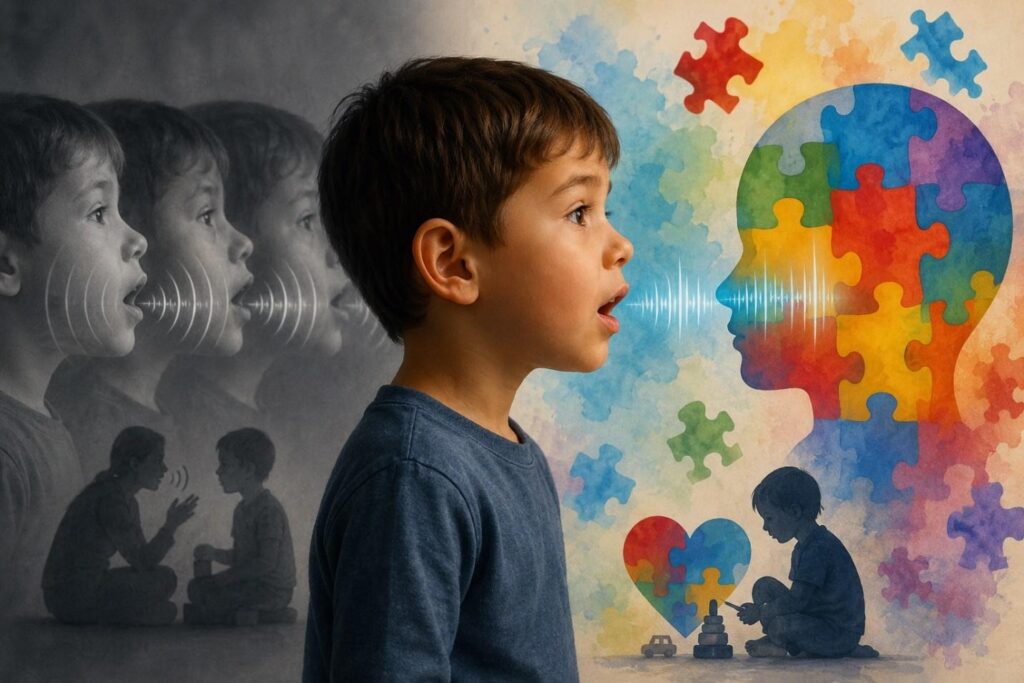
Is Echolalia a Sign of Autism?
Echolalia is very common in autistic children, but not every child with echolalia has autism.
Many toddlers naturally repeat words while learning language.
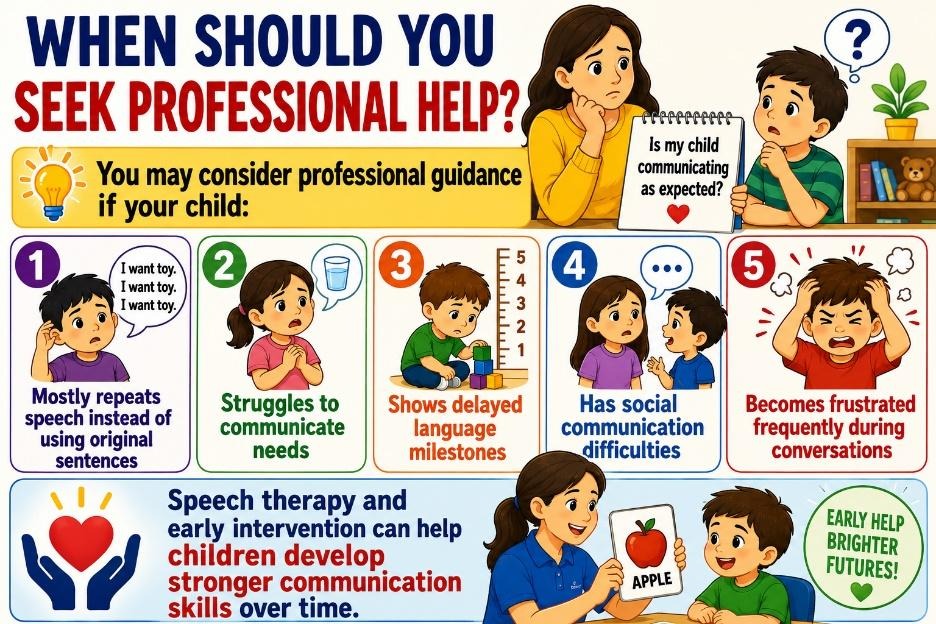
However, echolalia may need professional attention if it appears along with:
- Delayed speech development
- Limited eye contact
- Difficulty with social interaction
- Repetitive behaviors
- Sensory sensitivities
- Trouble answering questions independently
If you notice these signs, speaking with a pediatrician or speech-language therapist may help.
Early support can make a big difference.
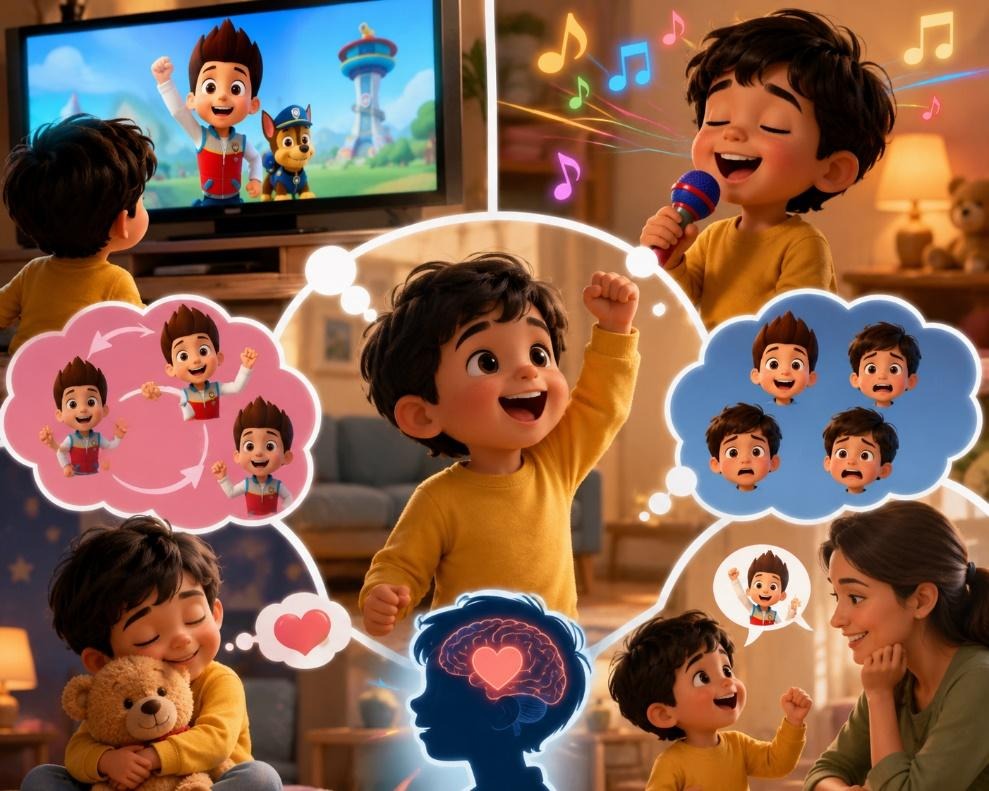
Why Children Repeat Cartoons, Songs, and Dialogues
Many parents notice their child repeating the same cartoon scenes or songs over and over.
This happens because familiar phrases feel safe and predictable.
Cartoons often provide:
- Repetitive language
- Clear emotional expressions
- Predictable speech patterns
- Comfort and familiarity
Sometimes your child may use a cartoon phrase to express emotions they cannot explain in their own words yet.
For example: A child repeatedly saying: “Mission complete!” . may simply mean: “I’m happy” or “I finished my task.”
Echolalia and Gestalt Language Processing
Some autistic children learn language in “chunks” instead of single words. This is called Gestalt Language Processing.
Instead of learning:
- “water”
- “want”
- “please”
they may first learn: “Can I have water please?”
Over time, children gradually break these phrases into smaller parts and begin forming their own sentences.This means echolalia can actually be part of natural language development for many autistic children.
What Is Functional Echolalia?
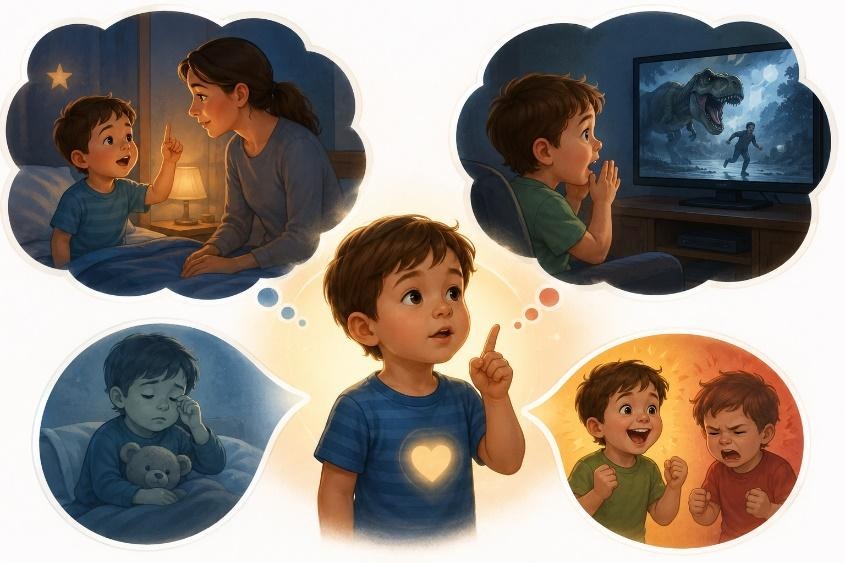
Functional echolalia means repeated speech that has a clear purpose.
For example: A child saying:“Time to sleep!”. may actually mean:“I’m tired.”
Another child repeating a movie line may be expressing fear, excitement, or frustration.The words may sound copied, but the message behind them is often real.
Echolalia and Emotional Regulation in Autism
Many autistic children use repeated phrases to calm themselves during stressful situations.
This can happen during:
- Loud environments
- Changes in routine
- Anxiety
- Sensory overload
- Emotional overwhelm
Repeated speech may help your child feel more safe, organized, and emotionally regulated.
Understanding this can change the way you respond as a caregiver.
Instead of asking:“How do I stop this?”. you may begin asking:“What is my child feeling right now?” That small shift often creates more supportive communication.
Common Myths About Echolalia
Myth 1: Echolalia Is Meaningless
Reality: Repeated phrases often carry emotional or communicative meaning.
Myth 2: Children With Echolalia Don’t Understand Anything
Reality: Many children understand much more than they can express verbally.
Myth 3: Echolalia Must Be Stopped Immediately
Reality: Echolalia can support learning, communication, and emotional regulation.
Myth 4: Only Autistic Children Have Echolalia
Reality: Echolalia can also appear in normal language development and other communication conditions.
How You Can Support Your Child at Home
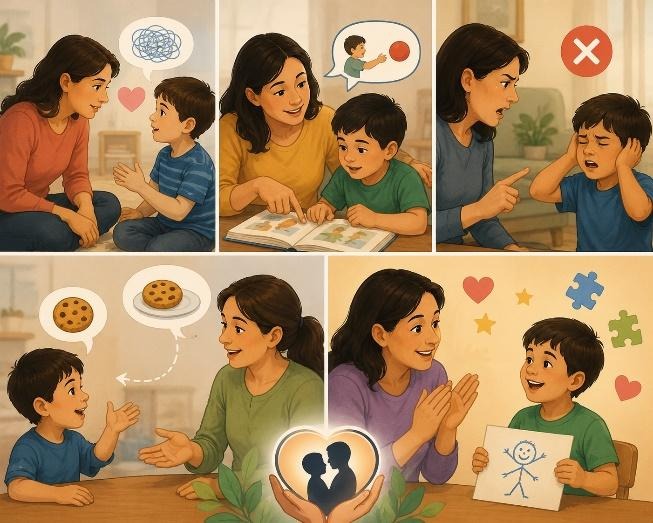
As a parent, your response matters more than perfect words.Here are supportive ways to help your child:
Listen for Meaning: Try to understand what your child may be communicating through repeated phrases.
Use Simple Language: Short and clear sentences are easier for many children to process.
Don’t Constantly Correct: Repeatedly saying “Stop repeating” may increase stress and frustration.
Expand Their Communication: If your child says:“Want cookie”. you can gently model:“I want a cookie.”
Celebrate Small Progress: Every new attempt at communication matters—even if it looks different from typical speech.
Final Thoughts
If your child uses echolalia, remember—repetition does not mean they have “nothing to say.” Often, echolalia is a way of communicating, understanding, and finding comfort. With patience, support, and proper guidance, many children gradually develop more flexible communication skills.
At Aaziban, we believe every child deserves to be understood with compassion and respect. Through supportive therapies and personalized care, we help children build confidence while guiding families to better understand their child’s unique communication needs.
Most importantly, your child’s voice deserves to be heard—not dismissed.
What is echolalia in autistic children?
Echolalia is the repetition of words, phrases, songs, or dialogues that a child has heard before. Many autistic children use echolalia as a way to communicate, process language, express emotions, or feel comforted during stressful situations.
Is repeating cartoon dialogues always a sign of autism?
Not always. Many young children naturally repeat words or cartoon lines while learning language. However, if repetitive speech appears along with delayed speech, limited eye contact, sensory sensitivities, or social difficulties, professional evaluation may be helpful.
Why do autistic children repeat the same phrases repeatedly?
Children with autism may repeat phrases to calm themselves, practice communication, express feelings, reduce anxiety, or interact socially. Familiar words and predictable language often help them feel safe and emotionally regulated.
Should parents stop echolalia immediately?
No. Echolalia is often a meaningful part of language development and communication. Instead of constantly correcting the child, parents can support communication by using simple language, understanding the meaning behind repeated phrases, and gently modeling clearer responses.
Need Personalized Guidance for Speech Therapy?
Our senior certified therapists at Aaziban Care Center provide customized 1-on-1 evaluation and treatment plans at our care centers.