Introduction
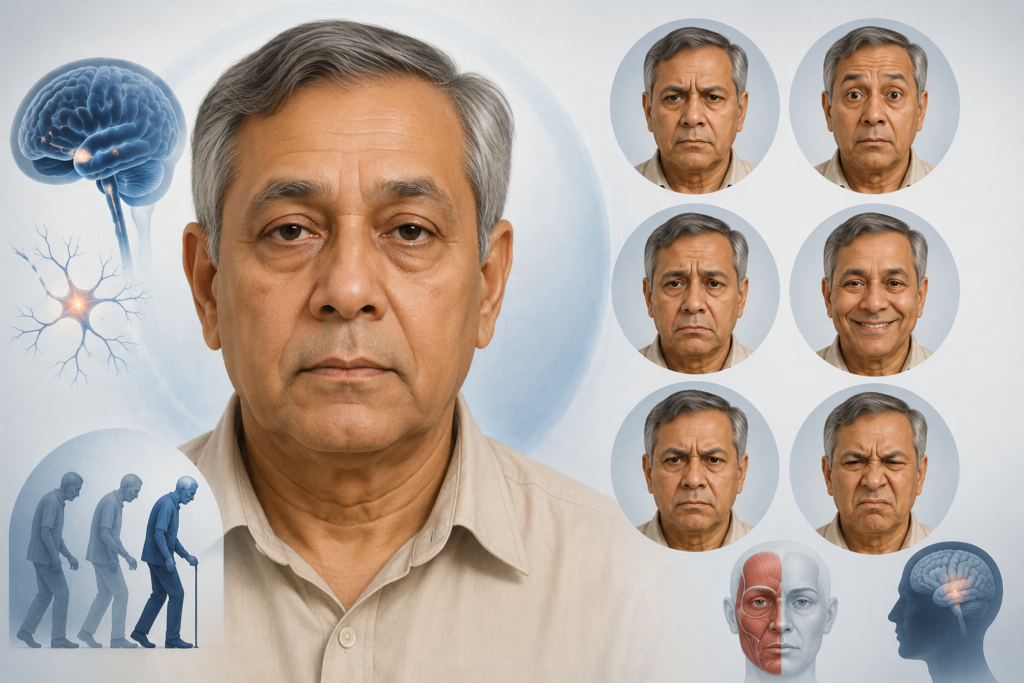
Hypomimia, commonly known as a “masked face” or decreased facial expression, is a neurological condition in which a person’s facial movements become limited or less expressive. Individuals with hypomimia may appear emotionless, even though they experience normal emotions. This condition is frequently associated with neurological disorders, particularly Parkinson’s disease, but it may also occur in other conditions affecting the nervous system. Early recognition and appropriate rehabilitation can improve communication and quality of life.
Definition
Hypomimia is the partial loss or marked reduction of spontaneous and voluntary facial expressions due to impaired facial muscle movement. It is primarily caused by dysfunction of the basal ganglia and related neural pathways responsible for controlling facial motor activity.
Etiology
- Parkinson’s disease (most common cause)
- Progressive supranuclear palsy (PSP)
- Drug-induced parkinsonism
- Multiple system atrophy (MSA)
- Wilson’s disease
- Traumatic brain injury
- Neurodegenerative disorders affecting the extrapyramidal system
- Stroke involving motor control regions
Clinical Features
- Expressionless or “masked” facial appearance
- Decreased spontaneous smiling
- Redused blinking frequency
- Limited eyebrow movement
- Decreased facial animation during conversation
- Difficulty expressing emotions through facial expressions
- Soft speech often associated with facial rigidity
- Social communication difficulties
Signs and Symptoms
- Stiffness of facial muscles
- Reduced emotional expression
- Slow facial movements (bradykinesia)
- Difficulty conveying happiness, sadness, or surprise
- Dry eyes due to infrequent blinking
- Drooling caused by reduced swallowing frequency
- Monotonous speech accompanying facial immobility
- Impaired non-verbal communication
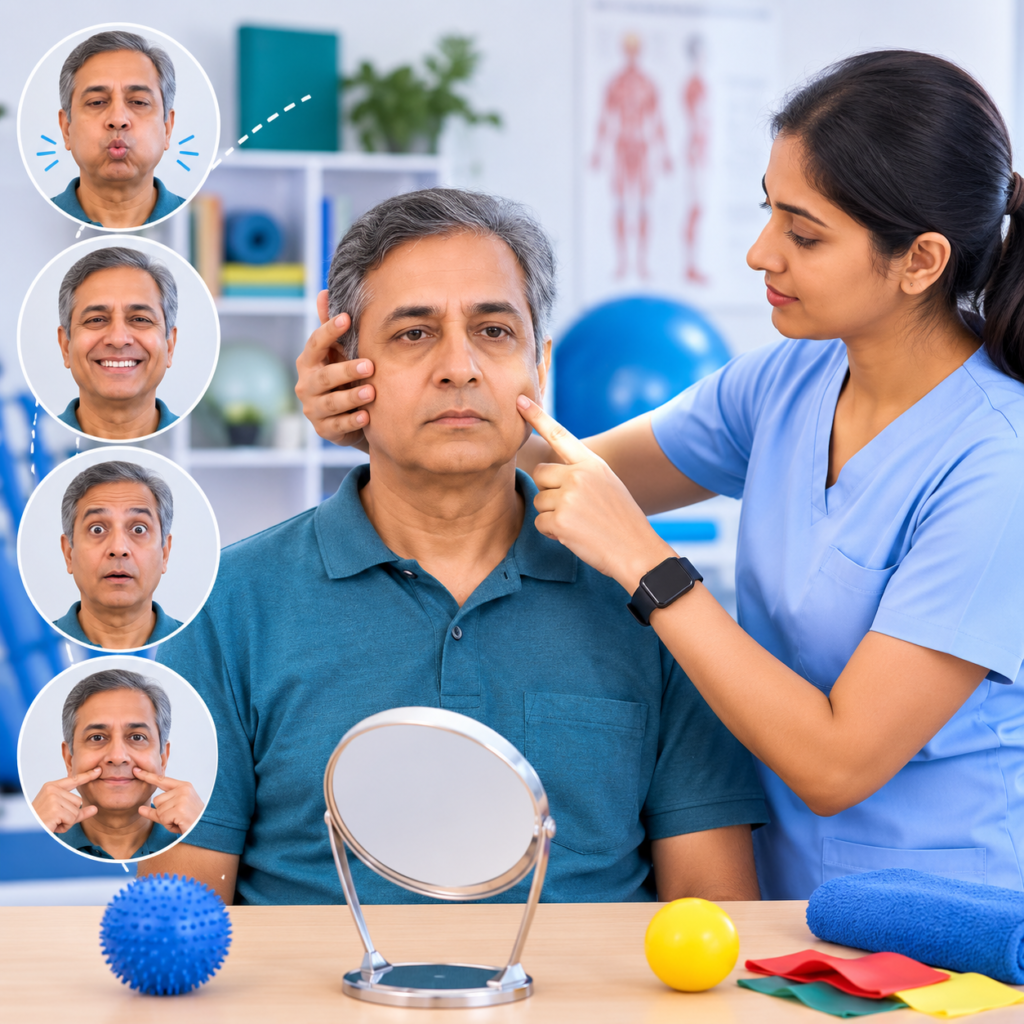
Physiotherapy Management
- Comprehensive assessment of facial muscle function and posture
- Mirror therapy for visual feedback during facial movements
- Facial muscle exercises to improve mobility and coordination
- Facial stretching and relaxation techniques to decreased stiffness
- Breathing exercises to improve respiratory support for speech
- Postural correction exercises to optimize head and neck alignment
- Orofacial motor training to enhance lip, cheek, and jaw movements
- Functional communication training during daily activities
- Balance, gait, and mobility exercises when associated with Parkinsonism
- Home exercise program with regular practice and caregiver education
- Multidisciplinary collaboration with speech-language therapists and neurologists
Complications
- Social isolation due to decreased emotional expression
- Reduced confidence and self-esteem
- Communication difficulties
- Dry eye complications
- Increased drooling and oral hygiene issues
- Decreased quality of life
Risk Factors
- Increasing age
- Parkinson’s disease
- Other neurodegenerative disorders
- Long-term use of dopamine-blocking medications
- Previous brain injury
- Stroke
- Genetic neurological disorders
- Exposure to neurotoxins
Conclusion
Hypomimia is more than a cosmetic concern; it significantly affects communication, emotional expression, and social interaction. Early diagnosis, medical management, and targeted physiotherapy interventions can improve facial mobility, enhance communication, and promote better participation in daily life. A multidisciplinary rehabilitation approach offers the best outcomes for individuals living with hypomimia.
Need Personalized Guidance for Physiotherapy?
Our senior certified therapists at Aaziban Care Center provide customized 1-on-1 evaluation and treatment plans at our care centers.