Introduction
Meniere’s disease is a chronic inner-ear disorder that can significantly affect balance, hearing, and daily activities. Episodes may occur unexpectedly and vary in frequency and severity. Early diagnosis, appropriate medical care, and rehabilitation can help individuals manage symptoms and maintain independence.
Definition
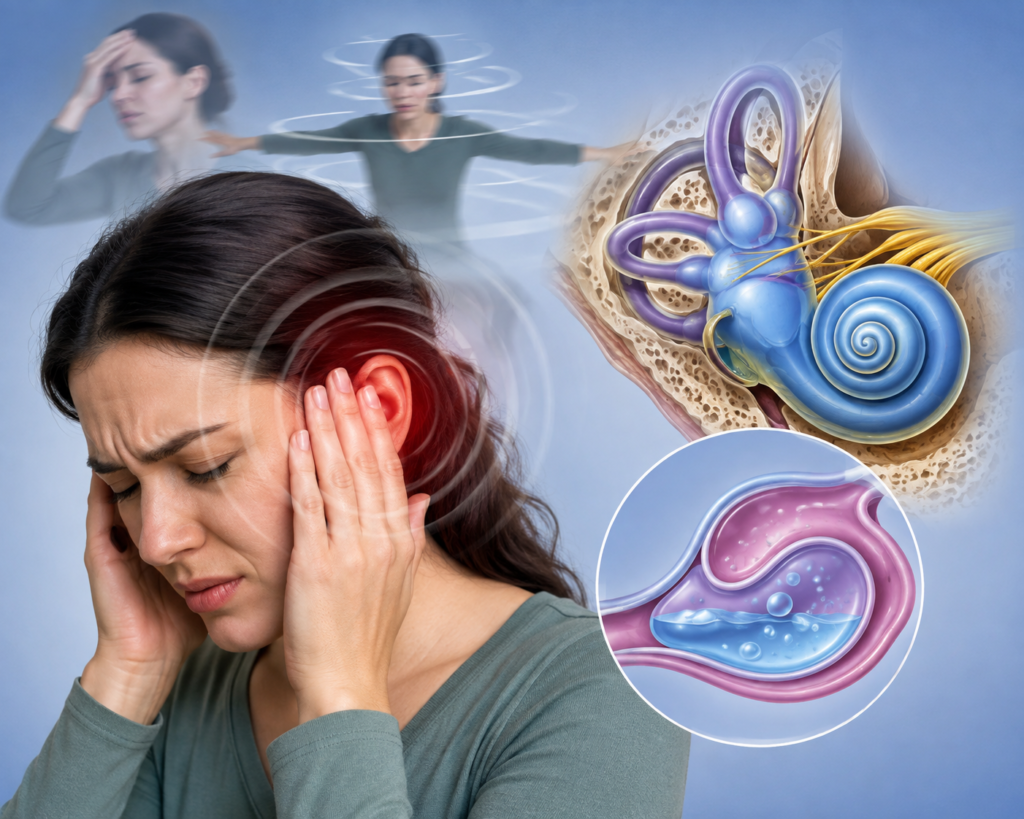
Meniere’s disease is a disorder of the inner ear characterized by recurring episodes of vertigo, fluctuating hearing loss, tinnitus, and a feeling of fullness or pressure in the affected ear. It commonly affects one ear but may involve both ears over time.
Etiology
The exact cause of Meniere’s disease is not completely understood. Possible contributing factors include:
- Abnormal accumulation of inner-ear fluid (endolymph).
- Genetic predisposition.
- Disturbed fluid drainage or regulation.
- Viral or inflammatory factors.
- Allergies or autoimmune responses.
- Abnormal blood circulation within the inner ear.
Clinical Feature
Important clinical features include:
- Recurrent spontaneous episodes of vertigo.
- Tinnitus, often described as ringing or buzzing.
- A sensation of pressure or fullness in the ear.
- Fluctuating or progressive hearing impairment.
- Difficulty maintaining stability during movement.
- Imbalance between attacks.
Signs and Symptoms
Common signs and symptoms are:
- Sudden spinning sensation lasting minutes to hours.
- Hearing changes, particularly in lower frequencies initially.
- Ringing or roaring sounds in the ear.
- Nausea and vomiting during severe attacks.
- Ear pressure or fullness.
- Unsteadiness after a vertigo episode.
- Fatigue and anxiety related to unpredictable attacks.
Physiotherapy Management
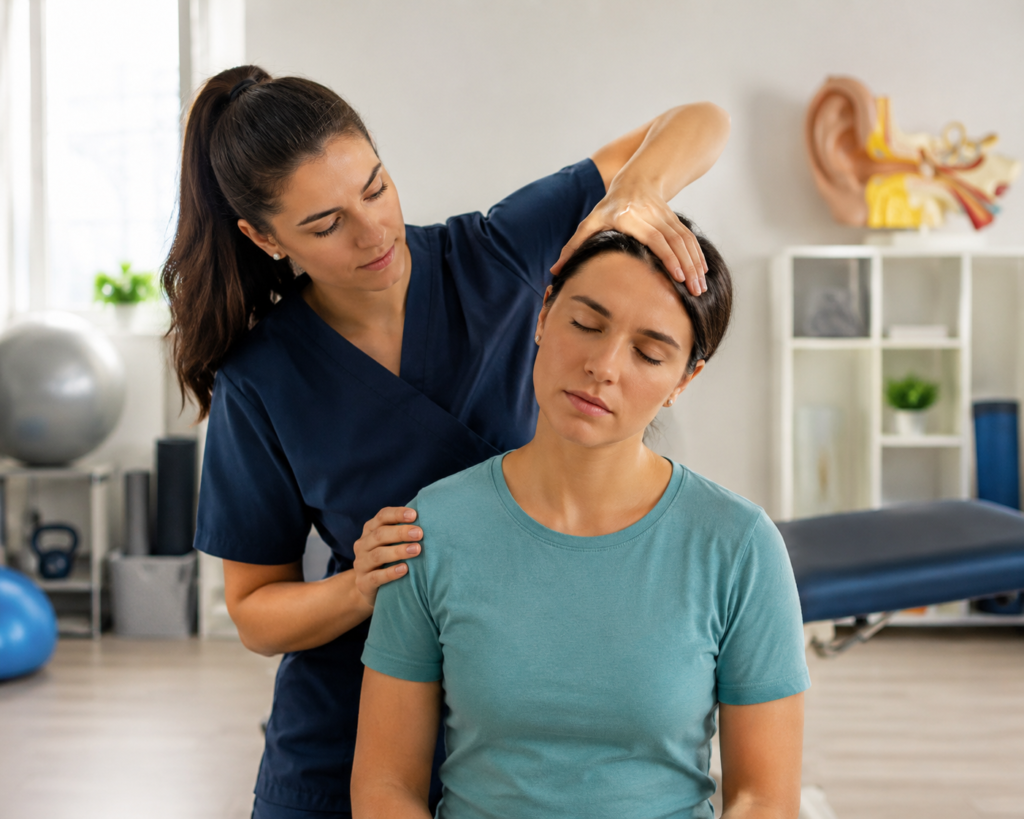
Physiotherapy primarily focuses on improving balance and decreased functional limitations, particularly when persistent dizziness or imbalance remains between attacks. Management may include:
- Vestibular rehabilitation: Exercises designed to improve balance and the brain’s adaptation to vestibular disturbances.
- Balance training: Progressive standing and walking exercises on different surfaces.
- Gaze stabilization: Controlled head and eye movements to improve visual stability.
- Gait training: Improving safe walking and turning strategies.
- Fall-prevention education: Teaching safe movement techniques and appropriate use of assistive devices when necessary.
- Habituation exercises: Carefully selected movements that help reduce sensitivity to specific dizziness-provoking activities.
Exercises should be individualized and performed under professional supervision, especially when symptoms are severe or unpredictable.
Complication
Possible complications include:
- Progressive or permanent hearing loss.
- Increased risk of falls.
- Persistent imbalance.
- Difficulty working or performing daily activities.
- Anxiety or decreased confidence because of recurrent attacks.
- Social and communication difficulties due to hearing impairment.
Risk Factors
Potential risk factors include:
- Family history of Meniere’s disease.
- Age, particularly adulthood.
- Previous inner-ear problems.
- Autoimmune or allergic conditions.
- Migraine history.
- Stress and certain dietary or lifestyle factors may aggravate symptoms in some individuals.
Conclusion
Meniere’s disease can interfere with hearing, balance, mobility, and quality of life. Although there is no universal cure, appropriate medical treatment combined with individualized vestibular rehabilitation can help manage persistent balance problems and improve functional independence. Patients should seek professional assessment for recurrent vertigo or unexplained hearing changes.
1. Is Meniere’s disease curable?
There is currently no definitive cure, but medical treatment and rehabilitation can help control symptoms and improve quality of life.
2. Can physiotherapy help Meniere’s disease?
Yes. Vestibular physiotherapy can help improve balance, gaze stability, mobility, and confidence, particularly when imbalance persists between attacks.
3. How long does a Meniere’s vertigo attack last?
An episode commonly lasts from about 20 minutes to several hours, although the duration can vary between individuals.
Need Personalized Guidance for Physiotherapy?
Our senior certified therapists at Aaziban Care Center provide customized 1-on-1 evaluation and treatment plans at our care centers.