Introduction:
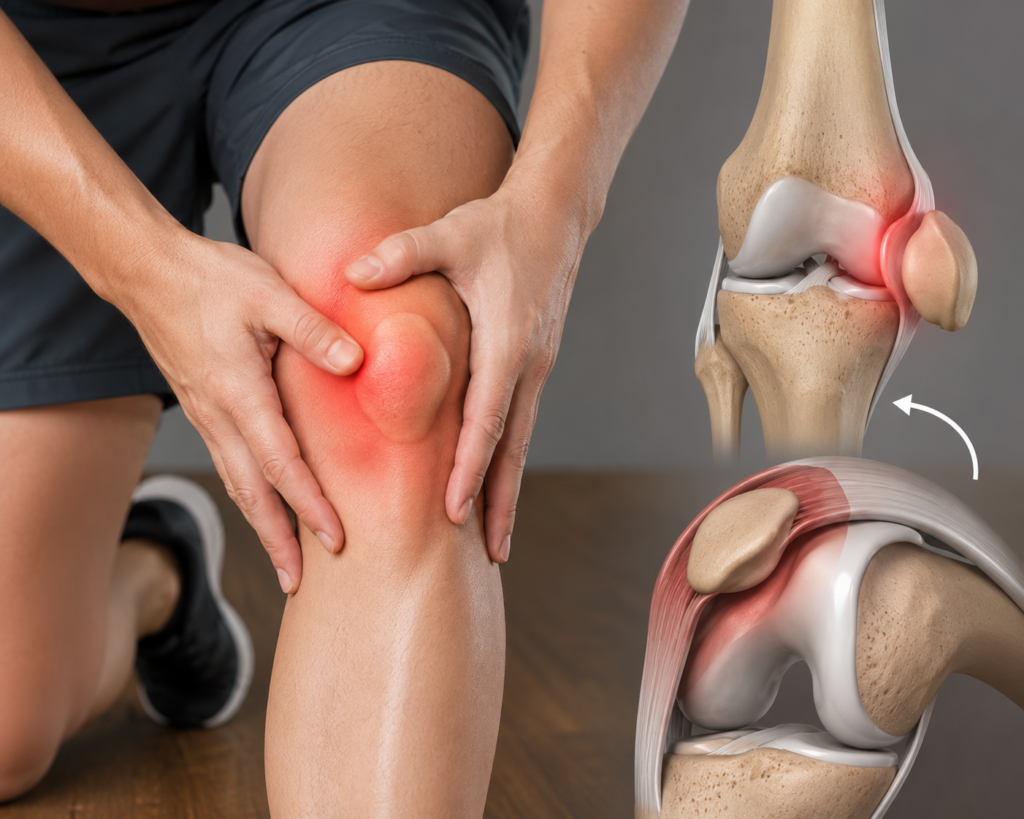
- Recurrent Patellar Dislocation is a significant knee condition characterized by the repeated displacement of the kneecap (patella) from its natural position.
- It is a common issue, particularly affecting young athletes, leading to chronic instability and discomfort.
- Trochlear dysplasia (shallow groove), patella alta (high – riding kneecap) and excessive genu valgum (knock- knees).
Definition:
- The repeated slipping of the patella out of the femoral trochlear groove, typically moving laterally.
- This condition contrasts with an initial traumatic dislocation and indicates underlying anatomical instability.
- This mostly occurs as a disruption of the medial patellofemoral ligament.
Cause:
- Anatomical factors: Trochlear dysplasia (shallow grove), patella alta (high-riding kneecap) and excessive genu valgum (knock- knees).
- Soft tissue injuries: Damage or rupture of the patellofemoral ligament (MPFL) from previous dislocations.
- Genu recurvatum
- Increased Q Angle
- Patellar hypermobility
Clinical Features:
- A characteristic sensation of the knee “giving way” or “slipping out of place”.
- The individual may experience patellar apprehension, a feeling of fear or instability when the kneecap is moved.
- Locking of the knee after the trauma
Sign & Symptoms:
- Sudden, sharp pain and a visible deformity during a dislocation episode.
- Immediate swelling and tenderness around the kneecap.
- Difficulty bending or straightening the knee after an episode.
Physiotherapy Management:
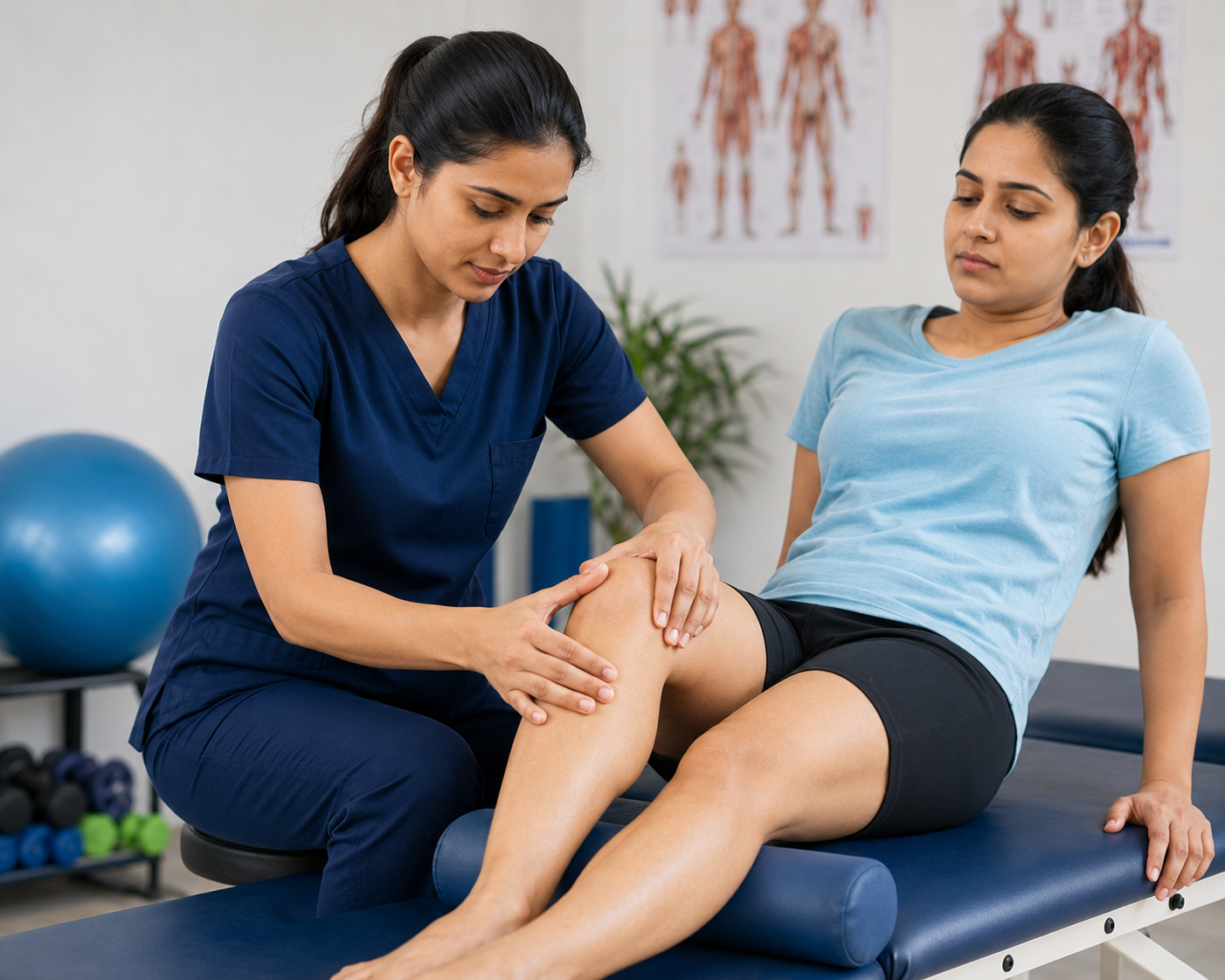
- Strengthening exercises focusing on the quadriceps, especially the vastus medialis obliquus(VMO), to improve patellar tracking.
- Proprioceptive and balance training.
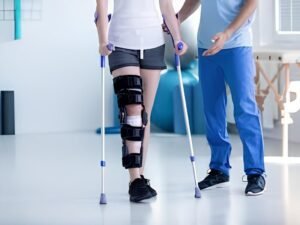
- Use of knee braces or taping to provide external support and guidance.
- Stretching: Improve flexibility of hamstrings and quadriceps.
Surgical Management:
- Recommended for persistent instability unresponsive to conservative treatment or in cases of significant anatomical abnormality.
- Common procedures include MPFL reconstruction to stabilize the kneecap.
- In specific cases, osteotomies or trochleoplasty may require to correct bony deformities.
Diet and Nutrition Support
At Aaziban, we emphasize that nutrition is an integral part of rehabilitation.
A balanced diet supports faster recovery from ligament injuries and muscle strain.
- Include protein-rich foods (fish, eggs, lentils) to repair soft tissues.
- Add calcium and vitamin D sources (milk, leafy greens, sesame) for bone health.
- Anti-inflammatory foods such as turmeric, mud apple (sapodilla), and berries help reduce swelling and promote healing.
- Stay hydrated and limit processed foods to aid recovery efficiency.
This nutrition-focused approach at Aaziban complements physiotherapy, ensuring optimal recovery and long-term joint stability.
Conclusion:
- Recurrent patellar dislocation requires a precise diagnosis and personalized treatment plan.
- A combination of physiotherapy and targeted surgical intervention provides the best approach for restoring stability and function.
Q1. What is Recurrent Patellar Dislocation?
A1. It is the repeated displacement of the kneecap from its normal position, usually moving laterally, causing chronic knee instability.
Q2. What are the common causes of Recurrent Patellar Dislocation?
A2. Causes include trochlear dysplasia, patella alta, genu valgum, ligament injury (MPFL rupture), and increased Q-angle.
Q3. How is Recurrent Patellar Dislocation managed?
A3. Management includes physiotherapy with VMO strengthening, proprioceptive training, bracing, and in severe cases, MPFL reconstruction surgery.
Need Personalized Guidance for Physiotherapy?
Our senior certified therapists at Aaziban Care Center provide customized 1-on-1 evaluation and treatment plans at our care centers.