Introduction:
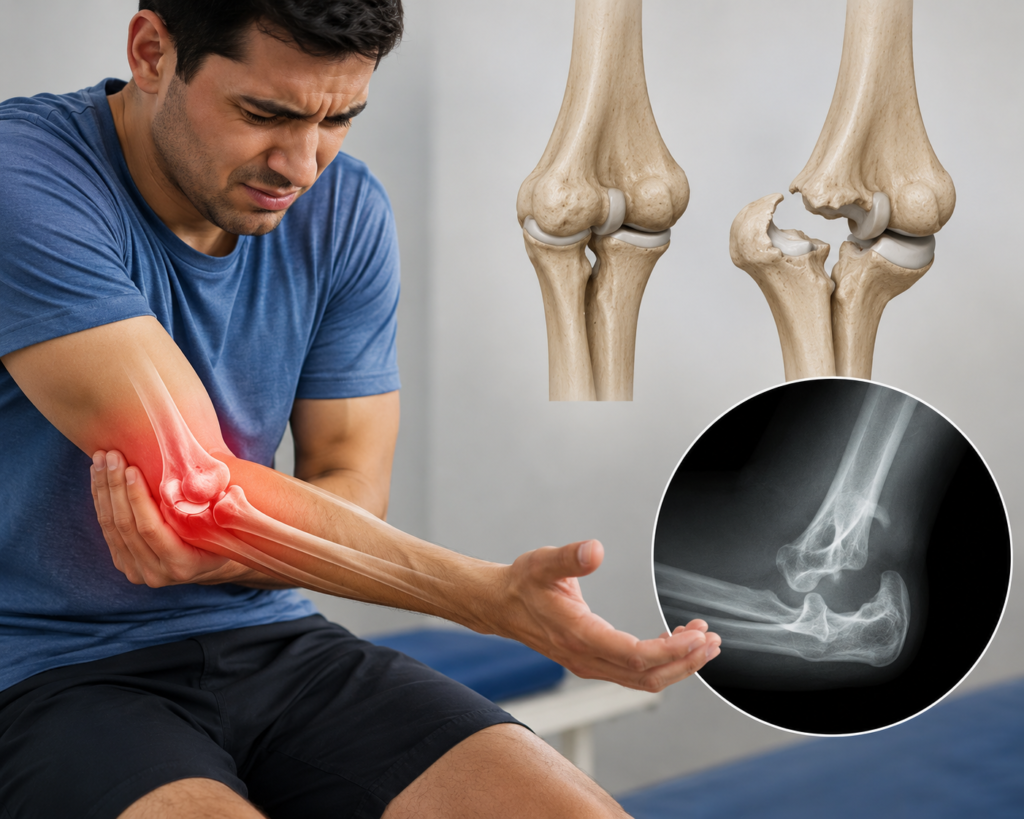
Terrible Triad is recognized term in orthopedic trauma, describing a specific, highly unstable injury pattern of the elbow.
Definition:
Terrible Triad is defined by the simultaneous occurrence of three distinct injuries:
- Posterior elbow dislocation.
- Fracture of the radial head.
- Fracture of the coronoid process of the ulna.
Cause:
- This injury typically results from high- level trauma.
- The impact forces the radius and ulna posteriorly relative to the humerus , leading to dislocation and the characteristic fractures.
- The most common mechanism is a fall on outstretched hand with the elbow extended.
Clinical Features:
- Severe instability of the elbow joint.
- It frequently results in soft tissue damage and ligamentous injury, particularly to the lateral collateral ligament (LCL) complex.
- Joint line tenderness on palpation.
- Popping sensation on immediate injury.
Sign & Symptoms:
- Visible deformity of the elbow.
- Significant swelling around the joint.
- Severe pain localized to the elbow.
- Locking with elbow in extension.
- Inability or extreme difficulty in moving the elbow(restricted ROM)
- Palpable instability of the joint.
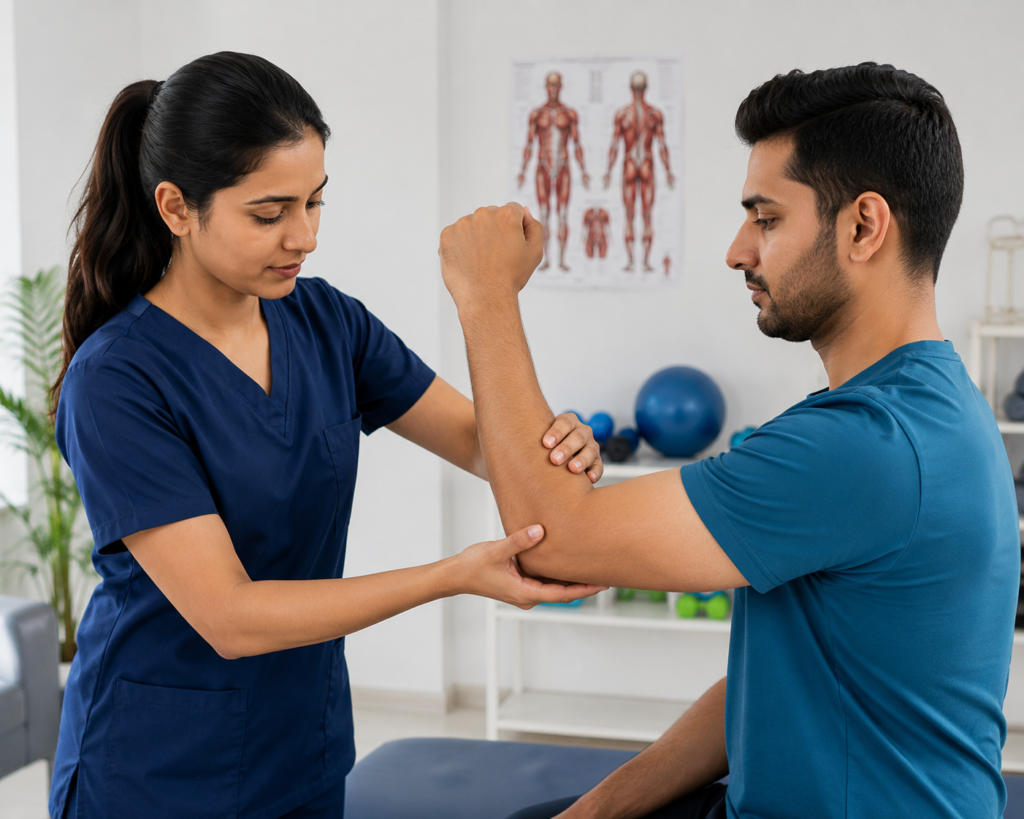
Physiotherapy Management:
- Early Immobilization (Post-surgery): Following surgical stabilization, the elbow is typically immobilized for a short period. Throughout the immobilization phase, wrist and shoulder function should be maintained through strengthening exercise.
- Gradual Mobilization: After the immobilization phase physiotherapy begins with gentle AROM and PROM exercise in a pain- free range targeting the entire upper limb.
- Pain and Swelling Management: Various modalities like ice, compression and elevation are used to reduce pain and swelling.
- Strengthening Exercises: Strengthening exercises for the muscles surrounding the elbow (biceps, triceps, and forearm muscles) are incorporated to enhance dynamic stability and functional strength.
- Patient Education: Crucially, patients are educated on proper body mechanics, activity modification, and the importance of adherence to their exercise program to prevent setback.
- Proprioceptive Training: Exercises that improve joint position sense and improve joint position sense and coordination are crucial for regaining fine motor control and reducing the risk of re-injury.
Diet & Recovery Support
At Aaziban, a balanced anti-inflammatory diet is encouraged to aid recovery after trauma. Foods rich in omega-3 fatty acids, fresh fruits, vegetables, and adequate hydration help reduce joint inflammation, promote bone healing, and restore overall strength — supporting the body’s natural healing process alongside physiotherapy.
Conclusion:
Terrible Triad represents a critical orthopedic emergency requiring specialized care. It is important to explore the level of severity and degree of complication associated with each posterior elbow dislocation since this dictates the patient’s prognoses.
Q1. What is the Terrible Triad injury of the elbow?
A1. It is a combination of posterior elbow dislocation, radial head fracture, and coronoid process fracture of the ulna.
Q2. What is the main cause of the Terrible Triad?
A2. It usually occurs from a fall on an outstretched hand with the elbow extended, causing high-impact trauma.
Q3. How is the Terrible Triad managed physiotherapeutically?
A3. Management includes early immobilization, gradual mobilization, pain control, strengthening, proprioceptive training, and patient education.
Need Personalized Guidance for Physiotherapy?
Our senior certified therapists at Aaziban Care Center provide customized 1-on-1 evaluation and treatment plans at our care centers.