Introduction
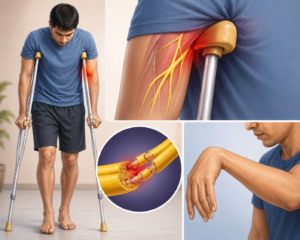
Neurotmesis represents the most severe form of peripheral nerve injury, often resulting in complete loss of nerve continuity. It typically occurs after major trauma and leads to remarkable motor and sensory deficits, requiring surgical and rehabilitative management.
Definition
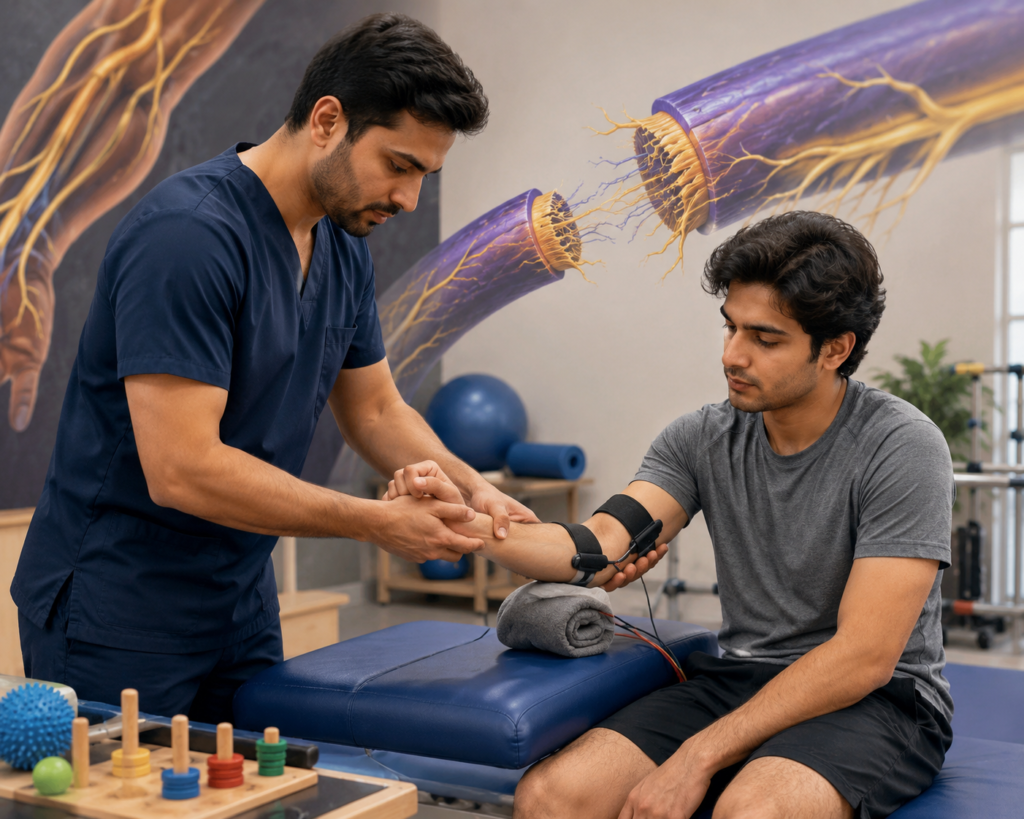
Neurotmesis is defined as a complete disruption of the nerve, including the axon and surrounding connective tissues (endoneurium, perineurium, and epineurium). Spontaneous recovery is unlikely without surgical intervention.
Etiology
- Deep lacerations or penetrating injuries
- Surgical trauma (iatrogenic causes)
- Severe crush or traction injuries
- High-impact accidents (road traffic injuries)
- Sharp object injuries causing nerve transection
Clinical Features
- Complete loss of motor and sensory function distal to the injury
- Rapid onset of muscle atrophy
- Absence of voluntary muscle contraction
- Loss of nerve continuity on diagnostic evaluation
- No natural recovery without repair
Signs and Symptoms
- Flaccid paralysis of affected muscles
- Absence of reflexes
- Total loss of sensation (anesthesia)
- Severe functional impairment
- Neuropathic pain or dysesthesia in some cases
Complications
- Permanent paralysis if untreated
- Joint stiffness and contractures
- Severe muscle atrophy and fibrosis
- Chronic neuropathic pain
- Long-term disability and reduced quality of life
Risk Factors
- High-velocity trauma (accidents, industrial injuries)
- Sharp penetrating wounds
- Improper wound management
- Delayed surgical intervention
- Occupational hazards involving machinery
Physiotherapy Management
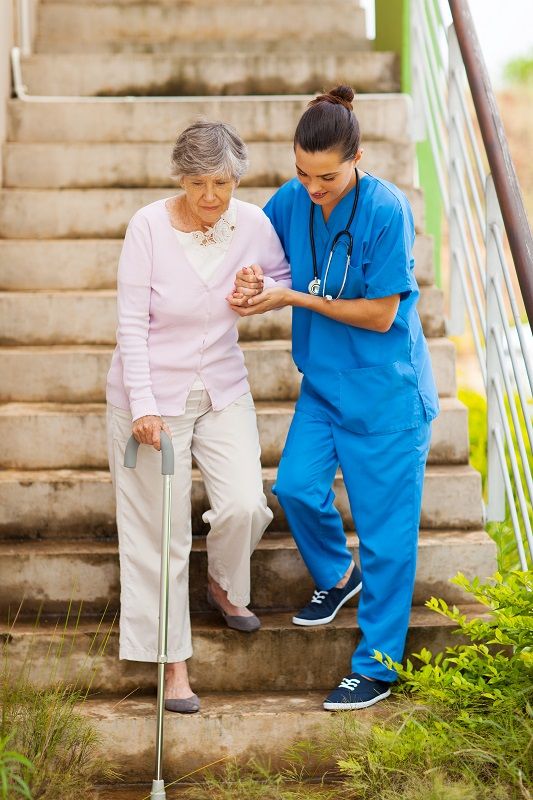
- Pre- and Post-Surgical Rehabilitation: Prepare and support recovery after nerve repair
- Electrical Stimulation: Maintain muscle viability in denervated muscles
- Splinting and Positioning: Decreased deformities and maintained joint alignment
- Range of Motion (ROM) Exercises: Prevent stiffness and maintain joint mobility
- Strengthening Exercises: Begin once reinnervation occurs
- Neuromuscular Re-education: Facilitate motor control and coordination
- Pain Management: Use modalities such as TENS and desensitization techniques
- Functional Training: Restore independence in daily activities
- Patient Education: Emphasize long-term rehabilitation and compliance
Conclusion
Neurotmesis is a severe nerve injury with poor spontaneous recovery potential. Early surgical repair combined with comprehensive physiotherapy is essential to maximize functional recovery and minimize complications. A multidisciplinary approach remarkably improves patient outcomes and quality of life.
What is Neurotmesis?
It is the most severe nerve injury involving complete disruption of the nerve, requiring surgical repair.
What are common symptoms of Neurotmesis?
Flaccid paralysis, total loss of sensation, absent reflexes, and rapid muscle atrophy.
What is the role of physiotherapy in Neurotmesis?
It supports recovery through ROM exercises, electrical stimulation, splinting, strengthening, and functional training.
Need Personalized Guidance for Physiotherapy?
Our senior certified therapists at Aaziban Care Center provide customized 1-on-1 evaluation and treatment plans at our care centers.