Introduction
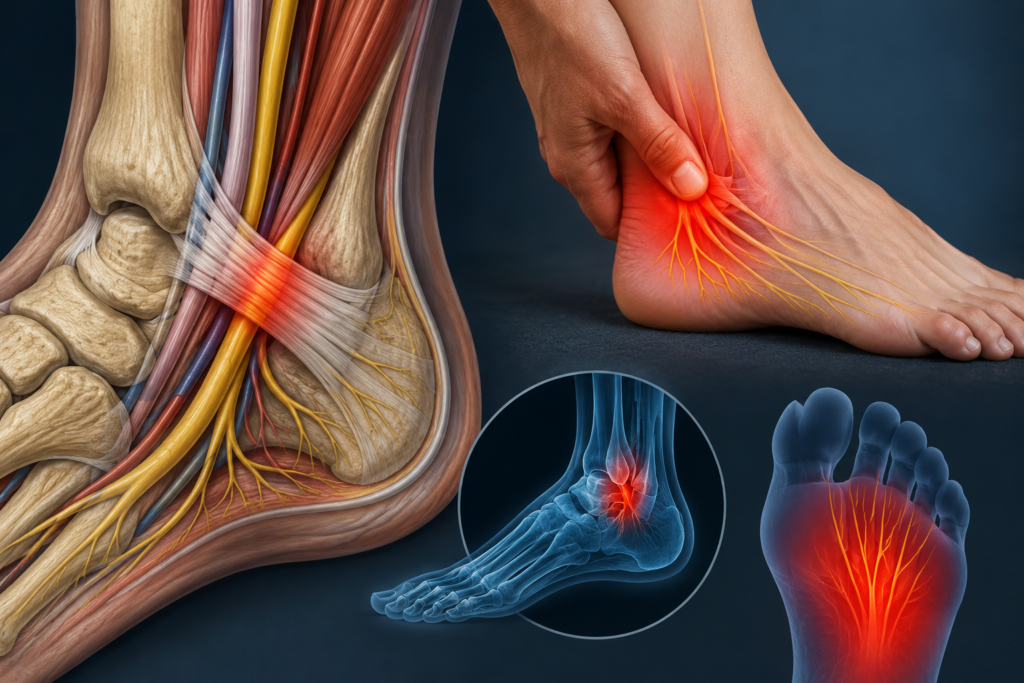
Tarsal Tunnel Syndrome (TTS) is a peripheral nerve entrapment disorder that occurs when the tibial nerve is compressed within the tarsal tunnel, a narrow passage located on the inside of the ankle. The condition can cause pain, numbness, and tingling in the foot, affecting daily activities and mobility. Early diagnosis and appropriate treatment are essential to prevent long-term nerve damage and functional limitations.
Definition
Tarsal Tunnel Syndrome is a neuropathic condition caused by compression or irritation of the posterior tibial nerve or its branches as they pass through the tarsal tunnel beneath the flexor retinaculum on the medial side of the ankle.
Etiology
Common causes of Tarsal Tunnel Syndrome include:
- Ankle sprains or fractures.
- Varicose veins within the tarsal tunnel.
- Flat feet (pes planus) causing excessive strain on the tibial nerve.
- Ganglion cysts, lipomas, or other space-occupying lesions.
- Inflammatory conditions such as rheumatoid arthritis.
- Repetitive overuse injuries and prolonged standing.
- Diabetes-related nerve vulnerability.
Clinical Features
Characteristic clinical features include:
- Burning pain along the inner ankle and sole of the foot.
- Tingling or “pins and needles” sensation.
- Symptoms that worsen with prolonged walking or standing.
- Pain radiating into the toes.
- Reduced tolerance to physical activities.
- Tenderness over the tarsal tunnel region.
Signs and Symptoms
Patients may present with:
- Numbness in the sole of the foot.
- Sharp, shooting, or aching foot pain.
- Weakness of intrinsic foot muscles in severe cases.
- Increased symptoms at night.
- Positive Tinel’s sign over the tibial nerve.
- Difficulty with prolonged walking or running.

Physiotherapy Management
Physiotherapy is an important component of conservative treatment.
- Activity modification to reduce nerve irritation.
- Stretching exercises for calf and foot muscles.
- Neural mobilization techniques for the tibial nerve.
- Strengthening exercises for foot and ankle stabilizers.
- Balance and proprioceptive training.
- Footwear assessment and orthotic recommendations.
- Modalities such as ultrasound or TENS for pain management.
- Gait training to improve walking mechanics.
- Patient education regarding symptom management and prevention.
Complications
If left untreated, Tarsal Tunnel Syndrome may lead to:
- Chronic foot pain.
- Muscle weakness and atrophy.
- Persistent numbness and sensory loss.
- decreased walking endurance.
- Functional limitations in daily activities.
- Permanent nerve damage in severe cases.
Risk Factors
Factors associated with increased risk include:
- Flat feet (pes planus).
- Previous ankle injuries.
- Diabetes mellitus.
- Obesity.
- Rheumatoid arthritis.
- Repetitive sports activities.
- Occupations requiring prolonged standing.
Conclusion
Tarsal Tunnel Syndrome is a potentially disabling nerve compression disorder that can importently affect foot function and quality of life. Early recognition, appropriate physiotherapy intervention, and management of underlying causes are essential for symptom relief and functional recovery. With timely treatment, most individuals can achieve improved mobility and return to their normal activities.
Q1. What is Tarsal Tunnel Syndrome?
Answer: Tarsal Tunnel Syndrome is a condition caused by compression of the tibial nerve inside the tarsal tunnel on the inner side of the ankle, leading to pain, numbness, and tingling in the foot.
Q2. What are the common symptoms of Tarsal Tunnel Syndrome?
Answer: Common symptoms include burning foot pain, tingling, numbness in the sole, pain radiating to the toes, and worsening symptoms during prolonged standing or walking.
Q3. How can physiotherapy help in Tarsal Tunnel Syndrome?
Answer: Physiotherapy helps reduce pain and nerve irritation through stretching, strengthening exercises, neural mobilization, gait training, balance exercises, and footwear or orthotic recommendations.
Need Personalized Guidance for Physiotherapy?
Our senior certified therapists at Aaziban Care Center provide customized 1-on-1 evaluation and treatment plans at our care centers.